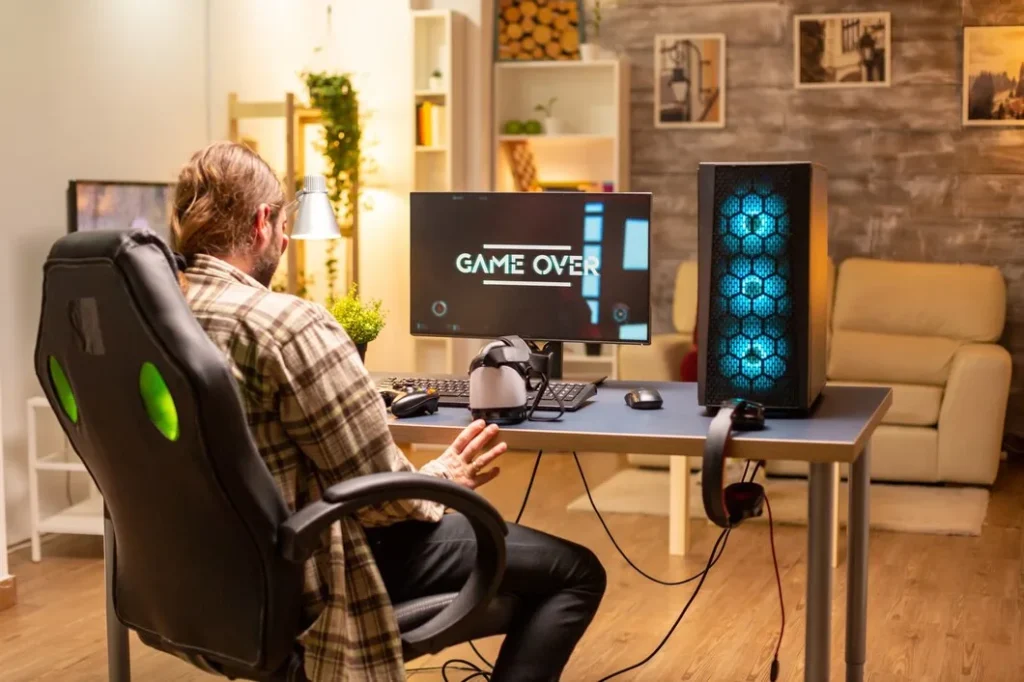
Gaming at 8K resolution transforms every frame into a breathtaking visual spectacle—environments feel alive, textures reveal microscopic detail, and the line between virtual and reality blurs in ways that redefine immersion. But here’s what many hardcore gamers discover too late: that stunning visual fidelity means nothing if your controller can’t keep up. The wrong controller introduces input lag, imprecise movements, and frustrating disconnects that undermine the entire experience your expensive 8K setup was designed to deliver.
The problem is widespread. Gamers invest thousands in cutting-edge GPUs, high-refresh displays, and premium 8K rigs, only to pair them with controllers chosen on impulse or brand loyalty alone. The result? Missed shots in competitive shooters, sluggish camera movement in open-world adventures, and hardware failures that strike mid-session. This article breaks down the most common mistakes gamers make when selecting an 8K gaming PC controller and provides clear, actionable solutions so you can match your input device to the extraordinary demands of next-generation gaming.
Understanding 8K Gaming and Why Your Controller Matters
8K gaming operates at a resolution of 7680×4320 pixels—four times the pixel density of 4K and sixteen times that of 1080p. This extraordinary visual output demands hardware working in perfect synchronization, from your GPU rendering millions of polygons to your display refreshing at high frame rates. What often gets overlooked is that your controller sits at the beginning of this entire pipeline. Every thumb movement, trigger pull, and button press initiates a chain of data that must travel through your system without bottleneck or delay.
For hardcore gamers, precision at 8K isn’t optional—it’s the entire point. When you can see individual blades of grass swaying in a sniper scope, your aiming input needs to be equally granular. A controller with high polling rates (1000Hz or above) communicates with your PC up to a thousand times per second, translating micro-adjustments into on-screen movement with near-zero perceptible delay. Low latency ensures that what you intend happens exactly when you intend it, which becomes critically important in fast-paced competitive titles where frames and milliseconds determine outcomes. Understanding these technical demands before purchasing prevents the most expensive mistake of all: owning a system capable of visual perfection while your input device holds you back.
Common Mistake #1: Ignoring Compatibility with Your 8K Gaming PC
One of the most frustrating experiences in gaming is unboxing a new controller, plugging it in, and discovering it doesn’t work properly with your system. Many gamers assume that any modern controller will function flawlessly with their 8K gaming PC, but this assumption leads to wasted money and hours of troubleshooting. The reality is that 8K setups often run specialized hardware configurations—custom GPUs, specific motherboard chipsets, and demanding operating system builds—that don’t always play nicely with every controller on the market.
Connectivity method matters more than most buyers realize. Some controllers rely on Bluetooth protocols that introduce additional latency or suffer from interference in environments crowded with wireless devices. Others require specific USB standards to achieve their advertised polling rates, meaning plugging into an older USB 2.0 port could silently throttle performance. Driver support is another hidden trap: a controller might technically connect but lack optimized drivers for your operating system version, resulting in missing features or erratic behavior.
Before purchasing, take these concrete steps. First, verify your PC’s available ports and Bluetooth version against the controller’s requirements. Second, check the manufacturer’s website for driver compatibility with your specific OS build. Third, confirm that the controller supports the connection mode you need—wired for zero-latency competitive play or wireless for couch gaming. Finally, look for community feedback from users running similar 8K hardware configurations. A few minutes of research prevents the painful cycle of buying, returning, and starting over.
Common Mistake #2: Overlooking Advanced Features Like Hall Effect Joysticks
Too many gamers fixate on surface-level specs—button count, color options, brand recognition—while completely ignoring the underlying technology that determines how a controller actually performs over months and years of heavy use. Traditional potentiometer-based joysticks rely on physical contact between resistive surfaces to register movement. This mechanical friction means degradation is inevitable. For hardcore gamers logging hundreds of hours in demanding 8K titles, this translates to stick drift appearing within months—that maddening phantom input where your character moves or your camera drifts without any touch on the stick.
Hall Effect joysticks solve this problem through magnetic sensing rather than physical contact. Because no components actually rub together, there’s essentially no wear mechanism to introduce drift over time. Beyond durability, the precision gains matter enormously at 8K resolution. When your display renders environments with such extraordinary detail, even slight inaccuracies in stick response become visible and frustrating. Hall Effect sensors deliver consistent, repeatable input readings from day one through year three and beyond, maintaining the same factory-fresh accuracy throughout the controller’s lifespan.
Why Hall Effect Joysticks Enhance Your Gaming Experience
The practical difference is immediately noticeable. In competitive shooters, Hall Effect sticks maintain their center deadzone perfectly, meaning your crosshair stays exactly where you place it without creep or wander. Fine aiming adjustments translate precisely to on-screen movement because the magnetic sensor reads position with higher granularity than traditional analog mechanisms. Compared to standard potentiometer sticks that develop inconsistencies as carbon tracks wear, Hall Effect technology delivers the same response curve on your thousandth hour as it did on your first—making it the clear choice for gamers who refuse to compromise precision for their 8K setup.
Common Mistake #3: Neglecting Wireless Controller Performance and Battery Life
The freedom of wireless gaming is undeniably appealing, especially when you’re settled into a couch setup enjoying 8K visuals on a large display. But too many gamers grab the first wireless controller they find without scrutinizing the metrics that actually determine whether that cord-free experience enhances or sabotages their gameplay. The most common error is assuming all wireless controllers deliver equivalent performance—they absolutely do not.
Latency varies dramatically between wireless implementations. Budget wireless controllers often operate at polling rates of 125Hz or lower, introducing up to 8 milliseconds of input delay before your system even begins processing the command. For 8K gaming where visual fluidity and input responsiveness must align perfectly, this hidden lag compounds with rendering pipeline delays to create a noticeably sluggish feel. Seek controllers offering dedicated low-latency wireless modes using 2.4GHz dongles rather than relying solely on Bluetooth, which typically adds measurable overhead. Range also deserves attention—a controller that loses signal strength beyond two meters defeats the purpose of wireless play in a living room environment.
Battery life represents the other critical oversight. Nothing destroys immersion faster than a controller dying during an intense raid or ranked match. Evaluate battery capacity against your typical session length, and consider whether the controller supports play-while-charging as a failsafe. More importantly, invest in a dedicated charging dock that keeps your controller topped off between sessions. A charging dock eliminates the scramble for cables and ensures you never start a gaming session with an unexpectedly low battery. Look for controllers whose ecosystem includes purpose-built charging solutions so maintenance becomes effortless rather than an afterthought.
Common Mistake #4: Forgetting About Essential Gaming Accessories and Ecosystem
A controller doesn’t exist in isolation—it functions within a broader ecosystem of accessories and peripherals that collectively determine your gaming experience. Yet many gamers purchase a controller as a standalone item without considering what supports it, upgrades it, or keeps it performing at peak levels over time. This narrow focus leads to inconvenience, unnecessary downtime, and missed opportunities to optimize your setup for the demands of 8K gaming.
The most common oversight involves charging infrastructure. Without a dedicated charging dock, wireless controllers become tethered to random USB cables draped across your gaming space, or worse, they sit dead when you’re ready to play. A quality charging dock serves as a permanent home for your controller, maintaining battery health through optimized charging cycles while keeping your setup clean and organized. Beyond power management, consider whether your chosen controller offers expandable accessories—swappable thumbstick caps for different genres, carrying cases for portability, or additional dongles for multi-device switching.
Think of your controller selection as choosing an ecosystem rather than a single product. Controllers like the EasySMX D05 exemplify this approach by offering purpose-built accessories designed to work seamlessly together, from magnetic charging docks to interchangeable components. Before committing to any controller, assess what accessories are available in its ecosystem, confirm compatibility with your existing gaming accessories, and plan for future upgrades. A controller backed by a thoughtful accessory lineup adapts to your evolving needs rather than forcing a complete replacement when requirements change.
How to Choose the Right 8K Gaming PC Controller: A Step-by-Step Guide
Now that you understand the pitfalls, here’s a practical framework for making a confident, informed purchase that matches your 8K gaming ambitions. Start by defining your primary gaming context. Are you competing in fast-paced multiplayer titles where every millisecond counts, or exploring expansive single-player worlds from your couch? Do you switch between PC and console, requiring multi-platform support? Your answers shape which features deserve priority and which trade-offs you can accept.
Next, establish your non-negotiable feature requirements. For hardcore gamers invested in 8K hardware, Hall Effect joysticks should sit near the top of this list—the precision and longevity they provide align directly with the visual fidelity your system delivers. Wireless performance with a dedicated 2.4GHz dongle matters if you game away from your desk, while wired connectivity remains essential for tournament-level responsiveness. High polling rates of 1000Hz ensure your inputs register with the speed your display demands.
With your priorities clear, research specific models that check your boxes. The EasySMX D05, for instance, demonstrates what a well-designed ecosystem looks like—Hall Effect joysticks for drift-free precision, versatile connectivity options, and purpose-built accessories including charging docks that maintain your setup without clutter. Read user reviews from gamers running similar 8K configurations, paying close attention to real-world latency impressions and long-term durability reports rather than spec sheets alone.
Finally, test before fully committing whenever possible. Many retailers offer return windows—use them. Connect the controller to your specific system, verify that polling rates perform as advertised through input testing software, confirm wireless range covers your actual gaming distance, and play through at least one extended session to evaluate ergonomic comfort and battery endurance. This methodical approach transforms controller selection from into a deliberate investment that complements every dollar you’ve already spent on your 8K gaming PC.
Make Your Controller Match Your 8K Investment
Choosing the right controller for your 8K gaming PC isn’t a decision to make casually—it’s the final piece of a high-performance puzzle that determines whether your investment in cutting-edge hardware actually delivers the experience you paid for. The mistakes covered here are entirely avoidable once you know what to watch for: failing to verify compatibility with your specific system configuration, settling for outdated joystick technology that degrades within months, accepting wireless performance that introduces hidden latency, and treating your controller as an isolated purchase rather than part of a cohesive ecosystem.
For hardcore gamers who demand the best from every component in their setup, informed controller selection separates frustration from flow state. Prioritize Hall Effect joysticks for lasting precision, insist on low-latency wireless with dedicated dongles, invest in charging infrastructure that eliminates downtime, and always validate compatibility before committing. Your 8K display reveals everything—including the shortcomings of a poorly chosen input device. Apply the step-by-step framework outlined above, do your research with intention, and select a controller that rises to meet the extraordinary standard your gaming rig already sets. Your gameplay deserves nothing less.