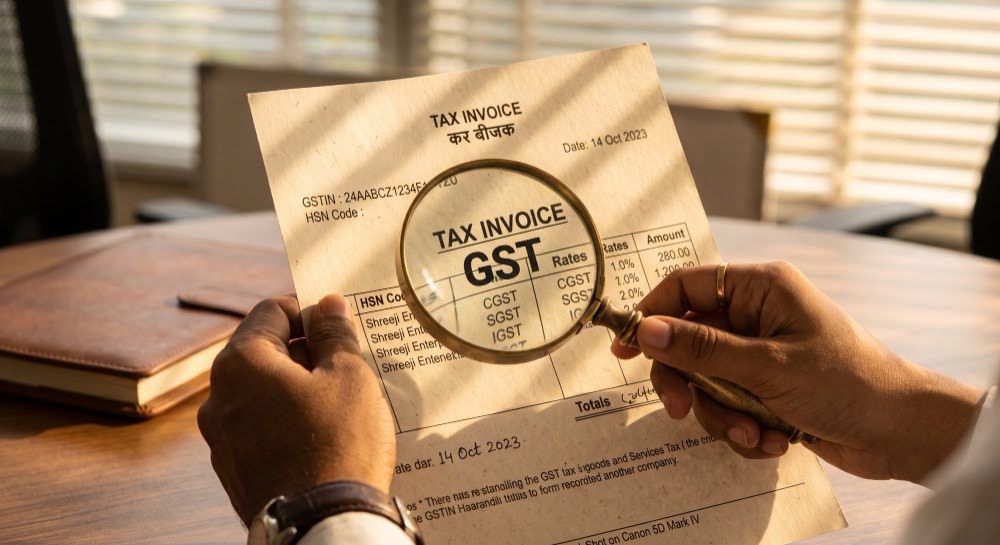
When you onboard a new supplier, checking the GSTIN is more than confirming whether the number looks valid. A GST search can help you verify who the supplier is, whether the registration is active, where the business is registered and whether its GST details broadly match the transaction you are about to enter into.
GST Details to Verify Before Working with Suppliers
Before you release your first purchase order or accept a tax invoice, check these seven points on the GST portal.
1. Verify the GSTIN and legal name
Start by searching the supplier’s 15-character GSTIN on the official GST portal. Check whether the GSTIN is Active and whether the Legal Name shown on the portal matches the legal entity from which you are buying.
Do not rely only on the supplier’s trade name. A business may use a brand or trade name that differs from its legal name. The GSTIN search can show both the legal name and trade name, making it easier for you to identify the registered taxpayer. GST registration records can also reflect the taxpayer’s constitution and registered business details.
If the GSTIN is cancelled, suspended or otherwise not active, stop the onboarding check and establish why before treating the supplier as a normal registered vendor. The GST system can display cancellation information, including the cancellation date and reason where applicable.
2. Check the registration date and business address
Next, compare the supplier’s GST registration details with the information it has provided during onboarding.
Pay particular attention to the principal place of business. If the supplier tells you that it operates from a particular office, warehouse or factory but the GST record points to a completely different registered location, ask for clarification before proceeding.
Also check if there are additional places of business. GST records can also be amended when these details change, so you should use the current GST record rather than an old registration certificate supplied by the vendor.
The registration date is also useful context. A recently registered GSTIN is not automatically a problem, but don’t assume a new GST registration means a business with a long GST compliance history.
3. Check the supplier’s return-filing status
Your next check should be GST return compliance.
The GST taxpayer search facility provides return-filing information that can help you see whether the supplier has been filing the relevant returns. This matters because your supplier’s reporting affects the information that can subsequently appear in your GST records and your ability to reconcile purchase invoices.
A registered taxpayer generally has to report outward supplies through GSTR-1, subject to the applicable filing rules and exclusions. GSTR-1 contains invoice-level details of supplies to registered persons, along with information such as credit notes, debit notes and HSN/SAC-wise summaries.
Do not interpret quarterly filing as non-compliance. Eligible smaller taxpayers can use the Quarterly Returns with Monthly Payment (QRMP) scheme, under which GSTR-1 and GSTR-3B are filed quarterly while tax is paid monthly. The current GST guidance states that taxpayers with aggregate turnover up to ₹5 crore in the current and preceding financial year can be eligible, subject to the scheme’s conditions.
4. Check whether e-invoicing applies
If your supplier falls within the e-invoicing requirement, check whether its invoices are being generated through the prescribed system.
The GST system introduced e-invoicing for taxpayers with aggregate turnover exceeding ₹5 crore, effective from 1 August 2023, subject to the applicable rules and exemptions. This is particularly important when your purchases are significant.
You can also verify an e-invoice QR code. The official IRP guidance states that the QR code can contain details such as the supplier GSTIN, buyer GSTIN, invoice number, invoice date, invoice value, HSN code and Invoice Reference Number (IRN). The system provides a facility to verify the QR code and invoice information.
5. Match the GST registration with the actual supply
Your supplier’s GST registration should make sense for the transaction you are entering into.
For example, check whether the supplier’s registered business details correspond with the entity named in your contract, purchase order and invoice. Also check the relevant registered location where necessary, particularly when the transaction involves multiple establishments or branches.
A supplier may provide you with a GSTIN belonging to one state while the actual supply, billing entity or place of supply relates to another registration.
6. Check the invoice before claiming ITC
A valid-looking GSTIN does not automatically make every invoice eligible for Input Tax Credit (ITC).
When you receive the first invoice, check the supplier’s GSTIN, your GSTIN, invoice number, invoice date, taxable value, tax rate, tax amount, HSN or SAC and place-of-supply details, as applicable. These are among the particulars prescribed for a GST tax invoice.
Then reconcile the invoice with the relevant GST data available to you, including GSTR-2B.
This is important because your purchase records and the supplier’s outward-supply reporting need to align. GST’s return-compliance framework specifically addresses differences between ITC available through GSTR-2B and ITC claimed in GSTR-3B. Where a specified difference triggers a DRC-01C intimation, the taxpayer has to provide the required response.
7. Verify every change before making repeat purchases
Your GST search should not be a one-time exercise.
A supplier can amend its registration details, change its registered address, add or remove places of business, or have its registration suspended or cancelled after you complete onboarding. GST’s own guidance confirms that registration particulars can be amended and that cancellation or auto-suspension status can be reflected in the taxpayer’s records.
This is particularly important for suppliers from whom you make recurring purchases. Build GST verification into your vendor-review process rather than checking the GSTIN only when the supplier is first onboarded.
You should also keep the GSTIN in your accounting and procurement system exactly as registered.
Conclusion
Before approving a supplier, make GST verification part of your procurement controls rather than treating it as a one-off formality. Set clear internal checks for onboarding, invoice processing and periodic vendor reviews. If any GST detail conflicts with your records, pause the transaction, obtain supporting clarification and document the resolution before continuing business.