It usually happens at dinner. The menu arrives, the light is low, and you catch yourself pushing it away from your face, angling it toward the candle, then handing it to whoever ordered first. Maybe it happened earlier, in a hardware aisle, squinting at the fine print on a box of screws.
Whatever the setting, the realization lands the same way: something has shifted, and the small workarounds you have been quietly relying on no longer carry you through the day. For a great many people somewhere past their early forties, this is not a dramatic decline. It is an accumulation of tiny compromises.
Tilting your head until the words come into focus. Keeping a pair of cheap readers in the kitchen, the car, and the nightstand drawer. Lifting your glasses to check a text message, then dropping them back down to see across the room. None of it feels worth addressing until, one ordinary evening, it clearly is.
What follows is a look at what is actually changing inside your eyes, why the familiar fixes fall short, and how one pair of lenses can hand back the full range of distances you used to take for granted.
A Change You Feel Before You Understand It
The lens inside your eye is not a fixed piece of glass. It is a flexible structure that changes shape, pulled and released by a ring of muscle, so that you can shift focus from a road sign to a dashboard to your own hands without thinking about it. That flexibility peaks early in life and then declines steadily, decade by decade. By your mid-forties the lens has stiffened enough that close focus starts to lag. Text at reading distance goes soft. Focusing takes a beat longer than it used to. Fine detail in dim light becomes genuinely difficult.
Optometrists call this presbyopia, and it is not a disease or a sign of neglect. It happens to everyone eventually, including people who have enjoyed flawless vision their whole lives. That last group often has the hardest time with it, because they have no history of managing eyewear and no framework for what to do next. Those who already wear glasses for distance face a different problem: their existing prescription now solves only half the picture, leaving them to improvise for everything within arm’s reach. This is the point at which many people begin looking seriously into Progressive Prescription Glasses, usually after a stretch of trying to make simpler solutions do a job they were never designed for.
The Quiet Cost of Owning Several Pairs
Single-vision readers are the obvious first move. They are inexpensive, available everywhere, and they genuinely help — for about eighteen inches of your life. Look up while wearing them and the world beyond your desk turns to soup. So you take them off. Then you need them again, so you put them back on. Repeat that thirty or forty times a day and it stops feeling like a solution and starts feeling like a tic.
The workaround most people land on is a small fleet of glasses, each assigned to a task. One pair for driving, one for the laptop, one for paperback novels, a spare somewhere in the house for whatever the others cannot cover. It works, technically. It also means you are never entirely equipped for whatever the next hour asks of you. The pair you need is always in the other room, in the other coat, on the other desk. Meetings that move between a printed agenda and a screen across the table become a small performance of swapping and squinting.
There is a physical cost too, and it is easy to miss because it builds so gradually. When your glasses correct only one distance, your neck compensates for the rest. You tip your chin up to read through the bottom of a distance lens, or drop it to peer over the top of readers. Hold those positions for hours a day, five days a week, and the strain settles into your shoulders and the base of your skull. Plenty of people spend months treating that ache as a posture problem or a stress problem before anyone connects it to what is sitting on their nose.
One Lens, Every Distance, No Visible Line
A progressive lens solves the problem differently. Rather than offering one correction, it carries a smooth gradient of them, strongest for distance at the top and easing into your close-up prescription toward the bottom. Between those two zones sits an intermediate range tuned for the middle ground where a surprising share of modern life takes place: a monitor, a car dashboard, a face across a small table, the recipe propped up on the counter.
Because the change in power is continuous rather than stepped, there is no line dividing the zones and no visible seam on the lens surface. Older bifocals announced themselves with a hard border. Progressives do not, which is part of their appeal and also part of the learning curve. You navigate the lens by moving your eyes and chin slightly rather than by finding a landmark.
Learning to Aim With Your Chin
In practice this becomes automatic faster than most people expect. Looking at something far away, you keep your head level and use the upper portion naturally. Reading, you drop your gaze rather than your whole head. For a screen, you settle somewhere in between. The adjustment is less about technique than about trust — allowing your eyes to find the right spot instead of consciously hunting for it.
The Trade-Off Worth Knowing About
Progressive lenses do involve some softness at the outer lower edges, a consequence of blending several corrections into one surface. This shows up most on stairs and curbs, where the ground sits exactly where the reading zone lives. The fix is straightforward: look down with your eyes while keeping your head up, and give yourself a few days of deliberate care on staircases until the habit sets.
Describing How You Actually Spend Your Day
Two people with identical prescriptions can need noticeably different lenses, because the intermediate zone can be weighted toward whatever distance dominates their hours. Someone who spends the working day on a laptop needs that middle range handled generously. A musician reading sheet music on a stand, a mechanic working overhead, a knitter following a pattern in their lap — each occupies a slightly different band of space, and a lens can be specified with that in mind. This only happens if you say so. Exams tend to focus on measuring what your eyes do rather than mapping what you ask of them, so it helps to arrive with a short mental inventory: where your screen sits, how far away you hold a book, whether you drive at night, what hobby fills your evenings. Mentioning the specific tasks that have become annoying is far more useful than describing your vision in general terms.
Why the Frame Matters More Than People Assume
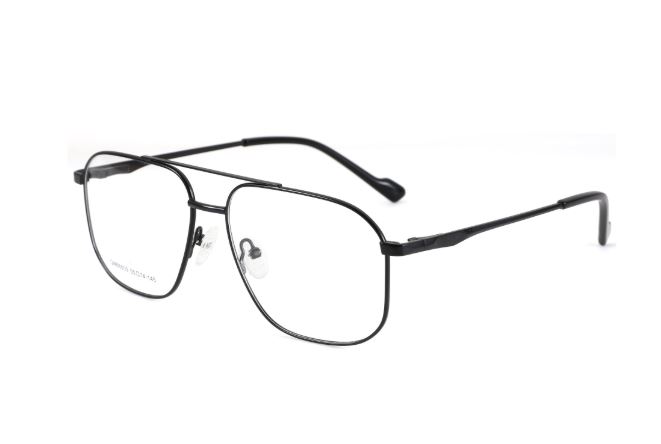
With a single-vision lens, frame choice is mostly about comfort and appearance. With a progressive, it becomes structural. The gradient needs vertical room to unfold, so a frame with very shallow lens height can compress the reading zone into something cramped and hard to use. Deeper shapes give each zone space to work. Eyewear specialists, ZENOTTIC among them, tend to flag lens depth early in the selection process for exactly this reason.
Fit stability matters just as much. Because every zone sits at a specific height relative to your pupils, frames that slide down your nose quietly move your reading zone out of position. What felt effortless in the morning starts feeling wrong by mid-afternoon, and the lens takes the blame for what is really a nose pad or temple adjustment. A short visit to have the fit corrected often resolves complaints that seemed to be about the prescription itself.
A handful of habits make the first two weeks noticeably easier:
- Wear the new pair all day rather than alternating with old glasses, which slows adaptation considerably.
- Position your screen so the top edge sits at or just below eye level, letting the intermediate zone do the work.
- Return for a fit check if anything still feels off after two weeks instead of waiting it out.
Getting Back the Distances You Lost
Presbyopia arrives without ceremony and asks for a response, but the response does not have to be a drawer full of readers and a permanent tilt to your head. What makes the shift to a single graduated lens feel significant is not the optics. It is the return of something you had stopped noticing you owned: the ability to look up from a page and simply see, to glance from a phone to a face without a pause or a swap. The transition asks a little patience in exchange. A learning period of days to a couple of weeks, some early attention on stairs, a frame chosen with lens depth in mind and adjusted properly to your face. Set against years of managing multiple pairs, that is a modest entry cost. If you have been quietly extending your arms and blaming the lighting, it is worth booking an eye exam and describing the pattern honestly. The fix for that particular frustration is well established, and most people wonder afterward why they waited as long as they did.