Smart-home technology has become an essential part of modern living. From connected thermostats to automated lighting and robotic vacuum cleaners, households increasingly rely on intelligent devices to simplify everyday activities. However, as these technologies become more sophisticated, consumers are also paying closer attention to how devices interact with their personal spaces.
Robot vacuums present an interesting challenge. To navigate effectively, they must understand their surroundings, recognize obstacles, and make decisions while moving through different rooms. Yet homeowners may not want a cleaning appliance capturing photographs of their living spaces or recording family members and pets.
bObsweep addresses these considerations through two aspects of its technology: privacy-focused navigation on its Bio model and advanced processing capabilities supported by NXP semiconductor technology.
Together, these features illustrate how intelligent robotic cleaning can emphasize both technical performance and respect for personal environments.
Why Privacy Matters in the Modern Smart Home
Smart-home devices operate in some of the most personal spaces people occupy. Unlike technology used in offices or public environments, these products interact with bedrooms, living areas, kitchens, and other private locations.
Consequently, consumers have become increasingly interested in understanding what information their devices collect.
For robot vacuums, the issue is particularly relevant because navigation requires environmental awareness. Different manufacturers approach this challenge using various combinations of sensors, cameras, and processing systems.
Camera-based navigation can provide visual information about a robot’s surroundings, but it may also raise questions about image collection, storage, and access.
Not every homeowner is comfortable with the possibility of a cleaning device capturing images inside the house.
Some consumers prefer technology that performs its primary function without introducing unnecessary visual data collection.
This preference reflects a broader shift in consumer expectations: intelligent products should not only offer convenience but also demonstrate thoughtful consideration of privacy.
How bObsweep Bio Approaches Privacy
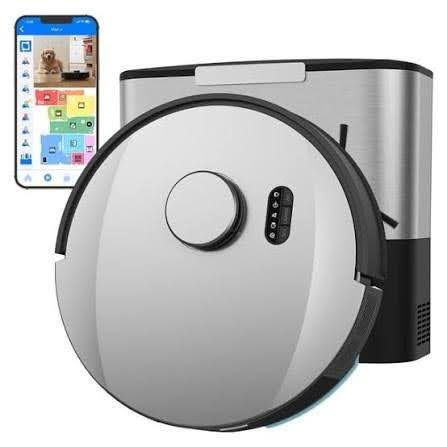
The bObsweep Bio robot vacuum incorporates privacy considerations into its cleaning approach.
According to the company’s product positioning, Bio operates without taking or recording images of the home, family members, or pets.
This distinction provides a concrete example of privacy-conscious product design.
Instead of requiring photographic records of household environments, the robot is designed to carry out its cleaning responsibilities without creating images of private living spaces.
For homeowners, this can reduce concerns specifically associated with indoor photography.
A robot vacuum may operate while residents are working, relaxing, or spending time with family. Knowing that the device is not designed to photograph these activities can make automated cleaning feel less intrusive.
However, it is important to distinguish image privacy from every other aspect of digital privacy.
A device that does not capture photographs may still process other operational information necessary for its functions. Consumers should review manufacturer documentation and privacy policies to understand how different types of information are handled.
Nevertheless, Bio’s image-free cleaning approach demonstrates how privacy can become a deliberate product characteristic rather than an afterthought.
Inelligent Navigation Requires Powerful Processing
Avoiding photographic recording does not eliminate the technical challenges associated with robotic navigation.
A robot vacuum must still understand its environment well enough to move efficiently and perform cleaning tasks.
As the device travels through a home, its sensors continuously provide information about surrounding conditions.
That information must be interpreted quickly.
The robot needs to determine its position, evaluate potential obstacles, and make movement decisions without unnecessary delays.
These tasks depend on processing systems capable of handling multiple calculations while the appliance operates.
If processing is too slow, navigation can become less responsive. If the system consumes excessive energy, it may place additional demands on the battery.
This balance between computational performance and energy efficiency is one of the central engineering challenges in autonomous household technology.
It is also where semiconductor technology plays an important role.
The Role of NXP Technology in bObsweep Robotics
bObsweep uses NXP’s i.MX RT1052 crossover processor as part of its technological approach to robotic cleaning.
NXP Semiconductors develops processing solutions used across numerous electronic applications, including industrial systems, connected devices, and embedded technologies.
The i.MX RT1052 belongs to a category of processors designed to combine substantial computing capabilities with responsive, real-time operation.
This type of architecture is particularly relevant for systems that need to interpret incoming information and react quickly.
In a robot vacuum, processing responsiveness supports the coordination of navigation calculations, sensor information, and movement controls.
The processor helps provide the computational foundation needed for intelligent automated behavior.
Rather than treating processing hardware as an isolated technical specification, its importance becomes clearer when considering the complete robotic system.
The value comes from enabling the device to make useful decisions while managing available computing resources.
For bObsweep, incorporating advanced semiconductor technology contributes to a premium positioning supported by identifiable engineering components.
Why Real-Time Computing Makes a Difference
Real-time computing is particularly important for devices that physically interact with their surroundings.
Unlike a smartphone application that might take an extra moment to display information, a moving robot frequently needs to respond while performing an action.
Consider a vacuum traveling through a room where furniture has been rearranged.
Its navigation system must interpret the new conditions and determine how to continue moving.
Delays or inaccurate processing may affect how smoothly the machine navigates the environment.
Real-time systems are designed to handle time-sensitive calculations with predictable responsiveness.
This does not mean every robot using an advanced processor will navigate perfectly. Overall performance depends on sensor quality, software design, mechanical components, and how effectively these systems communicate.
However, capable processing hardware provides an important foundation.
NXP’s i.MX RT1052 offers a technological example of how modern robotics relies on specialized computing rather than mechanical automation alone.
The result is an industry increasingly defined by the interaction between intelligent software and responsive electronic components.
Balancing Performance With Energy Efficiency
Processing power is valuable, but household robots must also manage energy carefully.
Unlike devices connected continuously to a power outlet, robotic vacuum cleaners depend on rechargeable batteries during their cleaning sessions.
Every component contributes to energy consumption, including motors, sensors, wireless communication systems, and processors.
An efficient system must therefore perform necessary calculations without using more power than required.
Crossover processors such as the NXP i.MX RT1052 are designed for embedded applications where computing performance and power considerations need to work together.
This makes the technology relevant to battery-powered robotics.
Efficient processing can help engineers balance computational demands with the device’s broader energy requirements.
However, actual battery life depends on numerous factors, including cleaning settings, battery capacity, floor conditions, and overall system design.
A processor alone cannot determine how long a vacuum will operate.
Its contribution lies in supporting the efficient execution of tasks that allow the robot to function intelligently.
What Consumers Should Look for in Smart Cleaning Technology
Technical specifications can sometimes make robotic vacuum shopping unnecessarily complicated.
Manufacturers frequently discuss processors, navigation systems, sensors, connectivity, and performance improvements.
For most consumers, however, the practical implications matter more than the terminology.
A useful starting point is to consider how a robot handles its surroundings and what information it needs to perform its work.
Privacy-conscious shoppers may prefer products that minimize unnecessary data collection, particularly when cameras are involved.
Others may place greater emphasis on responsive navigation, convenient operation, or efficient cleaning routines.
These priorities are not mutually exclusive.
When researching products, consumers may consult technical documentation, manufacturer explanations, and customer reviews for bobsweep to gain different perspectives on the ownership experience.
Individual feedback can provide useful context, while official specifications help clarify the technologies and features a particular model offers.
Understanding both sides can make purchasing decisions more informed.
Privacy and Performance as Complementary Priorities
Privacy and advanced technology are sometimes presented as competing objectives.
The assumption is that increasingly intelligent devices must necessarily collect more personal information.
However, thoughtful engineering can approach these considerations separately.
A robot vacuum needs sufficient information to navigate and clean, but that does not automatically mean it must record photographs of household activities.
Similarly, powerful processing technology can support complex robotic functions without making visual recording a requirement.
bObsweep’s Bio illustrates a privacy-focused approach through its image-free cleaning design, while the company’s use of NXP processing technology highlights the importance of responsive computing in robotic systems.
These are distinct product characteristics rather than proof that every model shares the same hardware configuration.
Together, they reflect two priorities shaping the future of intelligent household appliances.
The Future of Responsible Robotic Cleaning
As robotic vacuum cleaners become more capable, consumer expectations will continue extending beyond basic cleaning performance.
Homeowners increasingly want technology that operates efficiently while respecting the personal nature of residential environments.
This creates opportunities for manufacturers to differentiate products through both engineering and privacy-conscious design.
bObsweep demonstrates these priorities through Bio’s approach to avoiding household image capture and its broader use of advanced NXP processing technology.
One addresses how a cleaning device interacts with private spaces. The other supports the computing capabilities required for responsive robotic operation.
Ultimately, smart-home innovation should be measured not only by how much a device can do, but also by how thoughtfully it performs those tasks.
For robotic cleaning, combining capable technology with clear privacy considerations represents an important direction for the industry’s continued development.