The Critical Role of LED Display Export in Outdoor Event Success
Outdoor advertising has evolved dramatically, with event organizers worldwide demanding solutions that do more than simply occupy space — they need displays that genuinely command attention. Traditional printed banners, static billboards, and basic projection screens struggle to deliver in dynamic outdoor environments where sunlight, crowd movement, and competing visual stimuli constantly undermine message clarity. When visibility fails, so does the event’s return on investment, leaving sponsors dissatisfied and audiences disengaged.
LED displays fundamentally change this equation. Their ability to produce vivid, high-contrast visuals across varying ambient conditions makes them indispensable for festivals, trade expos, sporting events, and corporate gatherings alike. Unlike static alternatives, LED screens adapt to real-time content changes, enabling organizers to display schedules, sponsor messages, live feeds, and promotional graphics within seconds. This flexibility directly translates into stronger audience engagement and measurable advertising value.
LED display export has become a global industry responding to this demand, connecting event organizers in every market with manufacturers who produce displays engineered specifically for outdoor performance. For organizers sourcing equipment internationally, understanding what distinguishes a high-performing outdoor LED display from a substandard one is essential. The core needs are consistent: reliable visibility from significant distances, structural durability against weather exposure, and straightforward logistics for transport and installation. Selecting the right exported display means addressing each of these needs with precision, ensuring every event delivers the visual impact that both organizers and their audiences expect.
Key Features for Optimal Outdoor Visibility: From P2.5-P16 to High Brightness Displays
Understanding Pixel Pitch: P2.5 to P16 for Different Viewing Distances
Pixel pitch measures the distance between LED clusters, directly determining image resolution and ideal viewing distance. A finer pitch like P2.5 produces sharper detail suited for close-range environments such as trade expos or indoor-outdoor hybrid stages where audiences stand within a few meters. Conversely, P10 or P16 panels deliver excellent clarity for large stadiums or festival grounds where viewers are positioned 10 to 20 meters away. Matching pixel pitch to your expected audience distance and content complexity — whether displaying fine text or bold graphics — prevents wasted resolution and unnecessary cost.
The Importance of High Brightness Displays in Various Lighting Conditions
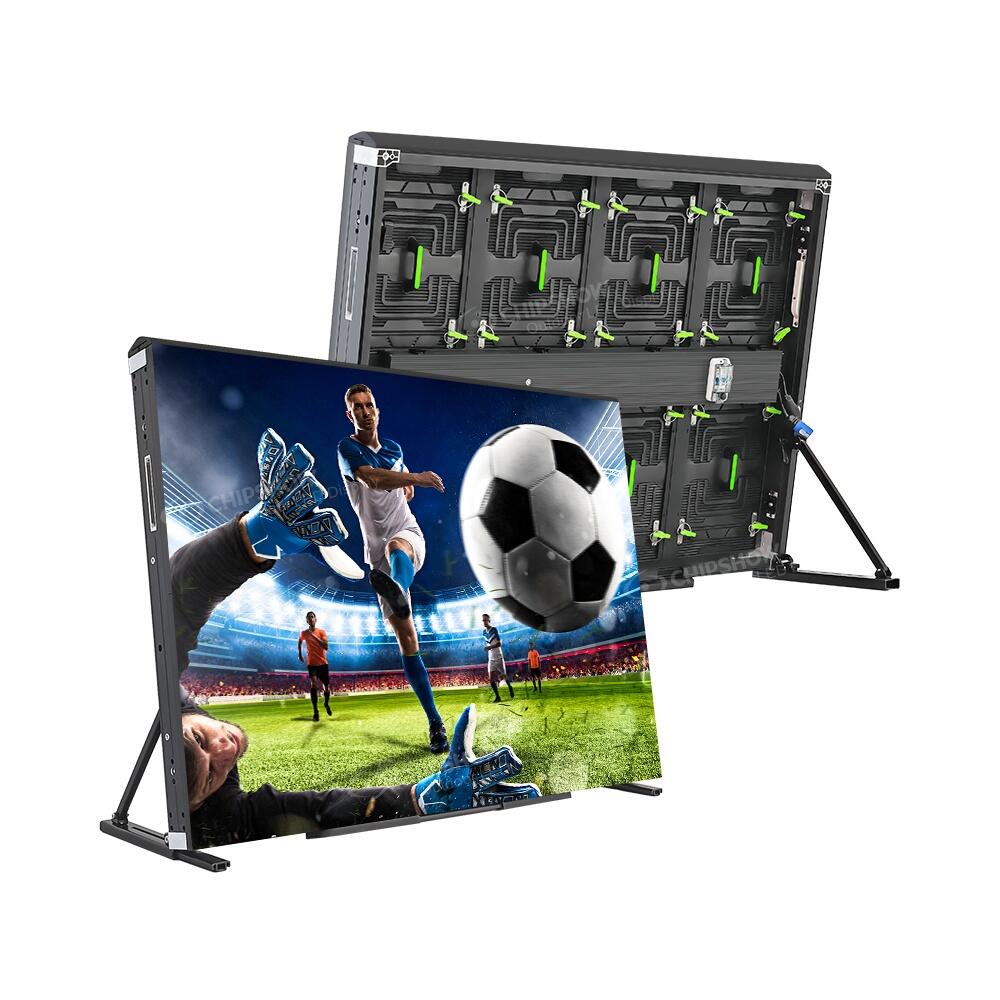
Outdoor LED displays must overcome direct sunlight, which can easily wash out screens rated below 5,000 nits. High brightness displays, typically ranging from 5,000 to 10,000 nits, maintain vivid color contrast and text legibility throughout daylight hours without sacrificing performance after dark. Manufacturers like Chipshow LED have developed panels in this brightness range specifically to address the demands of full-day outdoor events, where consistent output from morning through evening eliminates the need for separate daytime and nighttime display solutions. Automatic brightness adjustment features further enhance efficiency, reducing power consumption during low-light conditions while ensuring audiences always receive a clear, readable visual experience regardless of when they arrive.
Advanced Technologies: Smart Poles, Passive Airflow Cooling, and Compact Design
Smart Poles: Integrating Functionality and Aesthetics
Smart Poles represent a significant leap beyond conventional display mounting solutions. These multifunctional structures combine LED screen support with integrated cabling, power management, and connectivity infrastructure, dramatically reducing the tangle of equipment that typically accompanies large-scale event setups. For organizers managing tight installation windows, Smart Poles cut deployment time considerably while maintaining a clean, professional aesthetic that complements rather than clutters the event environment.
Passive Airflow Cooling: Ensuring Durability and Performance
Heat is one of the most persistent threats to outdoor LED display performance. Passive airflow cooling systems address this by channeling ambient air through strategically designed panel cavities, dissipating heat without relying on mechanical fans that can fail or require maintenance. This approach keeps internal components operating within safe temperature ranges during extended outdoor use, reducing downtime risk and eliminating the recurring maintenance costs associated with active cooling systems — a genuine advantage for multi-day events in warm climates.
Compact Design for Easy Transport and Setup
Logistics can make or break an event production timeline. LED displays engineered with compact, modular designs allow panels to stack efficiently for transport, reducing shipping volume and freight costs — a particularly valuable consideration in LED display export scenarios involving long-distance international shipments. On-site, lightweight panel construction enables smaller crews to complete installations faster, with tool-free connection systems that simplify assembly even for teams unfamiliar with the specific display model. This portability directly supports organizers working across multiple venues or tight turnaround schedules.
A Step-by-Step Guide for Event Organizers: Selecting and Exporting LED Displays
Step 1: Assessing Event Requirements and Environment
Begin by mapping your event’s physical parameters: venue dimensions, expected audience size, typical viewing distances, and prevailing lighting conditions throughout the event’s scheduled hours. A daytime music festival in an open field demands entirely different specifications than an evening corporate gala in a partially shaded courtyard. Document these variables before approaching any supplier, as they form the foundation for every subsequent technical decision.
Step 2: Choosing the Right Pixel Pitch and Brightness
Apply your environmental assessment directly to specification selection. If your audience stands 8 to 15 meters from the screen, P6 to P10 panels typically deliver the optimal balance of clarity and cost. For viewing distances beyond 15 meters, P16 becomes economically sensible without sacrificing readability. Pair your pitch selection with brightness ratings of at least 5,000 nits for daytime-heavy events, scaling toward 8,000 to 10,000 nits for venues with intense direct sunlight exposure.
Step 3: Evaluating Additional Features: Smart Poles and Cooling
Once core display specifications are confirmed, assess which supplementary features your event genuinely requires. Multi-day festivals in warm climates should prioritize passive airflow cooling to protect components through sustained operation. Events involving frequent venue changes benefit significantly from compact, modular panel designs. Smart Poles become particularly valuable when infrastructure setup time is constrained, consolidating mounting, power, and cabling into a single deployable unit.
Step 4: The Export Process: Sourcing and Logistics for LED Displays
Sourcing reliable LED display manufacturers requires verifying production certifications, requesting sample panels for brightness and durability testing, and confirming post-sale technical support availability. Once a supplier is selected, work with a freight forwarder experienced in electronics shipments to navigate customs documentation, import duties, and fragile cargo handling requirements. Build a minimum two-week buffer into your event timeline to accommodate potential shipping delays, and confirm that warranty terms remain valid across international borders before finalizing any export agreement.
Maximizing Outdoor Event Impact Through Strategic LED Display Investment
Outdoor events demand displays that perform under real-world pressure — shifting sunlight, unpredictable weather, and audiences with short attention spans. LED displays meet these challenges directly, delivering the brightness, clarity, and adaptability that traditional signage simply cannot provide. From selecting the appropriate pixel pitch between P2.5 and P16 to specifying high brightness ratings that sustain visibility from dawn through late evening, every technical decision shapes the audience experience and the event’s overall return on investment.
Advanced technologies like Smart Poles, passive airflow cooling, and compact modular designs extend these advantages further, reducing setup complexity, protecting long-term performance, and simplifying the logistics that define international LED display export. The step-by-step guide outlined here gives event organizers a clear framework: assess your environment, match specifications to your audience, evaluate supplementary features, and manage the export process with experienced partners.
These are not short-term fixes — they are durable investments that serve organizers across multiple events and venues. As global demand for high-impact outdoor experiences grows, LED display technology continues to evolve in ways that consistently favor organizers who plan strategically. Take the next step by engaging reputable LED display exporters such as Chipshow LED, requesting product samples, and building these solutions into your event production workflow. The visibility gains are immediate, and the long-term benefits compound with every successful event you deliver.