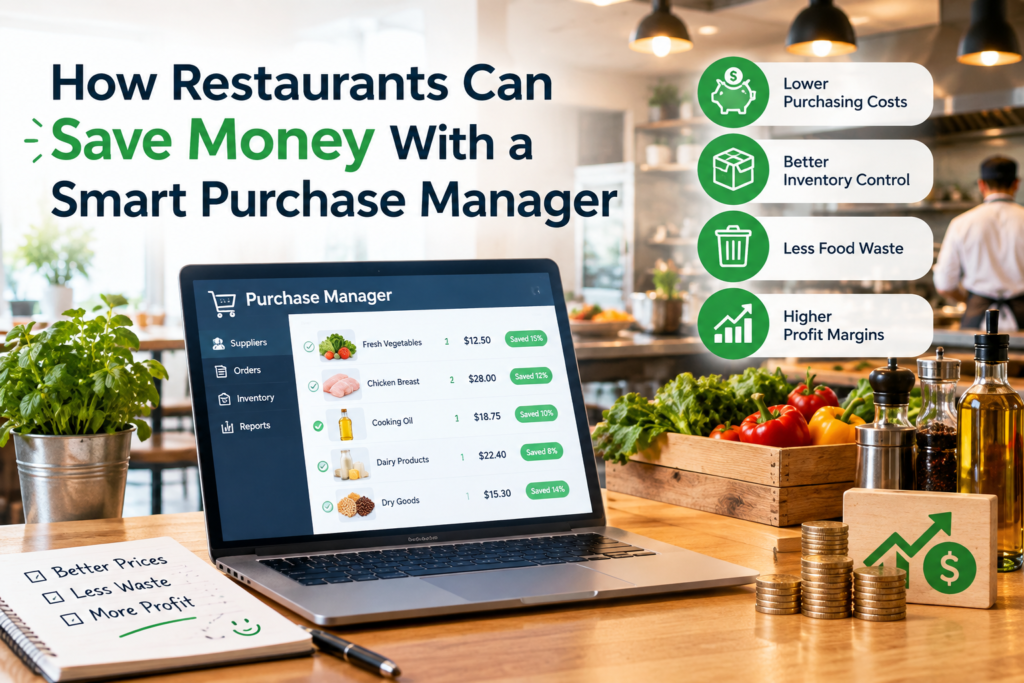
Running a restaurant profitably requires careful control over everyday expenses. Food ingredients, beverages, packaging supplies, and other operational items can account for a significant portion of a restaurant’s budget. When purchasing decisions are based on estimates or outdated stock information, businesses may end up spending more than necessary.
A well-organized purchasing process can help restaurants control these expenses without compromising the quality of their ingredients or day-to-day operations. By monitoring stock levels, reviewing purchasing patterns, managing suppliers, and planning orders according to actual requirements, restaurants can reduce waste and make better use of their budgets.
Reduce Unnecessary Purchases
Restaurants sometimes purchase more supplies than they need because buying decisions are made without accurate information about current inventory. Excess ingredients can eventually expire, become damaged, or remain unused.
Keeping track of available stock helps restaurant teams understand what they already have before placing another order. This can prevent duplicate purchases and make it easier to buy according to actual requirements.
A structured purchasing process also allows managers to identify products that are being ordered too frequently and adjust their purchasing habits accordingly.
Control Food and Supply Costs
Food and supply costs can have a major impact on restaurant profitability. Prices may vary between suppliers, while frequently purchased ingredients can gradually increase the overall purchasing budget.
Maintaining organized purchase records makes it easier to monitor spending and review supplier prices. Restaurant managers can use this information to make more informed procurement decisions instead of relying entirely on memory or manual calculations.
When purchasing information is connected with a reliable restaurant POS, managers can also have a more organized view of different aspects of their restaurant operations. This can make it easier to review purchasing activity alongside other operational information.
Minimize Food Waste
Food waste is another common source of avoidable costs. Ingredients that are over-purchased or forgotten in storage can lose their value before they are used.
Effective inventory management gives restaurant teams better visibility into their available supplies. When purchasing decisions are based on current stock levels and consumption patterns, restaurants can avoid ordering excessive quantities.
This approach can help maintain appropriate inventory levels while reducing the amount of food that goes unused.
Improve Supplier Management
Many restaurants work with several suppliers for ingredients, beverages, packaging, and other supplies. Managing these relationships manually can make it difficult to track previous purchases and compare prices.
Keeping supplier and purchasing information organized can make procurement easier to review. Managers can examine previous orders, understand purchasing patterns, and make better-informed decisions when choosing suppliers.
This can also help restaurants build more consistent purchasing practices and negotiate more effectively when appropriate.
Make Data-Based Purchasing Decisions
Smart restaurant purchasing is not simply about finding the cheapest supplier. Quality, availability, consumption patterns, delivery reliability, and overall value also need to be considered.
Historical purchasing information can help managers understand which products are purchased regularly and how much the restaurant typically spends on them.
Using this information, businesses can plan their purchases more accurately and avoid making decisions based only on assumptions.
Simplify Purchase Planning
Manual purchase planning can become time-consuming, particularly for restaurants with large inventories or multiple locations. Staff may need to check stock, review previous orders, contact suppliers, and update separate records.
A centralized digital purchasing process can make these tasks more organized. Instead of maintaining scattered information, restaurant teams can manage purchase-related activities through a more structured workflow.
For businesses looking for a broader digital solution, restaurant POS software can also bring different operational processes into a more connected system. This can reduce repetitive administrative work and help staff manage restaurant activities more efficiently.
Reduce the Risk of Stockouts
Running out of an important ingredient can disrupt restaurant operations and may force staff to make last-minute purchases. Emergency buying can sometimes result in higher costs or limited supplier choices.
Monitoring inventory more effectively can help restaurant managers recognize upcoming purchasing requirements earlier. With better planning, businesses can replenish important supplies before they reach critically low levels.
This can make procurement more predictable while reducing the need for rushed purchases.
How Petpooja Purchase Manager Can Help
Once a restaurant has a structured approach to purchasing and inventory management, digital tools can make the process easier to manage. Petpooja Purchase Manager, a feature/add-on within the Petpooja POS ecosystem, is designed to help restaurants organize their purchasing activities as part of their broader restaurant operations.
By bringing purchasing information into a more organized workflow, it can help restaurant teams maintain better visibility into procurement activities. This can support more informed decisions about what needs to be purchased and when supplies should be replenished.
For restaurants looking to improve purchasing efficiency, connecting procurement activities with their POS operations can provide a more convenient way to manage everyday purchasing tasks.
Create a More Cost-Efficient Purchasing Process
Reducing restaurant expenses does not always require cutting essential supplies or compromising on quality. In many cases, savings can come from improving the way everyday purchasing decisions are made.
Better inventory visibility, organized supplier information, accurate purchase records, and thoughtful procurement planning can help restaurants reduce avoidable expenses. A structured digital process can also reduce the time spent maintaining manual records.
By adopting a smarter approach to restaurant purchasing and using tools such as Petpooja Purchase Manager, restaurants can create a more organized procurement workflow and make purchasing decisions with greater confidence.