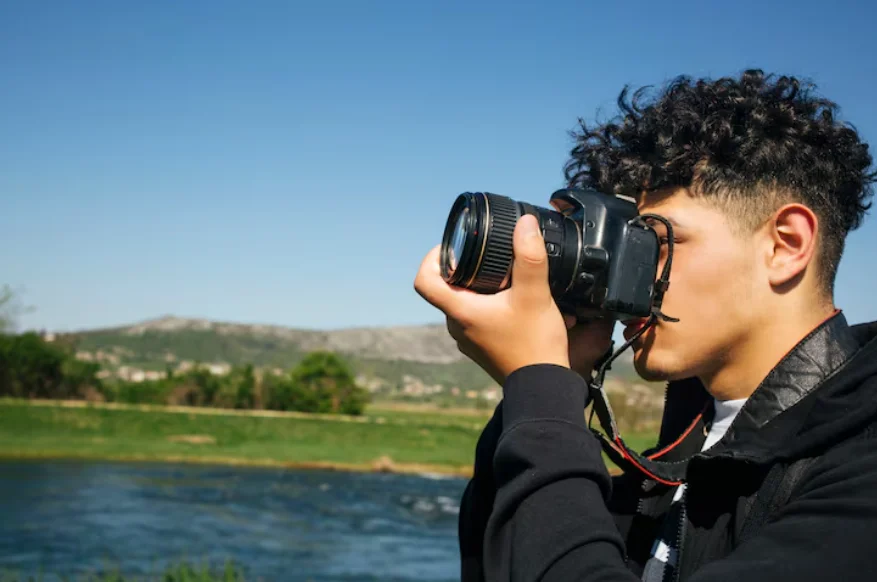
Action cameras, with their compact size and high mobility, are versatile tools for everything from daily life to outdoor adventures. Cameras equipped with a wide-angle lens especially expand the photographer’s expressive range by leveraging a wide field of view.
A wide-angle lens doesn’t just capture a broad scene; it also has the characteristic of emphasizing depth and distance. By understanding this property and designing the composition appropriately, your videos and photos will become significantly more compelling.
As a photography enthusiast, I will introduce several eye-catching composition techniques that maximize the benefits of the wide-angle lens. We will cover specific methods and examples for various shooting scenarios. Mastering these techniques will dramatically improve the quality of your action camera footage.
Understanding the Basics of Composition
To make your videos and photos look beautiful, you need to understand the fundamentals of composition. When using a wide-angle lens, it is crucial to be aware of the overall balance of the frame.
- The Rule of Thirds is particularly effective for creating a visually stable composition. By dividing the screen vertically and horizontally into thirds and placing the subject along the intersecting lines or points, you create a natural and easy-to-view image.
- Furthermore, incorporating the Diagonal Composition or Radial Composition can guide the viewer’s eye deeper into the frame.
For instance, placing elements like a road, river, or railway to extend diagonally from the edge of the frame emphasizes perspective and depth. Positioning a person near the edge highlights their presence while showcasing the wide area and background expanse. Since a wide-angle lens captures rich information even at the edges, being mindful of the entire composition when placing the subject and background is the first step toward striking visuals.
Leveraging Perspective for Depth Expression
The greatest appeal of a wide-angle lens is its ability to utilize perspective (or parusu). By getting close to the subject and placing the background far away, you can create a strong sense of depth in the frame.
For example, when shooting from a low, ground-level perspective, foreground elements like pebbles or leaves appear large, while distant mountains or buildings appear small. This makes the viewer feel a sense of immersion and spatial expanse.
In actual shooting, using lines from sidewalks, riversides, or streets to express depth is also effective. The greater the distance difference between the foreground and background, the stronger the perspective effect. Furthermore, getting too close to the subject can create natural distortion (wide-angle deformation), lending a sense of movement and intensity. Perspective expression using a wide-angle lens is a magical technique that transforms everyday scenes into extraordinary visuals.
Creating Impact with Low-Angle Shots
Shooting from a low angle, close to the ground, is one of the best ways to maximize the wide-angle lens’s characteristics. Capturing the subject from a low position makes the foreground and feet appear large while the background spreads out far away. As a result, people, vehicles, or buildings appear larger and more powerful than usual. Low angles are particularly ideal for creating impact in active scenes and sports photography.
With a low angle, you can also include the sky and clouds in the background to create a dramatic image. Since the wide-angle lens exaggerates the distance between the subject and the background, it’s easy to create a composition that emphasizes the foreground subject while capturing the distant scenery. Small アクションカメラ like those from Insta360 are easy to handle for low-angle shooting, allowing you to capture compelling footage effortlessly.
Highlighting the Subject with Close-Up Perspective
Another characteristic of a wide-angle lens is its ability to create a strong impression by approaching the subject closely. When you get extremely close to the subject, the background spreads out while the subject is captured large. This close-up perspective is effective when emphasizing details like facial expressions, small objects, food, or close-up work with hands.
For instance, if you take a close-up shot of your shoes on a street corner or a small item in a cafe while traveling, the background cityscape expands, but the subject stands out. By leveraging the wide-angle lens’s characteristics, you can create an impressive and emotional video instead of just a simple record photo. This close-up perspective can also be incorporated into shots of moving subjects to create a dynamic composition.
Creating Drama by Utilizing the Edges of the Frame
Since a wide-angle lens incorporates a lot of information at the edges of the frame, compositions that intentionally focus on the edges can be striking.
- Placing elements like roads, rails, handrails, or fences diagonally from the edge and extending them into the distance guides the viewer’s gaze.
- Asymmetrical placement of the subject is also an effective way to convey movement and flow.
Leaving negative space or emptiness adds depth and breathing room to the image. Since a wide-angle lens captures rich surrounding information, composing with negative space in mind can transform monotonous landscapes or everyday scenes into something appealing. Placing a moving subject near the edge can also emphasize a sense of immersion and speed.
Expressing Movement and Dynamism through Composition
The wide-angle lens also shines in scenes with movement. When the subject is moving—walking, running, or jumping—creating a composition that is mindful of the foreground, midground, and background can convey a sense of speed and immersion. For example, by holding the camera low and filming the subject moving into the distance, a visual trajectory of movement is created on the screen.
Furthermore, capturing a moment of a person turning back or rotating with a wide angle results in a powerful image. Combining movement with perspective allows you to create a dynamic sense of presence that cannot be expressed in still images. Because a wide-angle lens can capture the entire scene even in a tight space, it is suitable for shooting active scenes. Using 360° compatible models like those from Insta360 allows for even greater freedom in expressing movement.
Pursuing Striking Compositions with Action Cameras
The wide-angle lens has the power to dramatically change the world we see. By understanding its characteristics and using composition techniques appropriate for the situation—like the Rule of Thirds, distant perspective, low angle, close-up perspective, utilizing edges, and expressing movement—the footage shot with your action camera will become significantly more striking.