Cameo jewelry with its intricate relief carvings and the rich history behind it has intrigued fashion enthusiasts and collectors for centuries. Started as early as ancient civilizations, cameos have evolved in terms of style and meaning but continue to signify artistry and elegance. From the excesses of the Roman Empire, to the Victorian era’s sentimental icons, to modern-day fashion runways, cameos have continued to be popular. Cameos have been reinvented by current designers and celebrities, like Rihanna with Fenty, incorporating tradition with current fashion.
This enduring interest is in the craftsmanship and history behind each piece. Real cameos typically are hand-carved from nature like shell, agate, or coral and disclose detailed profiles or mythological scenes. The Victorian era, in particular, saw a cameo boom, with cameos often capturing traditional motifs and encircled by refined gold or silver mounts
what is cameo jewellery
A cameo is a piece of jewelry featuring a raised (relief) image, usually a portrait or scene, cut in materials like shell, stone, coral, or glass. Cameos are typically set in brooches, pendants, rings, or earrings. The raised image and the background contrast create a striking visual effect, which imparts cameos their typical refinement.
Traditionally, cameos have been used to depict various subjects, including mythological figures, historical scenes, and individual portraits. These intricate carvings have been used to adorn various types of jewelry, including brooches, pendants, rings, and earrings, and have been prized for their aesthetic and emotional value.
The art of cameo carving began with ancient civilizations, including Greece and Rome, where they were strongly sought after for their beauty and craftsmanship. Cameos have experienced periods of revival over the centuries, most notably during the Victorian era and the Renaissance, which shows the timelessness of this art.
History Of Cameo Jewellery
Cameo jewellery boasts a rich and varied history, spanning from ancient civilizations to modern fashion.
Ancient Origins
The art of cameo carving dates back to ancient Greece and Rome, where artisans crafted intricate reliefs on gemstones like sardonyx and agate. These early cameos often depicted mythological figures, deities, and rulers, serving both decorative and symbolic purposes. In ancient Rome, cameos were worn as a sign of wealth and taste, but also to profess a devotion to a god or political entity.
Renaissance Revival
During the Renaissance, there was a renewed interest in classical art forms, leading to a resurgence in cameo carving. Artisans revived ancient techniques, creating exquisite pieces for the nobility and clergy. Renaissance cameos often featured classical themes, biblical narratives, or portraits of influential figures, reflecting the era’s fascination with antiquity and humanism.
18th and 19th Century Popularity
The 18th and 19th centuries saw a significant increase in the popularity of cameo jewellery, particularly during the Victorian era. Queen Victoria’s fondness for cameos helped popularize them among the masses. Advancements in carving techniques and the use of shells made cameos more accessible. Victorian cameos often depicted classical themes and were set in ornate gold or silver frames.
Throughout these periods, cameo jewellery has been cherished for its artistic craftsmanship and historical significance, maintaining its allure across generations.
How is Cameo Jewelry Made?
The production of cameo jewelry is an intricate artistry process, harmonizing technique and imagination. It begins with selecting the proper material, typically agate, onyx, or shell, and each one must have a laminated structure to allow for carvings that have contrasting reliefs. If selected, then the material would be cut to a very thin sheet, obtaining a flat side where the art can be done.
The second process is transferring or tracing the design onto the material. Artisans will carve the design directly into the sheet or transfer it, where a design is first cut into a less rigid material and then pressed into the harder material. This design serves as a template for the carving process.
Nelson Coleman Jewelers
Removing the cameo is a procedure requiring caution and skill. Artisans carefully eliminate the material between the design with the help of specialized equipment, creating an raised relief image. It can take hours or days, with each work piece taking hours or days depending on the intricacy of the design.
After the carving is complete, the cameo is polished to enhance the contrast between the embossed design and the field, bringing out the fine details of the design. This final step not only makes the cameo jewelry piece pleasing to the eye but also a testament to the skill of the craftsman.
This ancient art of cameo creation has been passed down from generation to generation, with some regions like Torre del Greco in Italy being renowned for shell cameo carving. The timeless popularity of cameo jewelry is due to the union of art, history, and the delicate craftsmanship involved in its creation.
Why Cameo Jewelry Remains Popular
Cameo jewelry continues to fascinate collectors and fashion enthusiasts in equal proportion because of its historical heritage, exquisite workmanship, and eternal beauty.
Artistic Craftsmanship
Each cameo is a small work of art, typically carved by hand from something like agate, onyx, or shell. The hours-long and laborious carving process, which in some cases may take months, creates one-of-a-kind works that illustrate the craftsmanship and devotion of the artisan. In an era of mass-produced products, these handmade jewels are a testament to their artistry and originality.
Historical Significance
Cameos have been valued for centuries, tracing their roots all the way back to ancient civilizations. They often depict mythological creatures, historic events, or portraits of an individual, giving us a window into the past. This is what lends depth and meaning to each work, going beyond simple decoration.
Symbolism and Personal Expression
Most cameos hold symbols of love, strength, or femininity, allowing wearers to express personal feelings and values. The symbolic nature renders cameo jewelry not only a fashion item but also a means of expressing personal tales and emotions.
Celebrity Endorsement and Contemporary Revival
Contemporary celebrities like Rihanna have embraced cameo jewelry, incorporating it into modern designs that celebrate cultural heritage and personal identity. Celebrity endorsement has introduced cameos to a new generation, blending traditional beauty with contemporary style.
Timeless Elegance
The enduring beauty of cameo jewelry lies in its ability to transcend fashion trends. Whether housed in antique brooches or modern pendants, cameos add a touch of elegance and sophistication to any ensemble, making them eternally fashionable accessories.
How to find Real Cameo Jewelry
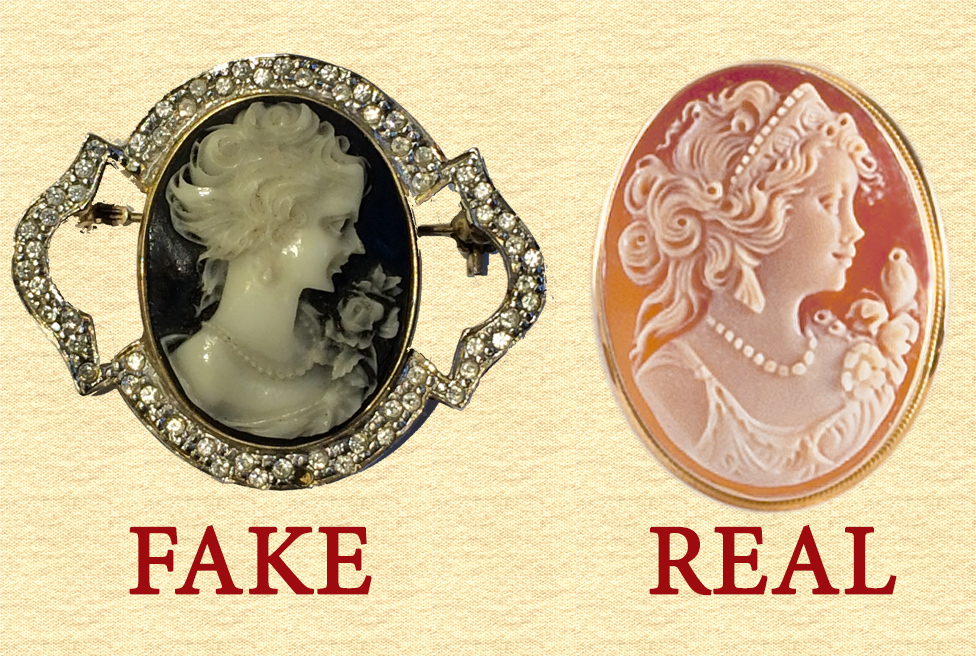
Identifying authentic cameo jewelry involves examining several key characteristics. Here’s a concise guide to help you distinguish genuine cameos from imitations:
- Verify the Material: Real cameos are hand carved from natural material like shell, coral, or agate. Plastic or resin imitations are typically shallow and will be warmer to the touch.
- Inspect the Carving: Inspect the cameo with a jeweler’s loupe or magnifying glass for tiny tool marks in the spaces around the carved features. These are characteristics of hand carving, whereas machine-carved ones have flat, smooth surfaces.
- Assess the Backing and Setting: True cameos generally have a delicate curve on the back, especially if they are shell-carved. Also, check for stamps indicating the type of metal (e.g., 14K for gold, 925 for sterling silver).
If still unsure, consult a reputable jeweler or antique dealer for authentication.
Conclusion
Cameo jewelry continues to captivate with its timeless elegance and intricate craftsmanship. Whether inherited or newly created, its appeal is in the exquisite craftsmanship and rich history that each piece holds. With a mix of tradition and personal style, cameo jewelry is a cherished accessory for anyone who wants to add a touch of antique glamour to their wardrobe.

How Much Do Agencies Charge for Website Design? A Complete Guide for Businesses

From Personal Experience: Why a Specialized Estate Planning Attorney Can Change Everything

Why Simple Swaps Matter: Rethinking Everyday Bathroom Essentials