The Unexpected Rise of ‘Southern UX’ and What It Means for Web Design in Columbia, SC

Let’s face it—when most people think about cutting-edge web design, their minds drift to high-rises in San Francisco or neon lights in Seoul. Maybe London’s Shoreditch or Berlin’s Kreuzberg if they’re feeling artsy. But Columbia, South Carolina? That’s not on many radar screens. And I get it. When I first started in this field nearly two decades ago, I wasn’t sure Columbia would one day become a reference point in global design conversations. Yet here we are.
I’m part of a team called Web Design Columbia, or WDC for short, and I’ve watched this shift firsthand. Not just in aesthetics or fancy fonts, but in something more profound—something I now call Southern UX. It’s a cultural design movement wrapped in local values, practical user flow, intuitive structure, and just the right amount of digital hospitality.
And believe it or not, this uniquely Southern style is catching attention far beyond the Palmetto State.
What Is Southern UX, and Why Should Anyone Care?
You might be tempted to dismiss “Southern UX” as a cheeky label. But it’s a real thing. When we design websites for businesses in Columbia, we’re not just dropping buttons and menus where Figma says they look cool. We’re mapping digital experiences that reflect how people from South Carolina (and, frankly, across much of the South) communicate, navigate, and make decisions.
It’s a contrast to Silicon Valley minimalism or Eastern Europe’s hardcore functionality. Southern UX favors warmth, clarity, and familiarity. It values the small town “how y’all doing” as much as the latest React update. But here’s the kicker: it works.
In global UX studies from Hotjar and Contentsquare, user engagement spikes when sites reflect local context. A 2023 study across 14 countries found that users were 42% more likely to complete a purchase when the content matched their cultural communication styles. So no, we’re not making things up over sweet tea and barbecue—we’re following the data.
And if you’re wondering whether the phrase web design in Columbia, SC can hold its own in such conversations, it can, and it does.
Columbia’s UX Identity Isn’t a Trend—It’s an Algorithmically Proven Asset
Over the past decade, Columbia has undergone significant transformation—both digitally and physically. Startups are moving in. The university scene is producing a wealth of talent. And tech infrastructure, including high-speed municipal fiber initiatives, has leveled the playing field in a way few expected. That’s given local design agencies like WDC the freedom to compete not just regionally, but internationally.
Meanwhile, global platforms are shifting too. Shopify’s 2024 Partner Report noted that users in the southeastern U.S. exhibit distinct shopping behaviors, including slower scrolling, longer time spent on About pages, and higher click-through rates on video testimonials. This matters. Design is no longer about just “looking good.” It’s about “converting with nuance.”
And we bake that into every project we take on. The language? Friendly. The visuals? Polished but not sterile. The layout? Optimized for both Grandma Jean on a tablet and a tech startup CEO juggling six Slack threads. That’s Southern UX.
That’s also web design in Columbia, SC, done right.
Beyond Templates: When UX Gets Personal
Let me tell you something brutally honest: most web design around the world is starting to feel… the same. Whether it’s a florist in Paris or a plumber in Vancouver, too many websites are Frankenstein templates with zero soul. You can smell a drag-and-drop builder from a mile away.
But when you’re building for clients in Columbia, especially in industries like education, healthcare, or hospitality, that doesn’t cut it. You have to dig into who they are—who their customers are—and how their digital handshake needs to feel.
I once had a local bakery client say, “We want the homepage to feel like a grandma’s hug.” I kid you not. So we scrapped the sterile white look, used custom photography of their staff baking pies, added soft-edged containers, and included microcopy like “Come on in, sugar.”
The bounce rate dropped by 38% in the first month.
That’s web design in Columbia, SC, with personality. And it makes a measurable difference.
New Tools Are Helping, But Only If You Know What You’re Doing
Now let’s talk tools, because even Southern charm needs high-performance gears behind the scenes.
Figma, Webflow, and Framer are dominating the design-tool landscape. WDC uses them all, depending on the project, and not just because they’re trendy. These tools allow for real-time collaboration, motion-first design, and frictionless prototyping. Figma has mainly grown from a hip startup tool to an enterprise necessity—Google now has over 12,000 employees collaborating on it daily.
Then there’s GSAP and Three.js—used to add slick animations or interactive 3D elements. But here’s the thing: just because you can make a button bounce like a kangaroo doesn’t mean you should. Over-design is a real risk. I’ve seen gorgeous websites tank on mobile simply because someone fell in love with scroll-jacking.
Global UX reports from Nielsen Norman Group warn that “over-animated” websites—especially those with parallax fatigue—lead to a 19% drop in conversions among users over 40 years old. So, we use these tools with restraint, especially when crafting web design in Columbia, SC that must serve a wide age and accessibility range.
That’s where almost 20 years of WDC’s experience come in handy. We’ve been around since people still thought Joomla would beat WordPress (spoiler: it didn’t). We know how to balance show-off moments with solid usability.
Why Speed and Performance Still Matter More Than Aesthetics in Columbia (and Globally)
You can have the prettiest site in the world, but if it takes 5 seconds to load, say goodbye to 53% of mobile visitors. That stat comes straight from Google’s Mobile UX study.
Performance isn’t sexy, but it’s critical. In Columbia, many users are browsing from lower-end devices or in areas with less-than-perfect bandwidth. That means our designs need to fly, not crawl.
WDC utilizes lazy loading, image optimization with modern formats such as WebP, and server-side rendering where applicable. We test Core Web Vitals obsessively. And when it’s time to launch, we host smartly, not necessarily with the big names like GoDaddy or AWS, but with tuned environments that actually fit the site’s needs.
Yes, we’ll optimize the design. But our main goal? Make users feel like the site was built just for them, and get it in front of them before they finish their first yawn.
And no surprise, that’s how you win in web design in Columbia, SC, too.
What Columbia’s Design Community Can Teach the World
Design isn’t about pixels. It’s about people. And in Columbia, people still value a little eye contact, a follow-up call, and sites that aren’t trying to play mind games.
Big Tech may keep automating web design—from AI-based layout generation to GPT-4o writing headlines—but trust me, the human touch isn’t going away. At WDC, we’ve worked on over 1,000 projects in industries ranging from car batteries to Torah learning apps. We’ve seen what works and what fails. We’ve seen clients come back ten years later just because “y’all took care of us.”
That’s the kind of experience no amount of AI can generate.
And if you’re still skeptical about Columbia’s impact on design culture, look at how many agencies are now mimicking “friendly” copywriting and approachable layouts. It’s not a coincidence. It’s just the South doing what it’s always done—making everyone feel welcome.
You can learn more about this flavor of UX and our perspective on it at webdesigncolumbia.us.
When Southern Values Meet Global Expectations
You might think that Southern design sensibilities would clash with the fast-paced, constantly evolving demands of global web audiences. But oddly enough, they’re perfectly aligned. Columbia’s approach to web design—slow down, speak clearly, don’t be pushy—is precisely what tired internet users are craving.
Think about it. Today’s web is filled with pop-ups that attack you before you even read the headline, cookies you didn’t order, and calls-to-action screaming like carnival barkers. Amid all that noise, a soft-spoken, well-structured website that simply says, “Welcome, take your time,” becomes unforgettable.
And that’s the philosophy at the core of web design in Columbia, SC—user comfort first. And yes, it’s backed by complex data. In 2024, a Harvard Business Review study found that 70% of users were more likely to engage with brands whose websites “felt trustworthy and calm.” They didn’t mean “boring.” They meant intentional. Thoughtful.
WDC didn’t stumble into this. We’ve been crafting these experiences since before smartphones became a thing. That nearly two decades of experience make a difference when it comes to knowing what not to add to a homepage.
The Hidden Dangers of Chasing Design Trends
Let’s pause for a moment to address a common trap: chasing trends without context. Every year, global agencies release “The 10 Design Trends You Need to Follow Right Now.” And every year, thousands of websites start looking like they were birthed from the same neon-colored, glitchy overlord.
In 2023, there was the “Glassmorphism” craze—everything frosted and semi-transparent, like you were browsing through a digital refrigerator door. It looked slick on Dribbble mockups. But in real-world use? Accessibility nightmare. People with vision issues couldn’t make out menu items. Load times increased. Mobile users were crying.
And yet, clients across the country (and world) kept asking for it. We at WDC had to do what any ethical designer should: talk them out of it. Because web design in Columbia, SC, isn’t about being trendy. It’s about being effective. Beautiful, yes. But also fast, clear, and accessible.
It’s not that we’re anti-innovation, far from it. We’ve integrated 3D elements using Spline for an event-planning website. We’ve built immersive product visualizations using Three.js for a cosmetics store. But every decision is weighed against user need, not designer ego.
Web Design as a Business Tool, Not Just an Art Project
This is one of those truths that hits differently in Columbia than it does in places like New York or L.A.: here, your website isn’t a fashion statement—it’s a working tool. It needs to bring in leads, clarify services, and build trust, often with people who are still warming up to the idea of digital-first businesses.
We’ve built sites for roofers who wanted to display hailstorm damage photos without needing a Dropbox. For churches that needed livestream integration without blowing their budgets. For nonprofits that needed to update volunteers faster than a phone tree. These aren’t edge cases—they’re the norm for web design in Columbia, SC.
You know what else is normal? Budget sensitivity. And we’re proud of it. We’ve built websites for less than $1,000 that are still going strong years later. No, we didn’t skip quality. We skipped bloated agencies, outsourced chaos, and six-month timelines. You don’t need a Madison Avenue price tag to build a site that performs like one.
And you don’t need a massive budget to work with Web Design Columbia. We’ve always believed that the best tech shouldn’t be reserved for the few—it should work for the many. That’s why we continue to offer highly affordable, scalable web solutions with enterprise-level code quality.
Southern UX in Action: A Case Study You Didn’t Ask For
Let me tell you about “Lake Wylie Outdoors,” one of our recent projects. It’s a local business selling mulch, decorative stones, sand, and—you guessed it—truckloads of pine straw. Not exactly the kind of niche that screams “digital innovation.” But that didn’t stop us.
We created a modern, mobile-optimized design with high-res custom photography (yes, we took the photos ourselves). We integrated a shipping calculator, a product estimator, and a super-simple checkout system. And most importantly, we built a layout that didn’t confuse the average homeowner looking to make their front yard look like a Southern Living cover.
That’s Southern UX. It doesn’t brag. It just gets the job done—and looks good doing it.
And of course, it’s another excellent example of how web design in Columbia, SC, can be just as elegant, practical, and conversion-ready as anything you’d find in a big city.
The Future of Web Design Might Just Start in Places Like Columbia
As we enter the age of AI-assisted development, voice-first interfaces, and even spatial computing (yes, the Apple Vision Pro is making a strong effort), the instinct is to look to the tech giants. But if the past decade has taught us anything, it’s this: real design revolutions don’t always come from the top—they come from the ground up.
The South is no longer just catching up; it is now leading the way. It’s redefining. And the work we’re doing at WDC—balancing storytelling with usability, cost-efficiency with quality, tradition with modernity—is part of that movement.
So the next time someone rolls their eyes at the phrase web design in Columbia, SC, remind them that quiet revolutions don’t make noise. They just change the game while no one’s watching.
And when they’re finally ready to stop overpaying for underwhelming websites, you know exactly where to send them: webdesigncolumbia.us.
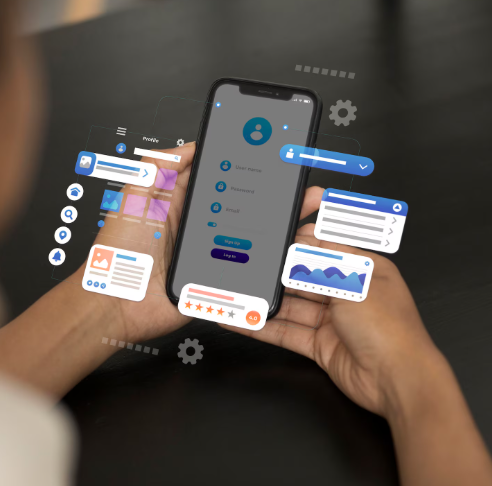
Legacy vs Modern Applications: Where UI Design and AI Make the Difference

5 AI Tools That Are Actually Worth Paying For in 2026 — Tested for Small Business

How Residential Proxies Help Scale Social Media Campaigns Safely