
Introduction: The ‘Why’ Behind Conversion Optimization
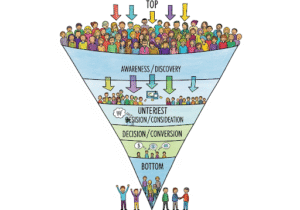
Every website acts like a funnel. Visitors enter at the top. But many leave before they take the action we want. This is a common issue for online businesses. We often call this the “leaky bucket” problem.
Conversion Rate Optimization (CRO) is the solution. It’s about fixing those leaks. We aim to turn more of your current website visitors into valuable customers or leads. This means getting more from the traffic you already have.
Why is this so important? CRO brings many benefits. We see a better return on our marketing spend. We learn more about what our users truly want. This leads to stronger, more lasting growth for our business.
This guide will show you how to build a powerful CRO strategy. We’ll cover everything from understanding your audience to running smart tests. Our goal is to help you boost your conversion rates effectively.
Laying the Groundwork: Essential CRO Metrics and Analysis
Before we can optimize, we must first understand what we’re optimizing for and how to measure it. At its core, CRO is a data-driven discipline. It begins with clearly defining what a “conversion” means for our business and establishing a baseline for our current performance.
The most fundamental metric is the conversion rate. We calculate this by dividing the total number of conversions by the total number of visitors to our site (or a specific page) and multiplying by 100 to get a percentage. For example, if 100 visitors come to your site and 5 make a purchase, your conversion rate is 5%. This simple formula helps us quantify our success.
Conversions aren’t always about a final sale. We differentiate between macro conversions and micro conversions. A macro conversion is the primary goal, like an e-commerce purchase or a lead form submission. Micro conversions are smaller, incremental steps that lead to the macro goal, such as signing up for a newsletter, downloading a whitepaper, adding an item to a cart, or viewing a product video. Tracking both helps us understand the entire user journey.
For e-commerce websites, common conversions include completed purchases, adding to cart, initiating checkout, or subscribing to product updates. For other websites, conversions might be signing up for a free trial, downloading an e-book, requesting a demo, or filling out a contact form. The average e-commerce conversion rate for orders is often said to be between 2.5% and 3%, but this can vary significantly by industry and product.
To truly understand why users convert or don’t, we dig into user research and data analysis. This involves leveraging powerful analytics tools, such as Google Analytics, to track user behavior, traffic sources, and conversion funnels. Beyond quantitative data, qualitative insights from session recordings and heatmaps allow us to visually observe how users interact with our pages, where they click, where they hesitate, and where they abandon. Scroll maps show us how far down a page users go, indicating engagement levels. This comprehensive approach provides the foundation for informed optimization decisions.
How to Identify Key Areas for Optimization
Identifying which parts of your website need optimization is crucial for focusing your CRO efforts. We start by looking at our web analytics data to pinpoint pages or funnels that are underperforming.
Google Analytics is an invaluable starting point. We look for:
- High-traffic pages with low conversion rates: These pages attract many visitors but fail to convert them, indicating a potential disconnect between user intent and page content or design.
- High bounce rate pages: A high bounce rate suggests users are leaving quickly after landing, often due to irrelevant content, slow loading times, or poor user experience.
- User flow analysis: By mapping common user paths, we can identify unexpected detours or drop-off points that hinder conversion.
- Funnel drop-off points: In a multi-step process (like a checkout or signup flow), significant drops between steps highlight specific areas of friction or confusion. Baymard’s research shows that 18% of users have abandoned orders due to checkout UX issues — the experience is either too long or too complicated.
- Form analytics: Tools that analyze form interactions can reveal which fields cause hesitation, errors, or abandonment.
Beyond analytics, we use tools like heatmaps and session recordings to observe user behavior directly. Heatmaps show us where users click, move their mouse, and scroll, revealing areas of interest and neglect. Session recordings allow us to watch individual user journeys, uncovering unexpected issues like broken forms, confusing navigation, or content that doesn’t resonate. By systematically analyzing these data points, we can prioritize optimization efforts on the areas that will yield the greatest impact.
Understanding Your Audience: The Role of User Research
Understanding our audience is paramount to successful CRO. It’s not enough to know what users are doing; we need to understand why. User research helps us bridge this gap, moving beyond assumptions to data-backed insights.
Our user research typically involves a mix of qualitative and quantitative methods:
- Surveys: On-site polls, exit-intent surveys, and post-purchase questionnaires can gather direct feedback on user experience, pain points, and motivations. Asking “What’s missing on this page?” or “What were you looking for today?” can uncover valuable insights.
- Customer Interviews: One-on-one interviews with existing customers or target users provide deep qualitative insights. This allows us to explore their needs, challenges, and decision-making processes in detail. People are always asking us about best practices for conversion. You know the kind of thing: magic buttons that convert, “killer” copywriting words, winning layouts, etc. Unfortunately, that little box of tricks doesn’t take you very far. In fact, it’s often more effective to speak to customers—whether on an interview or via survey—to truly understand their needs.
- User Personas: Creating detailed profiles of our ideal customers, based on research, helps us empathize with their goals, behaviors, and pain points.
- Feedback Widgets: Small, unobtrusive widgets on our site allow users to quickly provide feedback on specific elements or overall experience.
By combining these methods, we can uncover user intent, identify common objections, and understand the psychological triggers that influence their decisions. This deep understanding informs our hypotheses for A/B testing and ensures our optimization efforts are truly user-centric.
Here are some key questions we often ask in user surveys to gain valuable insights:
- What was the primary purpose of your visit today? (Helps identify user intent)
- Did you find what you were looking for? If not, why? (Uncovers navigation or content gaps)
- What, if anything, prevented you from completing your goal today? (Identifies friction points)
- How would you describe your overall experience on our website? (Gauges general satisfaction)
- What could we do to improve your experience? (Generates actionable suggestions)
- What nearly stopped you from [converting action]? (Reveals objections and hesitations)
- What convinced you to [converting action]? (Highlights successful persuasive elements)
Core Digital Marketing CRO Strategies to Implement Today
Now that we understand the foundations and how to identify problem areas, let’s dive into actionable strategies. Effective CRO is a blend of optimizing user experience (UX), crafting compelling content, and leveraging psychological triggers to guide visitors towards conversion.
Optimizing User Experience (UX) and Site Design
A seamless and intuitive user experience is fundamental to high conversion rates. If users struggle to steer your site or find what they need, they’ll leave.
- Simplified Navigation: Reduce clutter and make it easy for users to find key information. Abide by Hick’s Law: the more choices you provide a person, the longer it will take for them to decide. This is why more and more small business websites are limiting the contents of their navigation bar.
- Page Speed Optimization: A slow website is a conversion killer. Research shows that you should shoot for page load times of no longer than four seconds. Even within that range, the shorter the time, the better for your conversions. A delay of just one second can slash your conversions by up to 20%. We optimize images, leverage browser caching, and minimize code to ensure fast loading times.
- Mobile-First Design: With more than 58% of global web traffic coming from smartphones and tablets, a mobile-friendly website isn’t just a nice-to-have, it’s a must. Ensure your site is fully responsive, with easy-to-tap buttons and simplified layouts for smaller screens.
- Reducing Form Fields: Long, complicated forms are a major source of abandonment. Only ask for essential information. Consider multi-step forms if necessary, but keep each step brief.
- Clear Visual Hierarchy: Guide the user’s eye to the most important elements on the page using size, color, contrast, and placement. The Rule of Thirds, often used in photography, can also be applied here to position key elements like CTAs at visually impactful intersections.
- Effective Use of White Space: Don’t be afraid of empty space. It reduces cognitive load, improves readability, and draws attention to your core content and calls-to-action.
Crafting Compelling Content and Calls-to-Action (CTAs)
Your content and CTAs are your direct communication with your visitors. They need to be clear, persuasive, and action-oriented.
- Strong Value Proposition: Clearly articulate what makes your product or service unique and valuable. This should be evident in your headlines, subheadings, and introductory copy. Nichole Elizabeth DeMere recommends that anyone looking to launch a landing page and/or product first get the Value Proposition Design book and work through it.
- A/B Testing Headlines: Headlines are critical; five times as many people read the headline as read the body copy. A/B testing different headlines can significantly impact conversion rates. For instance, with A/B testing you can quickly and easily test different versions of your website copy, content offers, images, form questions, and web pages to determine what your target audience and leads respond to best.
- Clear and Concise Copy: Use simple language, short paragraphs, and bullet points to convey information quickly. Focus on benefits over features.
- Compelling CTA Buttons: Your calls-to-action should stand out visually and use action-oriented language. “Sign Up Now,” “Get Your Free Guide,” or “Shop the Collection” are much more effective than generic “Click Here.”
- Color Psychology: Experiment with CTA button colors. While there’s no universal “best” color, contrasting colors that align with your brand can draw attention.
- Placement Above the Fold: While not a strict rule, placing your primary CTA above the fold (the visible part of the page before scrolling) ensures it’s seen immediately by all visitors.
Building Trust and Credibility with Psychological Triggers
Trust is the currency of online conversions. Users won’t convert if they don’t trust your brand or feel secure on your site. We leverage psychological triggers to build this trust.
- Social Proof: People are influenced by the actions of others. Display customer testimonials, reviews, star ratings, and social media follower counts prominently. 88% of consumers trust online reviews as much as personal recommendations. Shopify store owners can use apps like Yotpo to embed customer reviews into product pages.
- Trust Seals and Security Badges: For e-commerce, displaying SSL certificates, payment processor logos, and security badges (e.g., McAfee, Norton) near checkout or sensitive forms reassures users about data security.
- Scarcity and Urgency: Phrases like “Limited Stock,” “Only 3 Left,” or “Offer Ends Soon” can motivate users to act quickly. Studies show we’re wired to strongly avoid losses. For example, “Stop losing customers” hits harder than “Get more customers”.
- Money-Back Guarantees: Offering a clear, no-questions-asked money-back guarantee reduces perceived risk and builds confidence in your product or service.
- Credibility Signals: Highlight awards, media mentions, partnerships, or certifications. Take a look at James Clear’s homepage, for example. Just above the CTA is a notable mention that his book is a No. 1 New York Times bestseller.
Mastering the full spectrum of digital marketing conversion strategies is an ongoing process that builds deep customer trust. It requires a holistic approach that combines technical optimization, persuasive content, and a deep understanding of user psychology.
The Science of Improvement: A/B Testing and Iteration
CRO isn’t about guessing; it’s about systematic experimentation. A/B testing is the cornerstone of this scientific approach, allowing us to validate hypotheses and make data-driven decisions.
A/B testing, also known as split testing, involves comparing two versions of a webpage or app element (A and B) to see which one performs better. We split our audience, showing one group version A and the other group version B. By analyzing conversion rates, we can determine which version is more effective. This process helps us move beyond opinions and base our optimizations on real user behavior.
The goal is to validate hypotheses. A hypothesis is an educated guess about why a change might lead to an improvement. For example: “Changing the CTA button color from blue to green will increase click-through rates because green is associated with ‘go’ and positivity.”
Statistical significance is critical here. It tells us whether the observed difference between version A and B is likely due to the change we made or simply random chance. We need to run tests long enough and with enough traffic to achieve statistical significance, ensuring our results are reliable.
To manage and prioritize our experiments, we often use frameworks like ICE (Impact, Confidence, Ease) or PIE (Potential, Importance, Ease). These frameworks help us score and rank test ideas based on their potential to drive conversions, our confidence in the hypothesis, and the effort required to implement the test. This ensures we focus our resources on the most promising experiments.
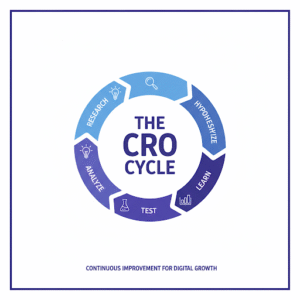
CRO is a continuous improvement cycle. It’s not a one-time project. We constantly research, hypothesize, test, analyze, and learn. This iterative process builds a culture of experimentation where every change is an opportunity to learn and grow.
Designing and Prioritizing Effective A/B Tests
Designing effective A/B tests is crucial for getting clear, actionable results. A poorly designed test can lead to misleading conclusions.
- Formulate a Clear Hypothesis: Every test should start with a specific, measurable hypothesis. For example: “By changing the hero image on our product page to one showing a person using the product, we expect to see a 10% increase in ‘Add to Cart’ clicks, because users will better visualize themselves with the product.”
- Isolate Variables: Test one element at a time. If you change the headline, image, and CTA button simultaneously, you won’t know which specific change caused the uplift (or decline). This is where A/B testing differs from multivariate testing, which tests multiple variables at once.
- Determine Sample Size and Duration: To achieve statistical significance, you need enough visitors interacting with your test variations. Tools can help calculate the required sample size based on your current conversion rate, desired uplift, and statistical confidence level. Running a test for a full business cycle (e.g., 1-2 weeks) helps account for daily and weekly variations in traffic and behavior.
- Prioritize Tests: Use a framework like ICE or PIE to decide which tests to run first.
- Impact: How big of an improvement do we expect?
- Confidence: How confident are we that this change will work? (Based on research, past tests, industry best practices)
- Ease: How easy is it to implement this test? (Technical effort, time, resources)

By scoring each test idea across these criteria, we can create a prioritized roadmap of experiments that maximizes our chances of significant conversion gains.
Avoiding Common CRO Mistakes and Pitfalls
Even with the best intentions, CRO efforts can be derailed by common mistakes. We strive to avoid these pitfalls to ensure our optimization journey is effective and efficient.
- Testing Without Research: This is often called “shooting in the dark.” Without qualitative and quantitative research to inform your hypotheses, you’re just guessing. This leads to a high rate of inconclusive or failed tests and wasted resources. Conversion optimization is 80% research and 20% experimentation.
- Ending Tests Too Early: Stopping a test as soon as you see a “winner” can lead to false positives. It’s essential to run tests until statistical significance is reached and for a full business cycle to account for variations.
- Ignoring Qualitative Data: While A/B tests provide quantitative results, they don’t always tell you why a variation won or lost. User interviews, surveys, and session recordings provide the qualitative context needed to truly understand user behavior.
- Testing Too Many Elements at Once (in A/B tests): As mentioned, isolating variables is key. If you change multiple elements in a single A/B test, you can’t attribute the results to any one specific change.
- Confirmation Bias: We all have biases. It’s easy to look for data that confirms our initial beliefs. A rigorous, objective approach to data analysis is crucial to avoid this.
- Chasing Quick Hacks Over Systematic Process: There are many “growth hacks” out there, but sustainable CRO comes from a systematic, research-driven process, not one-off tricks. Shanelle Mullin from Shopify notes, “Everyone’s looking for a quick and easy golden nugget they can implement for instant 10x growth. A button copy tweak here, a color change there. While tactics and growth hacks might be sexier than systematic processes, you should rely on the latter.”
Measuring Success and Ensuring Sustainable Growth
Measuring the success of our CRO initiatives goes beyond simply looking at individual test results. It involves a holistic view of our overall business objectives and a commitment to continuous improvement.
After each A/B test, we carefully analyze the results. This includes not just the primary conversion metric but also secondary metrics like engagement, bounce rate, and average order value. We identify the winning variation, but more importantly, we seek to understand why it won.
Learning from failed tests is as valuable as celebrating winners. An inconclusive or losing test provides insights into what doesn’t work, refining our understanding of our users and guiding future hypotheses. We document all learnings, creating a knowledge base that informs subsequent experiments.
Iterating on findings means that a winning test isn’t necessarily the end. We might iterate on the winning variation, testing further improvements based on new insights. This continuous cycle of improvement ensures we’re always optimizing.
Sharing insights across teams is vital for sustainable growth. CRO shouldn’t operate in a silo. Marketing, sales, product, and UX teams all benefit from understanding user behavior and test outcomes. This fosters a data-driven culture throughout the organization.
CRO is about cultivating a long-term growth mindset. It’s a marathon, not a sprint. By consistently applying a systematic approach, learning from every experiment, and continuously iterating, we can achieve sustained increases in conversion rates and drive significant business growth.
Frequently Asked Questions about CRO Strategies
What is a good conversion rate?
This is one of the most common questions we hear, and the answer is rarely straightforward. A “good” conversion rate is highly dependent on several factors:
- Industry: Conversion rates vary dramatically across industries. For example, the average e-commerce conversion rate for orders is often cited between 2.5% and 3%. However, some B2B industries or those with high-value products might see much lower rates, while others with simple lead generation forms could see higher numbers. In the second quarter of 2022, 2.3% of visits to e-commerce websites in the United States converted to purchases. However, online shopper conversion rates in Great Britain rose to over 4%.
- Type of Conversion: Macro conversions (like purchases) typically have lower rates than micro conversions (like newsletter sign-ups or adding to cart). Well-designed pop-ups placed at the right point in the user journey have an average conversion rate of more than 9%.
- Traffic Source: Visitors from organic search (high intent) often convert at a higher rate than those from display ads (lower intent).
- Device: Mobile conversion rates are often lower than desktop, partly due to the browsing context (on-the-go, distractions). As many as 85% of your mobile shoppers will leave your site without checking out (abandoned carts).
Instead of chasing an arbitrary industry average, we recommend focusing on improving your own conversion rate over time. A 1% increase in your current conversion rate can have a massive impact on your bottom line. Define success based on your own business goals and track your progress against your own historical data.
How do CRO strategies differ for mobile vs. desktop?
While the core principles of CRO remain the same, the implementation of strategies often differs significantly for mobile and desktop users due to differences in screen size, input methods, and user context.
- Mobile-First Approach: Given that more than 58% of global web traffic comes from smartphones and tablets, we prioritize designing and optimizing for mobile devices first. This ensures a seamless experience for the majority of users.
- Responsive Design: Essential for ensuring your website adapts fluidly to any screen size, providing an optimal viewing experience.
- Simplified Forms: On mobile, typing is cumbersome. We aim for fewer form fields, auto-fill options, and larger input areas.
- Thumb-Friendly CTAs: Buttons should be large enough and spaced appropriately for easy tapping with a thumb. Placement often shifts to the bottom of the screen for easier reach.
- Faster Load Times: Mobile users are even less patient than desktop users. Aggressive image optimization and minimal code are critical.
- Streamlined Checkout Process: For e-commerce, a one-page checkout or express payment options (like Apple Pay, Google Pay) are vital on mobile to reduce friction.
- Desktop’s Role: While mobile is dominant for browsing, desktop often plays a crucial role in complex research, detailed comparisons, or final purchase decisions, especially for higher-value items. Desktop designs can afford more information density and multi-column layouts.
Mobile CRO focuses heavily on brevity, speed, and ease of interaction, whereas desktop can accommodate more detailed content and complex navigation.
What are the most essential tools for a CRO professional?
A robust CRO strategy relies on a suite of tools that help us collect data, understand user behavior, run experiments, and gather feedback. Here’s a list of essential tool categories:
- Web Analytics Tools: These are foundational for tracking website traffic, user behavior, conversion goals, and funnel performance.
- Example: Google Analytics
- User Behavior Analytics Tools: These provide qualitative insights into how users interact with your site, helping to identify pain points and opportunities.
- Examples: Hotjar (heatmaps, session recordings, surveys), Microsoft Clarity (heatmaps, session recordings)
- A/B Testing & Experimentation Platforms: These tools allow you to create and run experiments, splitting traffic between different variations of your pages to determine which performs best.
- Examples: Optimizely Experiment, VWO
- User Feedback & Survey Tools: Essential for gathering direct qualitative feedback from your audience.
- Examples: Typeform, Qualtrics
- Conversion Funnel Analysis Tools: Help visualize and analyze the steps users take towards conversion, identifying drop-off points.
- Example: Google Analytics 4 (GA4)
- Landing Page Builders & Optimization Tools: Used to quickly create, test, and optimize dedicated landing pages.
- Examples: Unbounce, Leadpages
For a deeper dive into the specific functionalities and benefits of various platforms, you might find our guide on Conversion Rate Optimization Tools particularly useful.
Conclusion
Conversion Rate Optimization is not a magic bullet, but a systematic, data-driven methodology that empowers businesses to open up their website’s full potential. By understanding what CRO is, why it’s important, and how to measure its impact, we lay a strong foundation for growth.
The journey begins with laying the groundwork: carefully analyzing essential metrics and investing in user research to truly understand our audience’s needs and pain points. From there, we implement core digital marketing CRO strategies, focusing on optimizing user experience, crafting compelling content and calls-to-action, and building unwavering trust and credibility through psychological triggers.
The science of improvement lies in A/B testing and iteration. By designing effective experiments, prioritizing them strategically, and diligently avoiding common pitfalls, we ensure our efforts are always moving forward. We measure success not just in immediate gains but in the sustainable, long-term growth that comes from a continuous learning and optimization cycle.
CRO is a marathon, not a sprint. It requires patience, persistence, and a commitment to putting the user at the center of every decision. Start small, test often, learn from every experiment, and iterate for continuous improvement. The rewards—increased ROI, deeper customer understanding, and lasting business growth—are well worth the effort.

Car Shipping Costs Explained: Factors You Should Know

What Happens If You Miss a Credit Card Payment?

10 Reasons To Buy A House In The Dominican Republic In 2026