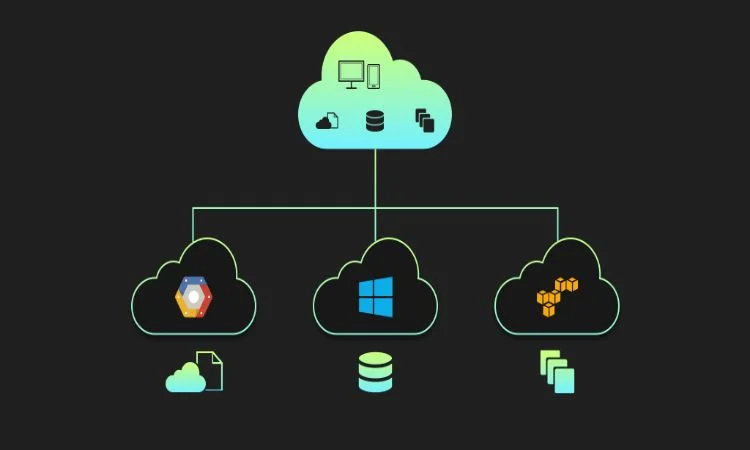
Organisations face workloads across departments, so it is essential to have different cloud platforms to analyse the organisational workloads. This gave rise to the concept of multi-cloud. Multi-cloud setups help you to avoid depending on a single provider by offering flexibility and better performance options.
However, dealing with multiple clouds may invite some problems as well. Many companies encounter similar difficulties in the process of connecting and managing these environments.Here are five common multi-cloud networking mistakes:
1. Poor Visibility Across Clouds
Poor visibility is one of the most common problems faced by organisations. When teams work with different cloud platforms, it becomes very challenging to track traffic flow, monitor performance, or spot problems early. This causes them to experience delays, outages, and inconsistency in user experiences.
Fix:
The organisations should get a unified dashboard tool to consolidate all the cloud environments in one place. Multi-cloud networking services, like the IZO™ Multi-Cloud Connect by Tata Communications, make it easier for companies to recognise and control the cloud traffic.
2. Over-Reliance on Public Internet
Many organisations use the public internet to make the process easier and cheaper. However, it comes with its own disadvantages. The public internet has unpredictable latency, limited security, and higher chances of congestion. This becomes very difficult for applications to provide a steady performance.
Fix:
Choosing a private cloud facility helps in fixing the problem because they provide stable bandwidth, lower latency, and safer transfer routes for sensitive workloads. Moreover, private cloud service providers also reduce the risk of downtime and performance dips.
3. Not Standardising Security Policies
There are no standardised security policies for private cloud providers since they follow their own security systems. The variation in firewalls, access controls, and identity-management systems makes it increasingly more difficult for a consistent level of safety to be maintained. Furthermore, security gaps and the misconfiguration of security features become easier to happen.
Fix:
Create a single security framework for all cloud platforms. Some rules, like access rules, authentication methods, and monitoring practices, should be standardised. Implementation of the zero-trust security also ensures that each request is verified before access is granted.
4. Ignoring Data Transfer Costs
The cost of moving the data poses as one of the biggest problems of multi-cloud environments. Transferring information from region to region increases the monthly bills of the organisation. Many teams only realise this when costs spike.
Fix:
Map out and optimise the data flows. Keep high-volume workloads closer together, use caching where possible, and choose routes that reduce unnecessary movement. Some managed multi-cloud networks also offer more predictable pricing models.
5. Treating Each Cloud as a Separate Island
Operational silos happen when the multi-cloud operators use multiple clouds without proper integration. Teams will end up with duplication of tools, processes and resources. This delays cooperation and troubleshooting.
Fix:
Rebuild your design to connect all the clouds through a shared network layer. Multi-cloud connecting solutions let users assimilate these different environments, thus they don’t function as five separate entities but as one connected network.
Final Thoughts
Multi-cloud setups offer significant advantages, but they require careful planning and the right connectivity strategy. By ensuring visibility, securing data in transit, reducing reliance on the public internet, and unifying security policies, enterprises can unlock the full value of their cloud choices. Once there is a clear plan and the right resources on hand, managing multi-cloud networking will be much less challenging and far more dependable.

Top 10 IT Certifications That Actually Boost Your Salary in 2026

Amazon Ads vs. Google Ads: Which Platform Drives Better eCommerce Sales?

Where to Buy a Passport Online for Uninterrupted Global Travel