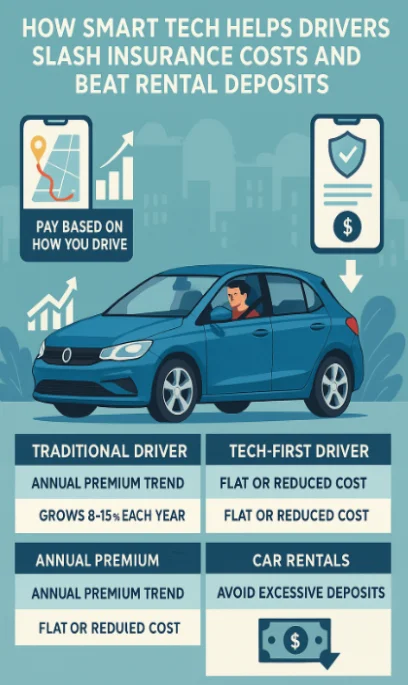
For most drivers, the car is no longer just a metal box on wheels – it’s a rolling gadget. Your phone is your GPS, music system, dashcam controller, and even your insurance assistant. But while tech has made driving more convenient, it has also revealed an uncomfortable truth: many people are still overpaying for car insurance and rental costs simply because they don’t use the tools they already have in their pockets.
In this guide, we’ll look at practical, tech-driven strategies that help you cut insurance premiums, avoid painful rental deposits, and manage your driving budget like a pro. This is perfect Tier-2 content territory: not pure finance, not pure tech, but the place where both worlds meet.
- From Static Policies to Data-Driven Insurance
Traditional car insurance assumed everyone was roughly the same type of driver. Today, connected cars, smartphone sensors and telematics boxes make it possible to pay based on how you actually drive, not just your age or postcode.
How Tech Changes the Insurance Game
- Usage-based insurance (UBI)apps track distance, time of day, and driving style.
- AI-powered quote enginescompare dozens of policies in seconds instead of calling agents one by one.
- Digital policy managementlets you tweak add-ons, adjust IDV, or change mileage declarations directly from an app.
The result? Drivers who know how to use these tools save significantly more over a year than those who simply auto-renew whatever their insurer proposes.
If you want to go deeper into practical tactics, you can explore a detailed guide on
little-known car insurance hacks that can slash your annual premiums and stack those optimisations on top of your tech tools.
- Traditional vs Tech-First Driver: Who Pays More?
Here’s a simple comparison of two fictional drivers with similar cars and profiles.
Table 1 – Traditional Driver vs Tech-First Driver
| Feature / Behaviour | Traditional Driver “A” | Tech-First Driver “B” |
| Renewal Method | Accepts first SMS / email quote | Uses apps & aggregators to compare 5–8 options |
| Driving Data | None collected | Uses telematics / UBI app |
| Policy Customisation | Standard package suggested by agent | Customises add-ons & voluntary deductible |
| Claim History | 1 small claim per year | Avoids tiny claims, protects No-Claim Bonus |
| Annual Premium Trend | Grows 8–15% each year | Often flat or reduced after first optimisation |
The difference isn’t “luck” – it’s about who is using the available technology in a smart way.
- Tech Tools That Help You Pay Less for Insurance
You don’t need to be a hardcore geek to use these. Most are free or bundled with services you already use.
Essential Apps & Tools
- Comparison Platforms– Quickly scan premiums from multiple insurers, filter by coverage, and see transparent pricing before you talk to anyone.
- Telematics / Driving-Score Apps– Installed either as part of your insurer’s offering or as standalone apps to understand how your driving looks to underwriters.
- Digital Dashboards– Many insurers provide online portals where you can download policy docs, check IDV and add-ons, and generate soft quotes for tweaks.
- Budget & Expense Trackers– Track fuel, maintenance and premium payments to see the true cost per kilometre.
Checklist: Tech-Backed Moves to Lower Your Premium
- Use a comparison site at least once a yearbefore renewal.
- Turn on driving-behaviour tracking and actually review the feedback.
- Run “what-if” simulations: higher voluntary deductible, fewer add-ons, adjusted IDV.
- Protect your No-Claim Bonus by not filing tiny claims you can easily absorb.
- Store all documents digitally so you can respond fast if an insurer asks for proofs.
Combine those basics with the little-known hacks from the resource linked above and you’re already ahead of most drivers.
- The Hidden Tech Pain for Young Drivers: Rental Deposits
The other big money leak lives in car rentals. App-based rentals and traditional agencies love young customers, but they also see them as “higher risk,” which often means:
- Higher daily rates
- Huge refundable deposits
- Extra fees for minor scratches or fuel differences
For students, digital nomads, or early-career professionals who travel often, thousands locked in a deposit can mess up cash flow and credit card utilisation.
A very practical resource on how young drivers can dodge high car rental deposits explains specific tactics for negotiating deposits, choosing the right rental products, and avoiding surprise charges – all highly relevant if you’re booking through apps or online portals.
- Using Tech to Beat Rental Deposits and Fees
Here’s how to turn your phone into a rental-optimisation toolkit:
Before You Book
- Compare across apps– Dynamic pricing means another platform may show a lower deposit for the same car.
- Check card benefits– Some credit cards include rental protection; this can reduce add-on insurance costs.
- Read user reviews– Look for patterns: “They always charge for small scratches” or “Deposit refunds are slow.”
At Pickup & Drop
- Use your phone to record a full walk-around videoof the car’s exterior and interior.
- Photograph the odometer, fuel gauge, and any existing damage.
- At return, repeat the process to document the car’s state and avoid false damage claims.
Table 2 – Common Rental Traps and Digital Fixes
| Rental Problem | Typical Pain for Drivers | Tech-Based Solution |
| Excessive security deposit | Card limit blocked for days or weeks | Compare apps, choose plans with lower holds |
| Dispute over minor damage | Part of deposit deducted | Timestamped photos and videos on your phone |
| Surprise fuel or mileage charges | Final bill much higher than quote | Capture gauge & odometer, use trip-log apps |
| Slow refund of deposit | Cash flow problems | Choose agencies with proven digital refund workflows & good reviews |
- Ownership vs Rentals vs Hybrids: What Does Tech Say?
With ride-hailing apps, subscriptions, and connected-car data, you no longer have to guess whether owning or renting is cheaper. You can track real usage and make decisions backed by numbers.
Table 3 – Tech-Enabled Cost Comparison (Illustrative)
| Option | Data You Should Track | When It Usually Wins |
| Own Car | Km/month, maintenance, EMI, premium | Daily office commute + regular weekend use |
| Mostly Rentals + Cabs | Number of trips, average distance per trip | Occasional long drives, no parking at home |
| Hybrid (Small Car + Rentals) | Car usage + rental days per year | Family with mixed needs & multiple drivers |
Use a simple expense-tracker or spreadsheet: log each cab, rental, fuel fill, toll, premium payment and major repair. After 3–6 months, you’ll know if your current model is actually worth it or if it’s time to switch strategy.
- Tech Tricks You Can Implement This Week
Here’s a short action list you can copy into your notes app:
- Export last year’s insurance statementand save it in cloud storage.
- Install a telematics or safe-driving appand track your next 500–1,000 km.
- Run fresh quoteson at least two aggregator platforms using your current driving data.
- Audit your last three rentals:
- Total cost vs quoted cost
- Deposit amount and refund time
- Any extra damage or fuel fees
- Create a simple “car costs” sheetand calculate cost per km for the last month.
- Bookmark resourceslike the car-insurance hacks guide and the rental-deposit guide so you can revisit them before your next renewal or booking.
These steps take less time than a Netflix episode but can save you real money over the next year.
- Final Thoughts: Treat Your Wheels Like a Tech Project
The best tech users don’t just install apps; they build systems. If you approach driving the same way:
- Your insurancebecomes a controllable, optimised subscription instead of a mystery bill.
- Your rentalsbecome predictable transactions instead of scary deposit traps.
- Your overall car budgetstarts to look like a measured, data-driven project rather than random swipes and auto-debits.
For readers of The Techno Tricks, this mindset should feel familiar. You already automate backups, optimise your phone storage, and tweak your gaming or streaming settings. Apply that same curiosity to your car costs, and you’ll be surprised how much financial “lag” you can remove from your life.
Use the tools, mine the data, and combine them with smart tactics like those little-known insurance hacks and rental deposit strategies. That’s how you turn everyday driving into a tech-powered money win.

How Federal Assistance Programs Now Support More Than Their Original Purpose

How Email Widgets Can Support Time-Sensitive Email Marketing

Deepseekplay com: A Comprehensive Guide to Features and Benefits