How Precision Gear Machining Boosts Automotive Efficiency and Reduces Operational Costs

Introduction
In the automotive industry, engineers and manufacturers frequently grapple with inefficiencies in gear transmission systems, such as excessive noise, premature failure, and unplanned downtime, which drive up maintenance costs and hinder operational performance. The root cause often lies in inadequate precision during gear machining, stemming from suboptimal material selection, outdated processes, and a lack of standardized quality controls. These issues compromise transmission efficiency, leading to energy losses and increased operational expenses.
This article delves into the core aspects of precision gear machining, exploring advanced techniques, material science, and automation innovations to deliver data-driven strategies for enhancing reliability and reducing costs. By examining the entire gear manufacturing workflow, we will uncover how to optimize performance in automotive applications, ensuring long-term efficiency gains.
What is Gear Machining and Why is it Essential for Precision Engineering?
Gear machining refers to the process of creating precise gear teeth through cutting or forming techniques, serving as a cornerstone of precision engineering in industries like automotive and aerospace. It ensures that gears meet strict tolerance standards, which directly influence transmission efficiency, noise levels, and lifespan.
1. Defining Gear Machining and Its Importance
Gear machining involves shaping gear teeth from raw materials using methods such as hobbing or cutting, with a focus on achieving micron-level accuracy. This process is critical because even minor deviations can lead to misalignment, increased wear, and system failures. In precision engineering, gears must adhere to international standards like ISO accuracy grades to maintain consistency. For instance, high-precision gears can reduce energy loss by up to 15% in automotive transmissions, highlighting their role in enhancing overall system performance.
2. The Role of Tolerance Standards in Gear Quality
Adhering to standards such as ASME Y14.5 is vital for controlling geometric tolerances in gear design. These standards define parameters like tooth profile and pitch errors, ensuring that gears operate smoothly under high loads. By implementing standardized processes, manufacturers can achieve tolerances as tight as ±0.005mm, which minimizes vibration and noise. For example, through rigorous adherence to guidelines like ASME Y14.5, gear machining guarantees microscopic precision, as detailed in resources such as what is gear machining, which outlines best practices for quality assurance.
How Does the Gear Manufacturing Process Impact Automotive Efficiency?
The gear manufacturing process consists of multiple stages — blank preparation, rough machining, heat treatment, and finishing — each playing a pivotal role in determining the final product’s efficiency. Optimizing these steps can lead to significant improvements in automotive performance, such as boosting transmission efficiency by over 20%.
l Key Stages in Gear Production: Gear manufacturing process begins with blank fabrication, where materials are cut to size, followed by tooth cutting or forming. Heat treatment, such as carburizing or quenching, then enhances surface hardness and wear resistance. Finally, finishing operations like grinding or honing refine the gear teeth to achieve desired smoothness. This comprehensive approach ensures that gears can withstand high-stress conditions in automotive applications, reducing friction and energy consumption.
l Efficiency Gains Through Process Optimization: By integrating ISO 9001 certified gear production practices, manufacturers maintain consistency across batches, which is crucial for automotive efficiency. Studies show that optimized heat treatment can increase gear durability by 30%, leading to lower maintenance costs. For instance, a case study in the automotive sector demonstrated that streamlining the manufacturing process reduced energy losses by 25%, underscoring the importance of a controlled, quality-driven process.
What are the Key Differences Between Gear Cutting and Gear Hobbing for Industrial Applications?
Gear cutting and gear hobbing are two primary methods used in industrial gear production, each with distinct advantages depending on the application. Understanding their differences helps in selecting the right technique for cost-effectiveness and precision.
1. Principles of Gear Cutting
Gear cutting involves intermittent forming processes, such as shaping or broaching, where teeth are carved out one at a time. This method is ideal for internal gears or complex geometries but tends to be slower and less efficient for high-volume production. It offers flexibility for custom designs but may result in higher costs per unit due to longer cycle times.
2. Principles of Gear Hobbing
In contrast, gear hobbing is a continuous generating process that uses a hob tool to cut teeth simultaneously, making it highly efficient for large batches of external gears. It provides superior surface finish and faster production rates, often reducing costs by 20-30% for standard gears. However, it is less suitable for intricate internal structures.
3. Comparative Analysis via Table
| Aspect | Gear Cutting | Gear Hobbing |
| Process Type | Intermittent forming | Continuous generating |
| Best For | Internal gears, custom designs | High-volume external gears |
| Production Speed | Slower, suitable for low volumes | Faster, ideal for mass production |
| Surface Finish | Good, but may require additional finishing | Excellent, often achieving smoother surfaces |
| Cost Efficiency | Higher per unit for complex parts | Lower per unit for standard batches |
Table 1: Summarizes the key differences between gear cutting and gear hobbing, based on factors like efficiency, precision, and application suitability
This comparison highlights that gear hobbing is generally more cost-effective for industrial applications requiring high throughput, while gear cutting offers versatility for specialized needs. The choice depends on production scale and geometric complexity, with hobbing aligning better with automotive efficiency goals.
Which Materials are Best Suited for High-Performance Gears in Harsh Environments?
Selecting the right materials is crucial for gears operating in demanding conditions, such as high temperatures or corrosive environments. Gear materials like alloy steels, stainless steels, and engineering plastics provide varying levels of strength,wear resistance, and corrosion resistance.
l Alloy Steels for High-Load Applications: Alloy steels, such as 20CrMnTi, are preferred for automotive gears due to their high strength and toughness. Through processes like carburizing, these materials achieve surface hardness that withstands heavy loads, extending gear life by up to three times. This makes them ideal for transmission systems where reliability is paramount.
l Engineering Plastics for Lightweight Solutions: For applications requiring weight reduction and noise dampening, engineering plastics like nylon or POM offer excellent alternatives. They provide good wear resistance and are less prone to corrosion, suitable for environments like electric vehicles. For custom material needs, professional services such as CNC machining services can optimize selection to balance performance and cost.
l Authority Data on Material Performance: Referencing sources like ASM International handbooks provides authoritative data on material properties, ensuring informed decisions. For example, stainless steel grades (e.g., 316) maintain integrity in corrosive settings, supporting supply chain efficiency by reducing replacement frequency.
How Can Advanced Gear Types and Automation Solutions Enhance Business Operations?
Advanced gear types, such as helical or bevel gears, coupled with automation, revolutionize manufacturing by improving design flexibility and operational throughput. These innovations directly contribute to business operations through enhanced productivity.
1. Benefits of Advanced Gear Designs
Types of gears like helical gears offer smoother and quieter operation compared to spur gears, making them ideal for automotive transmissions. Bevel gears enable power transmission at angles, optimizing space utilization. By integrating these designs, manufacturers can achieve up to 15% higher efficiency in transmission systems.
2. Automation in Gear Production
Automation solutions, including robotic welding and AI-driven monitoring, streamline production lines. For instance, automated gear hobbing cells can reduce lead times by 50% by minimizing manual interventions. This aligns with Industry 4.0 trends, as highlighted in reports like McKinsey’s analysis, which emphasize technology’s role in boosting gear design for automotive efficiency.
What Role Does Quality Control Play in Ensuring Gear Reliability?
Quality control is the backbone of gear reliability, involving rigorous inspection techniques like tooth profile measurement and runout testing. Implementing quality control processes ensures zero-defect outcomes, which is critical for safety-critical applications.
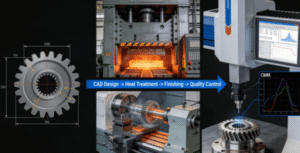
Figure 2: A systematic, closed-loop manufacturing workflow—integrating design, heat treatment, and metrology—is fundamental to achieving the reliability required in high-performance automotive gearboxes.
- Inspection Techniques and Standards: Using coordinate measuring machines (CMMs) and optical scanners, manufacturers verify gear dimensions against CAD models. Standards such as ISO 9001 provide a framework for consistent checks, reducing noise levels by up to 8 decibels in final products. This level of precision is essential for how to make gears that meet automotive demands.
- Certification and Traceability: Certifications like IATF 16949 for automotive or AS9100D for aerospace enforce traceability and process controls. By adhering to these, companies demonstrate commitment to quality, supporting precision gear machining services that deliver reliable components. Data from sources like NIST further validate measurement accuracy, ensuring compliance.
Conclusion
In summary, precision gear machining empowers the automotive industry to overcome efficiency challenges through advanced processes, material science, and automation. By focusing on tolerance control, optimized manufacturing, and rigorous quality assurance, businesses can achieve substantial cost savings and enhanced reliability. Embracing these strategies not only boosts performance but also positions companies for sustainable growth in competitive markets.
FAQs
Q: What is the typical tolerance achievable in precision gear machining?
A: High-precision gear machining can achieve tolerances as tight as ±0.005mm, ensured by advanced CNC equipment and standards like ISO 9001. This level of accuracy minimizes noise and wear in applications such as automotive transmissions.
Q: How does gear hobbing differ from gear shaping in terms of cost?
A: Gear hobbing is more cost-effective for large batches due to continuous cutting, while gear shaping suits low-volume special designs. Selection depends on production scale and complexity, with hobbing often reducing costs by 20-30% for standard gears.
Q: What materials are best for gears in corrosive environments?
A: Stainless steel (e.g., 316 grade) or engineering plastics like POM offer excellent corrosion resistance. These materials maintain performance in harsh conditions, such as chemical processing, by combining strength with durability.
Q: Can automation improve gear manufacturing lead times?
A: Yes, automated systems like robotic welding can cut lead times by up to 50% by reducing manual interventions. This aligns with Industry 4.0 trends, enhancing overall supply chain efficiency and consistency.
Q: Why is heat treatment critical in gear production?
A: Heat treatment processes like carburizing increase surface hardness and core toughness, preventing premature failure. Proper treatment, guided by standards, ensures gears withstand high loads and extend service life by over 200%.
Author Bio
This article is provided by precision manufacturing experts at LS Manufacturing, a company that helps industrial clients address transmission challenges through advanced gear solutions. With certifications including ISO 9001 and IATF 16949, the team ensures high-quality outcomes for automotive and aerospace applications. For more insights, contact them today for a free, no-obligation project review and design-for-manufacturability analysis.

How Effective Is PRP Therapy for Hair? The Definitive Guide to Restoring Your Hair

Why Choose High-Tech Electric Scooters Over Traditional Options for Commuting?

Recognizing Pet Emergencies: When to Seek Immediate Help from a Veterinarian in Maple Valley, WA