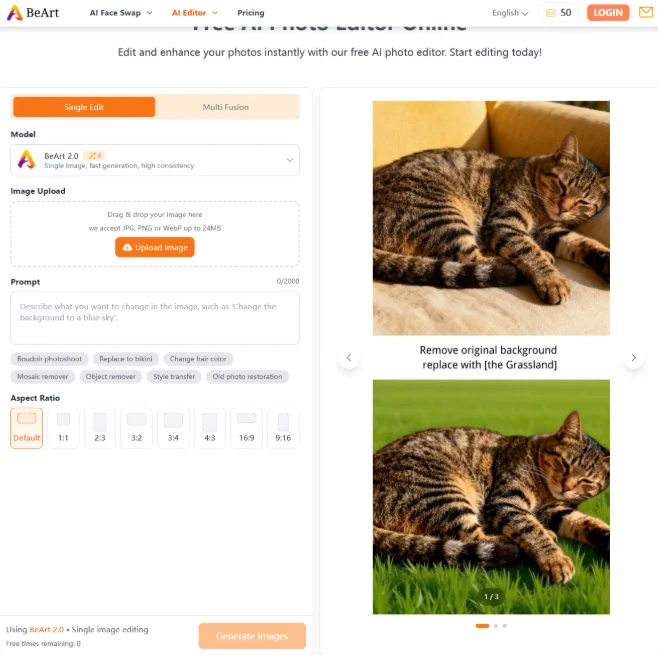
Digital art is changing fast, and you no longer need a paintbrush or years of training to create something amazing. What used to be a “superpower” reserved for professional designers is now available to anyone with a smartphone. Today’s AI Photo Editor has evolved from a simple tool for fixing minor flaws into a powerful creative playground. It allows you to become a visual storyteller, effortlessly turning ordinary photos into funny, emotional, or surreal masterpieces.
The best part? Tools that once seemed like magic, such as the Face Swap technology on BeArt AI, are now incredibly easy to use. Even though the technology behind it is complex, the experience for you is simple, fun, and built for pure exploration.
The Psychology of Visual Transformation
Why are we so drawn to modifying images? It stems from a desire to see the world not just as it is, but as it could be. AI tools tap into this by allowing us to play with identity and context.
When a user engages with a Face Swap tool, they are doing more than just pasting a face. They are engaging in a form of digital role-play. You can visualize yourself as a historical figure, a movie star, or a character in a fantasy world. This isn’t just vanity; it’s a powerful way to interact with media. It creates a personalized connection to the content we consume. Instead of just looking at a poster of a superhero, you can become the superhero. This immersive quality is what makes AI-generated content so shareable and engaging on social media platforms.
Beyond the Basics: Creative Use Cases
A robust AI Photo Editor offers a palette of features that can be combined for artistic effect. Here is how you can use these tools to elevate your creative projects:
- Themed Greeting Cards and Invitations: Forget generic store-bought cards. AI allows you to place your family’s faces onto elves for Christmas, or onto astronauts for a space-themed birthday party. The AI handles the lighting matching, ensuring that the final image looks cohesive rather than a cut-and-paste job. This adds a layer of personalization that feels high-effort, despite taking only minutes to create.
- Digital Cosplay: For fans of anime, gaming, or cinema, creating a costume is expensive and time-consuming. AI allows for “digital cosplay.” You can take a photo of a cosplayer (with permission or using stock assets) and seamlessly blend your facial features onto the character. It allows you to experiment with different aesthetics and personas without buying a wig or sewing a stitch.
- Artistic Style Transfer: Some AI tools go beyond swapping faces and can swap styles. You can take a mundane selfie and request the AI to render it in the style of an oil painting, a cyberpunk sketch, or a 1950s polaroid. When combined with face swapping, you can create “vintage” portraits of yourself that look like they were discovered in an attic from a century ago.
The Technology of “Vibe” Matching
One of the most impressive aspects of current AI technology is its ability to understand the “vibe” or atmosphere of an image. When you perform a Face Swap, the AI analyzes the lighting environment of the target photo.
If the target photo is a moody, candle-lit dinner, the AI knows that the new face cannot be bright and flat. It must generate shadows, adjust the color temperature to be warmer, and perhaps add a bit of grain. This capability is often referred to as “harmonization.” It is the difference between a bad Photoshop job and a convincing image.
For the user, this means you don’t need to know about “color grading.” You just need to select images that feel right emotionally. If you want a dramatic image, pick a dramatic target photo. The AI will do the heavy lifting of forcing your source face to adapt to that drama.
Tips for the Artistic Creator
To get the most out of these creative sessions, consider the following advice:
- Expression Matters: The AI is great at blending, but it works best when the expressions align. If you are swapping your face onto a screaming warrior, try to use a source photo where you are making a dynamic expression, or at least have your mouth open. A stoic passport photo on an action star’s body can look amusingly stiff.
- Respect the Angle: Think of your images as 3D objects. A face looking left cannot easily be mapped onto a head looking right without distortion. Browse through the templates or target images to find one that matches the orientation of your selfie.
- Ethical Creativity: With great power comes great responsibility. The goal of creative AI editing should always be fun, art, or personal utility. Using these tools to create misleading images of public figures or to harass others undermines the artistic potential of the technology. Stick to consensual fun and personal projects.
Conclusion
We are moving away from a world where “editing” meant “correcting errors.” We are entering a world where editing means “generating possibilities.” The AI Photo Editor is no longer just a digital darkroom; it is a magic wand.
By automating the technical difficulties of lighting, blending, and texture, tools like Beart.ai strip away the frustration of creation. They allow users to think in terms of ideas rather than pixels. Whether you are making a funny meme to make a friend laugh or visualizing a new version of yourself, the barrier between your imagination and the screen has never been thinner. The future of digital art is not about who has the steadiest hand with a mouse, but who has the most vivid imagination.
AI and the Next Generation: Opportunities, Challenges, and Responsibilities
Your AI Isn’t Wrong, It’s Alone: Why Model Disagreement Is the Real Enterprise Risk
SEO for ChatGPT: Boost Your Brand in AI Responses