Key Takeaways
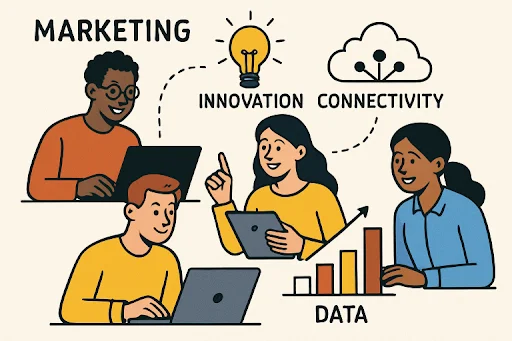
- Embracing digital transformation is crucial for effective marketing and ongoing business agility.
- Personalization and customer engagement are essential for deepening brand loyalty and driving positive customer experiences.
- Data-driven decision-making leads to more effective and efficient campaigns by ensuring optimal resource allocation.
- Strategic partnerships can expand market reach, enhance core capabilities, and provide access to new audiences.
In today’s fast-moving, highly competitive business environment, companies face mounting pressure to remain not only relevant but also innovative in how they reach and retain customers. As consumer expectations evolve rapidly and new tools emerge seemingly every day, it has become more important than ever for organizations to employ flexible and creative marketing strategies. Modern businesses are often required to pivot quickly in response to technological advancements, shifting market trends, and changes in customer behavior. The ability to remain agile in this context provides a significant advantage, ultimately allowing a business to keep ahead of its competitors. Recognizing the advantages of staying current, organizations frequently seek out a consultant for business growth, leveraging their expertise to assess new opportunities, fine-tune their marketing approaches, and implement tailored solutions that foster long-term success.
Modern marketing has evolved into a multifaceted discipline that goes far beyond traditional advertising campaigns. Today, the most successful strategies rely heavily on a blend of technology, data-driven insights, and highly personalized engagement tactics to create authentic connections that endure over time. Rather than simply broadcasting messages, businesses now use a range of digital tools to interact with customers more deeply, building trust and loyalty with each engagement. Companies that succeed in this arena are those that recognize the need to intertwine overarching strategy with measurable results, harnessing every available channel and metric to stay ahead of the curve. Cultivating a loyal customer base has become a matter of strategic orchestration, where personalized experiences and agility determine long-term growth.
Embracing Digital Transformation
The digital revolution has fundamentally changed the way businesses operate, communicate, and grow. Digital transformation, encompassing the adoption of new technologies, reimagining of business models, and redefining of customer experiences, has become imperative for organizations of all sizes and sectors. Today’s consumers expect seamless online experiences whether they’re shopping via e-commerce platforms, connecting with brands on social media, or receiving targeted content through multiple digital touchpoints. The accessibility of digital tools means that even small businesses can access powerful resources that were once reserved for large enterprises.
Successful digital transformation is more than a simple upgrade or a string of new software implementations; it’s about taking a holistic approach to how a business interacts with its customers and operates internally. The adoption of artificial intelligence (AI), automation, and machine learning is now at the forefront of contemporary marketing. AI-driven solutions allow marketers to better forecast market trends, personalize their messaging, segment audiences, automate repetitive yet necessary tasks, and improve overall campaign efficiency. According to a McKinsey report, organizations that make substantial investments in digital technology for marketing purposes are far better equipped to identify opportunities, respond to shifting consumer needs, and capture emerging markets. These digital capabilities not only drive revenue growth but also enable companies to create sustainable competitive advantages.
Personalization and Customer Engagement
In the modern marketplace, consumers are inundated with choices and can be selective about which brands they engage with and remain loyal to. They expect brands to not only provide high-quality products and services but also to understand and anticipate their individual needs and preferences. Personalization today goes far beyond simply addressing a customer by name. Advanced data analytics now enables businesses to deliver hyper-relevant content at just the right time, tailored to each customer based on past behavior, purchase history, browsing patterns, and even real-time context.
The drive for personalized marketing has also shaped how businesses approach customer engagement. Companies that integrate interactive content, personalized landing pages, custom loyalty programs, and targeted promotional offers into their strategies consistently achieve higher customer retention and improved conversion rates. This is supported by a recent McKinsey article, which notes that meaningful personalization has become a cornerstone of customer trust, relationship building, and brand differentiation in crowded markets. Furthermore, as competition intensifies, the ability to create engaging, one-to-one customer touchpoints is proving a decisive factor in long-term brand growth and customer satisfaction.
Data-Driven Decision-Making
The evolution of marketing into a data-driven discipline has transformed how organizations set goals, evaluate performance, and refine their messaging. Access to real-time analytics empowers brands to go beyond intuition and make informed decisions based on concrete evidence. Through advanced analytics platforms, marketers can dissect key performance indicators, identify drop-off points in the customer journey, and pinpoint exactly where improvements are needed. This data-driven mindset encourages ongoing experimentation and rapid deployment of A/B tests and new initiatives to see what resonates most with their target audience.
Businesses that employ robust data strategies can better predict market trends, personalize content, and maximize the potential of each interaction to create value and drive customer satisfaction. Data-driven marketing was once a practice limited mainly to large corporations. Still, the rise of cloud-based systems and cost-effective marketing technology solutions has democratized access, enabling organizations of all sizes to leverage these insights. As highlighted by McKinsey, the most data-savvy marketers deliver stronger ROI, quickly pivot to new market demands, and outperform peers through continuous optimization.
Leveraging Strategic Partnerships
In a world where market conditions can shift overnight, strategic partnerships have become a key accelerator of business growth and resilience. Collaborations allow companies to combine their respective strengths, share vital resources, and access capabilities they might otherwise lack. Strategic partnerships can take the form of joint ventures, co-branded marketing campaigns, cross-promotions, technology-sharing agreements, or collaborations with specialized marketing agencies or consulting firms. By working together, organizations can tap into new customer segments, enter unfamiliar territories, and stay at the forefront of innovation while reducing individual risk.
For instance, global brands often choose to team up with independent agencies that have deep local expertise, enabling them to adapt their messaging, content, and channel strategy to specific regional markets with greater precision. These alliances not only save time and resources but also unlock creative solutions that frequently lead to breakthrough campaigns and wider audience reach. Effective partnerships are rooted in complementary abilities and mutual trust, enabling all parties to achieve shared success and long-term growth that would be difficult to attain in isolation.
Conclusion
Strategic marketing solutions are indispensable for modern businesses seeking sustainable growth, relevance, and leadership within their industries. By embracing digital transformation, investing in robust personalization tactics, harnessing the analytical power of data-driven insights, and cultivating productive strategic partnerships, companies create the conditions needed to build lasting customer relationships and outpace their competitors. The modern business climate rewards those who adapt quickly and leverage every available tool. By staying committed to these core strategies, organizations can confidently navigate change while seizing new opportunities in today’s dynamic global marketplace.

The Value Of Tax Accountants In Litigation Support Cases

SEO in the Age of Chatbots: What Businesses Need to Know

Advancing Women's Leadership for Stronger Governance in the MENA Region