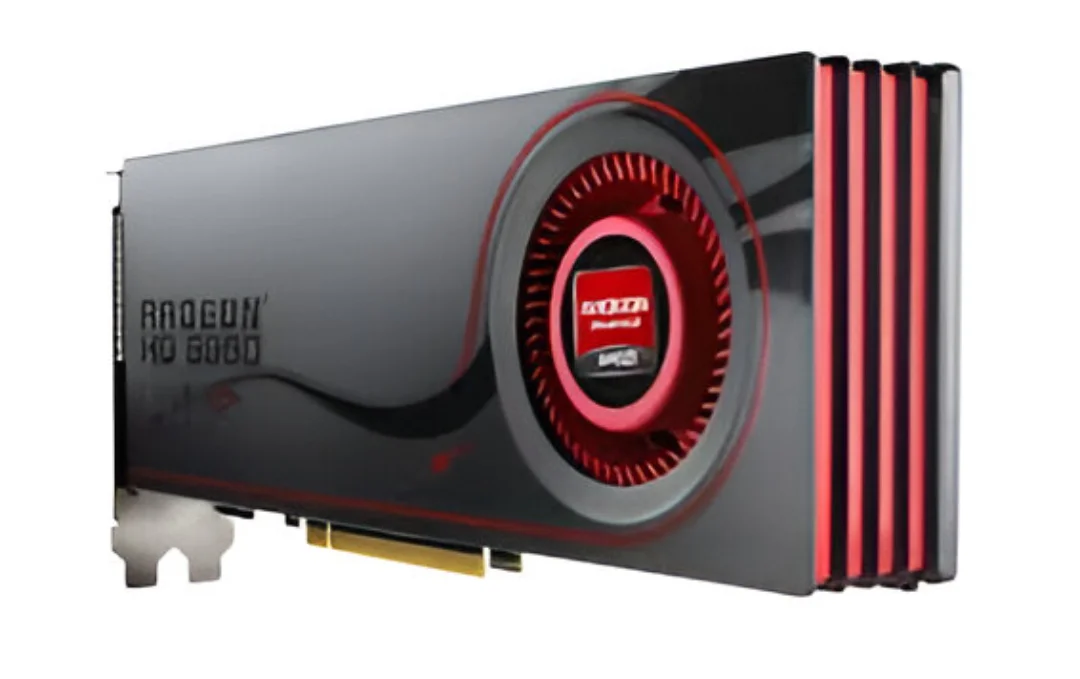
The AMD Radeon HD 6950 is a legacy desktop graphics card that still attracts attention on Google, even years after its release. Many users search for this GPU to understand its specifications, performance, compatibility, and whether it still has any practical use today. Released during a time when DirectX 11 gaming was becoming mainstream, this card played an important role in AMD’s graphics lineup. In this detailed guide, we will explore everything about the AMD Radeon HD 6950, from its architecture and specs to gaming performance and modern relevance.
What Is the AMD Radeon HD 6950?
Overview and Background
The AMD Radeon HD 6950 is a dedicated desktop graphics card developed by AMD as part of the Radeon HD 6000 series. It was designed for gamers and power users who wanted strong performance at a competitive price point. At launch, it sat just below the flagship models and offered an excellent balance of power and value.
This GPU belongs to a generation that focused heavily on DirectX 11 support, better shader efficiency, and improved multi-display capabilities. For many users, it became a popular choice for 1080p gaming during its time.
Release Date and Market Position
AMD officially released the Radeon HD 6950 in December 2010. At that time, it competed directly with NVIDIA’s GTX 560 series. With a launch price around the mid-range enthusiast category, it appealed to gamers who wanted solid performance without paying premium flagship prices.
AMD Radeon HD 6950 Architecture and Design
Cayman GPU Architecture Explained
The AMD Radeon HD 6950 is built on the Cayman GPU, which uses AMD’s TeraScale 3 architecture. This architecture introduced several design improvements over previous generations. AMD redesigned the shader layout to improve efficiency and parallel processing.
The GPU was manufactured using a 40nm process, which was standard for high-performance graphics cards at the time. While this process is outdated today, it was considered advanced during its release period.
Core Technology Used
The card features a large number of stream processors designed to handle complex graphics calculations. The architecture focused on better utilization of shader cores, which helped improve gaming and compute performance compared to earlier Radeon models.
AMD Radeon HD 6950 Technical Specifications
Core Specifications
The AMD Radeon HD 6950 comes equipped with 1,408 stream processors. These processors handle graphical calculations such as lighting, shading, and texture mapping. The GPU runs at a core clock speed of around 800 MHz, which was competitive for its era.
It also includes a solid number of texture units and render output units, allowing it to handle high-resolution textures and complex scenes efficiently for games released during its time.
Memory Specifications
One of the strengths of the AMD Radeon HD 6950 was its memory configuration. Most models shipped with 2 GB of GDDR5 memory, which was generous at the time. The card uses a 256-bit memory bus, delivering high memory bandwidth that helped in texture-heavy games.
This memory setup allowed smoother performance at higher resolutions, especially at 1080p, which was becoming the standard gaming resolution.
Power Consumption and Physical Design
The card has a thermal design power of around 200 watts. It requires two 6-pin PCIe power connectors and typically occupies two expansion slots. A quality power supply of at least 500 watts is recommended to run the card safely.
Features Supported by AMD Radeon HD 6950
Graphics and API Support
The AMD Radeon HD 6950 supports DirectX 11 and Shader Model 5.0. This enabled advanced visual effects such as tessellation and improved lighting in games released during that period. It also supports OpenGL and OpenCL, which allowed limited compute workloads and professional applications.
However, the card does not support modern APIs like Vulkan or DirectX 12 at the hardware level.
Display and Multimedia Features
The GPU supports multiple display outputs, including DVI, HDMI, and DisplayPort. It also supports AMD Eyefinity, which allows users to connect multiple monitors for extended desktop or immersive gaming setups.
For multimedia, the card includes hardware video decoding support for common formats, making it suitable for HD video playback.
AMD Radeon HD 6950 Gaming Performance
Performance at Launch
At launch, the AMD Radeon HD 6950 delivered strong gaming performance at 1080p resolution. It handled most popular titles of the time at medium to high settings with smooth frame rates. Games released between 2010 and 2012 ran particularly well on this GPU.
The card was praised for its price-to-performance ratio and became a popular option among mid-range gamers.
Gaming Performance Today
In today’s gaming landscape, the AMD Radeon HD 6950 struggles with modern AAA titles. Newer games require more VRAM, modern shader support, and newer APIs. While older or lightweight games may still run, users must lower settings significantly.
For casual gaming, indie titles, or classic games, the card can still offer playable performance. However, it is no longer suitable for demanding modern games.
AMD Radeon HD 6950 Benchmarks Overview
Synthetic Benchmarks
In synthetic benchmarks from its era, the AMD Radeon HD 6950 scored well compared to its competitors. These benchmarks highlighted its strong shader performance and memory bandwidth.
Today, these scores appear low compared to modern GPUs, but they still provide useful reference points for legacy performance comparisons.
Real-World Gaming Benchmarks
Real-world benchmarks showed that the card performed best at 1080p with moderate settings. Modern benchmarks indicate that performance drops significantly in newer games due to limited VRAM and outdated architecture.
Driver Support and Compatibility
Official Driver Support Status
AMD has officially moved the Radeon HD 6950 to legacy support. This means no new driver updates or optimizations are provided. The last official drivers focus mainly on stability rather than performance improvements.
Operating System Compatibility
The card works best on older operating systems like Windows 7 or Windows 8. On Windows 10 or newer, driver compatibility can be limited. Linux support is also restricted and may require legacy drivers.
Power Supply and System Requirements
Recommended PSU and System Pairing
A reliable 500 to 550-watt power supply is recommended for systems using this GPU. Pairing it with older generation CPUs provides better balance, as modern CPUs may be bottlenecked by the GPU.
Compatibility with Modern PCs
While the card uses PCIe, which is backward compatible, modern systems may not offer full driver support. BIOS compatibility issues can also arise on newer motherboards.
AMD Radeon HD 6950 vs Similar GPUs
AMD Radeon HD 6950 vs HD 6970
The HD 6970 offers higher clock speeds and more enabled cores. While the 6950 was cheaper, the performance gap was noticeable in demanding games.
AMD Radeon HD 6950 vs NVIDIA GTX 560
The GTX 560 was a direct competitor. Performance varied by game, with each card having advantages in specific titles. The Radeon often offered better memory bandwidth, while NVIDIA had stronger driver support.
Pros and Cons of AMD Radeon HD 6950
Advantages
The AMD Radeon HD 6950 offered strong performance for its time. It supported DirectX 11, had generous VRAM, and delivered good value at launch.
Limitations
Today, the card is outdated. Limited VRAM by modern standards, lack of new driver support, and high power consumption make it impractical for modern gaming.
Is the AMD Radeon HD 6950 Still Worth Using Today?
Who Should Consider It
Retro PC builders, collectors, or users running older games may still find some value in this GPU.
Who Should Avoid It
Modern gamers, content creators, and professionals should avoid this card due to compatibility and performance limitations.
Common Questions People Ask About AMD Radeon HD 6950
Is AMD Radeon HD 6950 good for gaming?
It is suitable for older games but not modern titles.
Does AMD Radeon HD 6950 support DirectX 12?
No, it only supports up to DirectX 11.
How much VRAM does AMD Radeon HD 6950 have?
Most models include 2 GB of GDDR5 memory.
Can AMD Radeon HD 6950 run modern games?
Only at very low settings, and many games will struggle.
Is AMD Radeon HD 6950 obsolete?
Yes, for modern use cases, it is considered obsolete.
Final Verdict on AMD Radeon HD 6950
The AMD Radeon HD 6950 was a strong and competitive graphics card during its prime. It delivered solid gaming performance, good memory bandwidth, and reliable DirectX 11 support. However, in today’s fast-moving technology landscape, it has become a legacy GPU. While it still holds historical value and can handle older tasks, it is no longer suitable for modern gaming or demanding workloads.

How Federal Assistance Programs Now Support More Than Their Original Purpose

How Email Widgets Can Support Time-Sensitive Email Marketing

Deepseekplay com: A Comprehensive Guide to Features and Benefits