
For many fleet operators, visibility used to mean knowing roughly where vehicles were during the day and whether jobs were completed on time. That level of awareness is no longer sufficient when delivery windows are tighter, customers expect precise updates, and regulatory requirements increasingly influence how transport activities must be organised. Real time visibility now connects vehicle location, driver activity, and operational progress into one continuous picture that supports faster and more confident decisions.
Managers who work with connected fleet data quickly notice that visibility is less about technology and more about control. When information flows consistently across dispatch, operations, and compliance functions, uncertainty decreases and daily planning becomes more predictable even when conditions change.
How Real Time Visibility Impact On Fleet Operations?
The introduction of continuous fleet data changes how transport operations are coordinated because decisions can be based on what is actually happening in the field rather than on assumptions or delayed updates. Dispatchers can monitor route progress, identify delays as they develop, and adjust assignments before minor disruptions affect the wider schedule.
This shift has practical consequences for both efficiency and service quality. Vehicles spend less time waiting for instructions, drivers receive clearer communication, and managers can maintain a more balanced workload across the fleet. The result is smoother operations without increasing administrative complexity.
Operational Control – What Managers Actually Gain?
As fleets move beyond basic tracking and start integrating multiple information streams, the value of visibility becomes more tangible because managers gain operational context rather than isolated data points. Knowing where a vehicle is located matters less than understanding what task is being performed, how long it will take, and whether the schedule remains achievable.
This broader operational control supports several practical improvements:
- earlier identification of delays and bottlenecks
- more efficient allocation of vehicles and drivers
- improved punctuality and customer communication
- reduced unnecessary mileage and idle time
- clearer accountability for completed tasks
Managers also gain confidence in their decision making because information is consistent across departments. Dispatch, compliance, and management teams can rely on the same dataset, which reduces misunderstandings and duplicated effort.
For fleets operating light commercial vehicles between 2.5 and 3.5 tonnes, this level of control is becoming increasingly important as operational expectations move closer to those traditionally associated with heavier transport segments. Visibility tools provide the structure needed to manage that complexity without slowing down daily operations.
New Tachograph Rules for 2.5 to 3.5 Tonne Vehicles
One of the most significant recent regulatory developments affecting fleet operations is the extension of tachograph obligations to light commercial vehicles between 2.5 and 3.5 tonnes used in international transport. Many operators previously associated tachographs only with heavy goods vehicles, which has created confusion and delayed preparation across parts of the sector.
The regulatory framework now clearly requires that vehicles in this weight category involved in cross border commercial transport must comply with tachograph rules, including recording driver activity, respecting driving and rest time limits, and maintaining proper documentation. A further milestone is approaching with the obligation to use the second generation smart tachograph, known as G2V2, effective from 1 July 2026 for relevant vehicles. This introduces additional planning requirements related to retrofitting, calibration, and system integration.
In practice, fleets must address several operational areas:
- identifying which vehicles fall within the scope of the rules
- scheduling tachograph installation and workshop capacity
- training drivers who may have limited previous experience with tachographs
- establishing regular download and archiving procedures
- preparing for inspections and audit requests
Arealcontrol has been supporting fleets as they prepare for the new tachograph environment, helping integrate tachograph data into existing telematics systems so that compliance requirements align with operational workflows. Their experience illustrates how regulatory adaptation becomes significantly easier when vehicle data, driver identification, and compliance records are managed within one connected platform.
Drivers, Data, and Inspections
Technology alone does not guarantee compliance. Day to day behaviour, data discipline, and organisational processes play equally important roles. Drivers who are new to tachographs require clear guidance on correct usage, including mode selection, manual entries, and card handling procedures. From an administrative perspective, fleets must establish reliable processes for downloading, storing, and reviewing tachograph data. During inspections, the ability to present structured records quickly often determines whether a check remains routine or develops into a more complex investigation.
Solutions developed by Arealcontrol’s fleet management software help integrate tachograph downloads with broader fleet management systems, reducing manual steps.
Turning Visibility into Faster Decisions and Lower Risk
When real time fleet visibility is combined with compliance awareness, the benefits extend beyond operational efficiency into risk management. Dispatchers gain insight into driver availability, vehicle status, and scheduling constraints, which supports more realistic planning and reduces the likelihood of regulatory infringements.
Managers can respond to disruptions earlier, reallocate resources more effectively, and maintain service reliability even under changing conditions. The same data also supports performance analysis, helping organisations identify inefficiencies and improve resource utilisation over time. The connection between visibility and risk reduction is particularly relevant for fleets expanding into new transport segments, where operational complexity increases alongside regulatory exposure. Integrated systems provide the structure needed to manage both aspects simultaneously.
Main conclusion? As transport environments continue to evolve, the ability to see operations clearly and act on reliable information will remain a defining capability for efficient fleet management.

Why Proactive IT Support Is Essential for Business Continuity and Growth
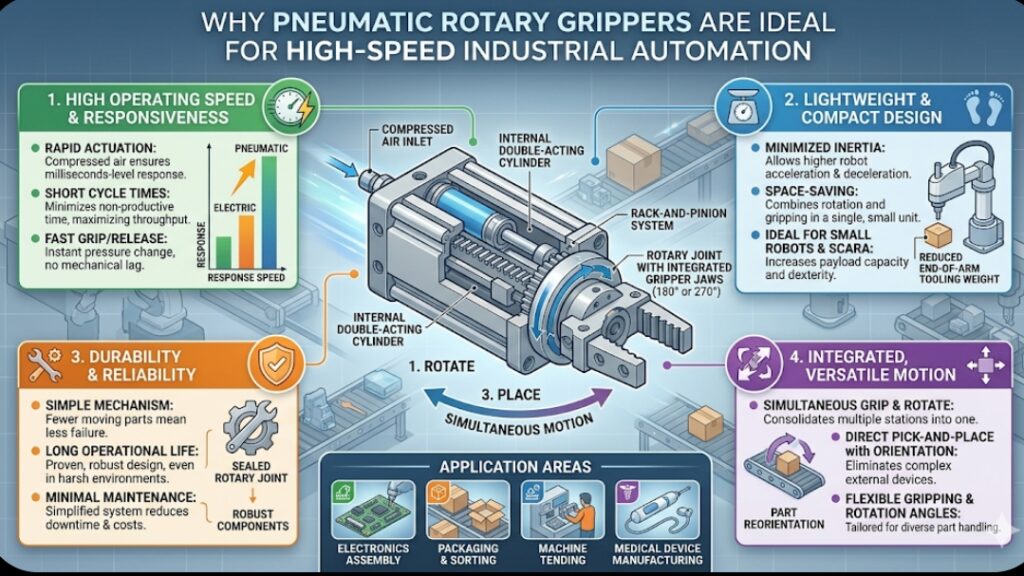
Why Pneumatic Rotary Grippers Are Ideal for High-Speed Industrial Automation

Car Shipping Costs Explained: Factors You Should Know