Tiny Tubes, Big Responsibility—Why Industrial Test Tube Labels Must Get It Right
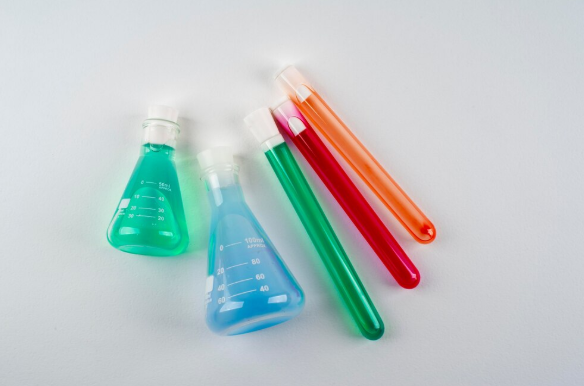
In the heart of a bustling laboratory or a high-output industrial facility, a simple test tube might not seem like the center of attention. But look closer. That unassuming cylinder often holds data that could steer a new product to market, determine safety outcomes, or direct a next step in critical research. In these environments, the stakes are sky-high—and the test tube labels play a far bigger role than many give it credit for.
Reliable labeling isn’t just about organization. It’s about accuracy, compliance, and protecting the integrity of every sample. Because in industrial, pharmaceutical, or biotech settings, one smudged barcode or faded identifier could delay results, compromise an entire batch, or even violate regulatory standards. There’s no room for “close enough” here. It has to be right—the first time and every time after.
More Than a Sticker—Labels Built to Perform
Not all labels are created equal, especially when science, heat, moisture, and chemicals enter the scene. A typical adhesive or low-grade print won’t stand a chance when subjected to centrifuges, cryogenic storage, or solvent splashes. That’s why test tube labeling in industrial environments demands materials that are purpose-built to endure.
From water-resistant polymers to chemical-resistant coatings and cryo-grade adhesives, the technology behind modern labeling has evolved to meet these intense demands. It’s not just about staying stuck—it’s about staying legible, scannable, and reliable under extreme conditions.
Think of it like a safety net for your workflow. If a label degrades, peels, or fades, the information it carried is gone. And in some cases, that lost data can’t be replicated. That’s why investment in the right labeling system isn’t just a convenience—it’s a protective measure for operations, safety, and compliance.
Tracking Samples with Confidence
In industrial laboratories, each test tube could be part of a larger chain—a batch process, an ongoing trial, or a quality control program. Without a solid labeling system, chaos isn’t just a possibility—it’s inevitable. Accurate tracking is what keeps results traceable, auditable, and meaningful.
Whether using barcodes, QR codes, or alphanumeric IDs, the goal remains the same: to instantly identify a sample without second-guessing. Efficient digital integration is often paired with these labels, feeding into databases that manage inventories, track chain-of-custody, and ensure consistency across departments and timelines.
In regulated industries, that traceability isn’t optional—it’s mandatory. Mislabeling or losing a sample can lead to failed audits, non-compliance penalties, or compromised research integrity. That tiny label becomes a legal and operational anchor.
Designed for the Real World of Labs
It’s easy to overlook the real-world demands placed on lab staff. Gloves on. Timelines tight. Conditions unpredictable. Labels have to work with the team, not against them. That means easy peel-and-stick application, no bubbles, no slipping—even with gloved hands or on cold glass.
Some operations rely on pre-printed label sets for mass workflows, while others use print-on-demand systems for ultra-specific, real-time labeling. Both approaches rely on clarity and consistency. There’s no luxury for misreads or illegible text when time-sensitive work is on the line.
Beyond performance, there’s also the element of safety. In facilities handling biohazards, chemicals, or potentially volatile substances, misidentifying a tube could be more than inconvenient—it could be dangerous. Proper labeling literally keeps everyone in the loop and out of harm’s way.
Customization That Meets Compliance
From GMP-compliant production lines to clinical trial labs, customization plays a critical role. Labels often need more than just a name or batch number. Temperature indicators, hazard symbols, date codes, or traceable barcodes are all part of a tailored labeling solution. And those requirements shift based on industry, region, and regulatory authority.
That’s why working with a labeling provider that understands these nuances isn’t a luxury—it’s essential. Whether the job requires tamper-evident labels, solvent-resistant inks, or labels that survive autoclaves and nitrogen tanks, the solution needs to be precise and proactive.
Customization also supports branding and internal process management. A well-organized labeling system can streamline batch recalls, accelerate quality checks, and reduce the margin of error across the board.
The Role of Labels in Scaled Operations
When operations move from small batch to large scale, everything needs to scale accordingly—including labeling. Automation, high-throughput workflows, and larger teams mean the label becomes the first checkpoint in a long chain of data, movement, and decision-making.
In such environments, durability and consistency are only part of the equation. Speed, compatibility with automated dispensers, and clean integration with lab management systems all become critical. It’s about flow, reliability, and eliminating any guesswork.
High-volume industries can’t afford inconsistencies, and that includes labels. A smudged character or misplaced print line may not seem like much—until it slows down an entire process. That’s why scalable, high-performance labeling systems are a silent force behind many efficient industrial operations.
Final Thought: Small Label, Big Impact
It’s easy to underestimate the importance of something as small as a label. But in industrial and scientific work, where accuracy is non-negotiable and data is the backbone of every decision, that sliver of printed material becomes mission-critical.
When it sticks, clarity follows. When it endures, operations stay smooth. When it’s built for the environment it’s in, everything runs safer and smarter.
So while test tubes may be small, the responsibility riding on their labels is anything but. And in this high-stakes space, precision always starts with how things are labeled—and who’s trusted to get it right.

The Comprehensive Guide to Rhett Hartzog: Biography, Career, and Influence

Understanding 127.0.0.1:49342: A Guide for Networking Professionals

How to Create a Realistic AI Avatar for Your Videos