Air Conditioner Repair and Maintenance: A Complete Homeowner’s Guide
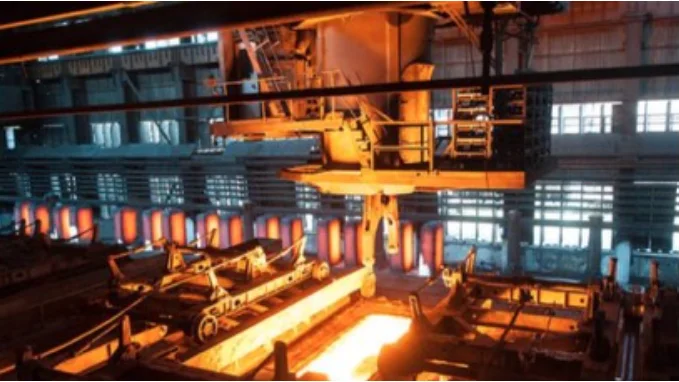
Heat treatment is a group of industrial and metalworking processes used to alter the physical and sometimes chemical properties of a metal by heating and cooling, usually to achieve desired mechanical properties such as hardness, toughness, ductility, or strength. It involves controlled heating to a specific temperature, holding at that temperature (soaking), and then cooling at a predetermined rate to modify the material’s microstructure without changing its shape.
Mechanics of Heat Treatment
Heat treatment processes involve both heating and cooling metals, but they differ mainly in three areas: the temperatures used for heating, the speeds of cooling, and the quenching methods employed to achieve specific characteristics.
Using the right equipment is essential for effective metal heat treatment. This allows for precise control over heating, cooling, and quenching conditions. The heating chamber should be properly sized and equipped with the appropriate type and gas mixture to accurately manage the temperature. Additionally, choosing a suitable quenching medium is crucial for ensuring the correct cooling of the metal.
Steps in Heat Treatment
The heat treatment process generally comprises three fundamental stages:
- Heating Phase
The primary objective is to achieve a uniform temperature distribution throughout the metal by heating it gradually. Critical to this stage is controlling the heating rate, which varies based on:
Thermal conductivity: Metals with higher conductivity (e.g., aluminum) can be heated more rapidly.
Initial condition: Hardened or stressed components require slower heating to avoid thermal shock.
Size and geometry: Larger workpieces or those with irregular cross-sections need extended heating time to ensure core temperature matches the surface, preventing distortion or cracking from uneven expansion.
- Soaking Phase
This stage involves holding the metal at the target temperature for a specified duration, allowing sufficient time for internal structural transformations (e.g., alloy diffusion, grain refinement). Soak time is determined by the material’s chemical composition and mass; for parts with uneven thickness, the thickest section dictates the minimum soaking period to ensure complete phase change.
- Cooling Phase
Cooling the metal to room temperature at a controlled rate is the critical final step that defines the material’s ultimate properties. Cooling speed—regulated by media such as water (fastest), oil (moderate), or air (slowest)—directly influences microstructure formation: rapid cooling promotes hard, brittle martensite, while slow cooling yields softer, ductile structures like pearlite or ferrite.
These three stages function synergistically: uniform heating establishes the foundation, adequate soaking enables structural refinement, and precise cooling locks in the desired characteristics. For example, the “quenching and tempering” process relies on precisely calibrated heating rates, soaking times, and cooling media to produce strong yet resilient components such as automotive crankshafts, demonstrating how each parameter must be tailored to the material’s composition and application requirements.
Annealing
Annealing serves as the counterprocess to hardening, primarily aimed at relieving internal stresses, softening the material, enhancing ductility, and refining grain structure. By heating steel to a critical temperature (typically above its recrystallization point) and cooling it slowly—often in a furnace—annealing allows atomic rearrangement, which dissipates residual stresses from processes like welding, casting, or cold working.
A key application is post-welding treatment: inadequate preheating during welding creates extreme temperature gradients, with molten zones adjacent to room-temperature areas. As the weld cools, this imbalance generates internal stresses and localized hard, brittle regions, weakening the material. Annealing mitigates these issues by homogenizing the microstructure, restoring toughness, and ensuring uniform mechanical properties across the workpiece.
Beyond welding repair, annealing is critical for improving machinability—softening high-carbon steel to reduce tool wear—or preparing metals for further forming operations like bending or drawing, where increased ductility prevents cracking.
Normalizing
Normalizing is a heat treatment process primarily designed to eliminate internal stresses induced by prior manufacturing operations such as heat treatment, machining, forging, forming, welding, or casting. By heating the steel to a temperature above its upper critical point (typically 30-50°C higher than the austenitizing temperature for annealing) and allowing it to cool freely in still air, normalizing refines the grain structure, reduces porosity, and promotes uniformity in mechanical properties across the material.
Uncontrolled internal stresses can lead to premature metal failure, distortion, or dimensional instability. As such, normalizing is often performed as a preparatory step before hardening processes to ensure the steel has a consistent microstructure, thereby enhancing the reliability and success of subsequent heat treatment operations. Compared to annealing, normalizing results in a slightly harder and stronger material with a finer, more homogeneous grain structure due to the faster air cooling rate, making it particularly useful for improving the machinability and structural integrity of medium-carbon steels and castings.
Hardening
Hardening aims to not only increase steel’s hardness but also enhance its strength, though this comes with a trade-off: while strength rises, ductility decreases, rendering the metal more brittle. For this reason, tempering often follows hardening to mitigate brittleness.
The process begins with the first two standard heat treatment stages: gradual heating to a uniform temperature and soaking to ensure complete austenitization. The critical distinction lies in the third stage, rapid cooling (quenching). Most steels require immersion in water, oil, or brine to achieve hardening; only a few alloys harden effectively via air cooling.
Key Factors Influencing Hardening:
- Carbon Content: Up to 0.80% carbon, hardness increases directly with carbon concentration. Exceeding this threshold enhances wear resistance (due to cementite formation) but not hardness.
- Alloy Additions: Alloys reduce the required cooling rate for hardening, lowering the risks of cracking or warping. They also amplify carbon’s hardening efficiency, allowing alloy steels to reach maximum hardness with lower carbon content than plain carbon steels—often resulting in superior performance.
- Quenching Dynamics: Carbon steels demand extreme rapid cooling (below 1000°F in <1 second), typically using brine or water. Alloy steels, with their slower cooling requirements, use oil quenching. To avoid cracking, parts are often removed from the quench bath at ~200°F (before entering the “cracking range” of room temperature to 200°F) and air-cooled.
This balance of heating, soaking, and controlled quenching transforms the microstructure—most notably forming hard martensite—laying the groundwork for strength, while subsequent tempering refines toughness.
Tempering
After hardening—whether via case hardening, flame hardening, or other methods—the rapid cooling inherent in the process leaves steel overly hard, brittle, and internally stressed. Tempering addresses these issues by relieving stresses, reducing brittleness, and balancing mechanical properties, making it an essential follow-up to hardening.
Tempering follows the same three-stage framework as other heat treatments but with critical differences in temperature and outcomes:
Heating: The hardened steel is reheated to a precise temperature below its lower critical point(ranging from 212°F up to just under the low-critical threshold).
Soaking: Held at this temperature for a specified duration—typically 1 hour per inch of thickness (minimum 1 hour for parts <1 inch thick)—to allow microstructure transformation.
Cooling: Usually air-cooled in still air, similar to normalizing, cooling rate has minimal effect on most steels.
Temperature Control: Unlike annealing, normalizing, or hardening (all performed above the upper critical point), tempering occurs below this threshold. The chosen temperature directly dictates the final balance of hardness and ductility: higher temperatures reduce hardness more significantly but increase toughness.
Property Trade-offs: While tempering unavoidably softens steel, it transforms the brittle martensite from hardening into tempered martensite—a finer, more balanced structure. Up to 450°F, tempering can even increase tensile strength; beyond this temperature, strength gradually decreases as the material softens further.
Microstructural Refinement: The process relieves quenching stresses by allowing carbon atoms to diffuse and form small carbide particles, reducing internal strain while maintaining sufficient hardness for practical use.
In essence, tempering is the “fine-tuning” step of heat treatment: it takes the extreme hardness of quenched steel and tailors it to application-specific needs—whether prioritizing wear resistance (lower tempering temps) or impact toughness (higher temps)—ensuring the material is neither too brittle nor too soft for its intended function.
Heat treatment is a controlled thermal process that modifies material properties like strength, durability, and wear resistance by regulating heating, soaking, and cooling cycles. Common techniques include surface-focused methods (nitriding, carburizing, induction hardening for localized hardening), and joining processes like brazing. Each method produces distinct results due to variations in temperature, timing, and cooling rates. To select the right process, engineers must consider material composition, desired properties and manufacturing needs (part size, complexity) to ensure the final product meets performance requirements.
Conclusion
Heat treatment is a controlled thermal process that modifies material properties like strength, durability, and wear resistance by regulating heating, soaking, and cooling cycles. Common techniques include surface-focused methods and joining processes like brazing. Each method produces distinct results due to variations in temperature, timing, and cooling rates.
To select the right process, engineers must consider material composition, desired properties and manufacturing needs to ensure the final product meets performance requirements.
Why Industrial Automation and Robotics Are Essential for High-Precision Manufacturing
Is Investment Casting Right for Your Industry? Here’s What to Know
Why CNC Machining is Premium Choice for Prototyping?