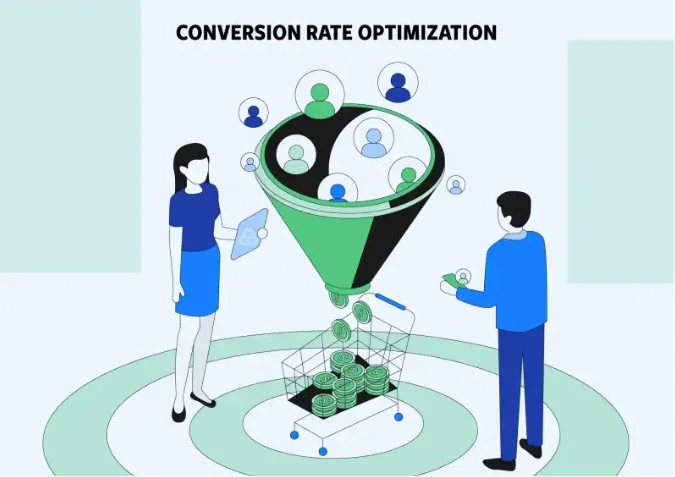
Every ecommerce brand wants more revenue. Most assume the solution is simple—drive more traffic. But in today’s competitive digital environment, traffic alone does not guarantee growth. What matters is how effectively your website converts that traffic into paying customers.
This is where a CRO audit (Conversion Rate Optimization audit) becomes one of the most powerful tools for ecommerce businesses. A well-executed CRO audit uncovers friction points, identifies missed revenue opportunities, and creates a data-backed roadmap to improve conversions, AOV, and long-term customer value.
In this article, we break down how CRO audits transform ecommerce performance and why investing in CRO audit services delivers measurable business impact.
What is a CRO Audit and Why Does It Matter?
A CRO audit is a systematic evaluation of your ecommerce store to understand how visitors behave, what stops them from converting, and what improvements can maximize revenue.
Unlike basic analytics checks or UI reviews, a CRO audit takes a deeper, holistic approach by evaluating:
- Website performance
- User experience & UX flows
- Content quality
- Product page optimization
- Checkout efficiency
- Technical issues
- Trust, credibility & reassurance signals
- Behavioral insights
- A/B testing opportunities
A CRO audit bridges the gap between traffic generation and actual revenue outcomes. Instead of spending more on paid ads or SEO to bring in new users, it helps convert your existing visitors first—at a fraction of the cost.
Traffic ≠ Revenue: Why Many Ecommerce Stores Lose Money
It’s common to see brands investing aggressively in traffic acquisition but barely optimizing their conversion processes.
Symptoms of a low-converting ecommerce store:
- High bounce rates
- Low add-to-cart rates
- Cart abandonment
- Weak mobile conversions
- Poor checkout performance
- Low repeat purchases
- High dependency on paid campaigns
What most stores overlook is that the issue often isn’t traffic—it’s experience.
A CRO audit helps identify these weaknesses and provides a clear path to improvement.
How a CRO Audit Transforms Ecommerce Performance
Let’s break down the key areas where a CRO audit generates real business growth:
1. Improves User Experience, Reducing Friction
Every second of delay, every extra click, and every confusing element on the page increases friction and reduces conversions.
A CRO audit evaluates the user journey from homepage to checkout and highlights issues like:
- Slow-loading pages
- Complicated navigation
- Hidden CTAs
- Poor product descriptions
- Lack of trust signals
- Cluttered design
When these issues are fixed, visitors move effortlessly through the funnel—leading to higher conversions and better engagement.
2. Enhances Product Pages for Higher Conversion Rates
Product pages are the heart of ecommerce revenue. A CRO audit reveals whether your pages:
- Communicate value
- Answer customer objections
- Demonstrate social proof
- Offer clear CTAs
- Display essential product info
- Support buying decisions
Optimized product pages often lead to:
- Higher add-to-cart rates
- Better conversion rates
- Increased average order value (AOV)
- More repeat customers
3. Reduces Cart Abandonment and Optimizes Checkout Experience
Checkout is where most ecommerce brands lose money.
Through a CRO audit, brands discover issues such as:
- Complicated forms
- Lack of payment options
- High shipping costs
- Unexpected fees
- Mandatory sign-up
- Poor mobile checkout
By fixing these friction points, businesses recover lost revenue and dramatically improve their checkout completion rates.
4. Uncovers Technical Errors That Kill Conversions
Not all conversion issues are obvious. Some are hidden technical problems discovered only through a CRO website audit, such as:
- Broken CTA buttons
- Form validation issues
- Tracking errors (GA4/Tag Manager)
- Cross-browser inconsistencies
- Mobile responsiveness issues
- Failed coupon codes
These technical errors silently reduce conversions—even when traffic is high. Identifying and fixing them immediately boosts revenue without spending an extra dollar on marketing.
5. Provides Data-Driven Insights for Smarter Decision-Making
CRO audits rely on actual user behavior data through:
- Heatmaps
- Session recordings
- Scroll-depth analysis
- Funnel analysis
- GA4 events
- Attribution modeling
- Customer journey analysis
Instead of guessing what might work, the audit shows exactly what users do—and why they don’t convert.
This leads to intelligent decisions, not assumptions.
6. Helps You Prioritize High-Impact Improvements
Not every optimization task delivers equal results.
A CRO audit prioritizes improvements based on:
- Impact on conversions
- Implementation difficulty
- Alignment with user behavior
- ROI potential
This means your team focuses on changes that move revenue the fastest—rather than wasting time on low-impact updates.
7. Increases ROI from Paid Ads and SEO
Think of conversion optimization as multiplying the value of your marketing channels.
If your store improves conversion rate from 1% → 2%:
- Your revenue doubles
- Your CPA drops
- Your ROAS grows
- Your overall marketing profitability increases
A CRO audit ensures your campaigns deliver the maximum possible return.
8. Boosts Customer Loyalty and Repeat Purchases
Conversion optimization isn’t just about the first purchase—it also improves long-term customer value.
A CRO audit evaluates and enhances:
- Post-purchase experience
- Thank-you pages
- Email flows
- Customer support accessibility
- Return policies
- Loyalty program visibility
When experiences improve, customers come back more often—reducing acquisition costs over time.
9. Creates a Roadmap for Continuous Optimization
Ecommerce success isn’t a one-time project—it’s ongoing.
A CRO audit ends with a clear strategic roadmap that includes:
- Key issues
- Prioritized tasks
- Testing recommendations
- UX enhancements
- Tracking improvements
- Technical fixes
- Long-term CRO goals
This roadmap helps ecommerce teams stay focused on measurable growth.
Why Professional CRO Audit Services Deliver Better Results
While internal teams can perform basic checks, expert CRO audit services provide deeper insights thanks to:
✔ Advanced tools
✔ Industry benchmarks
✔ Cross-platform experience
✔ Analytics expertise
✔ A/B testing proficiency
✔ UX/UI specializations
They not only identify issues—but also recommend proven, revenue-generating solutions.
Final Thoughts:
In ecommerce, growth isn’t just about reaching more people—it’s about converting the traffic you already have.
A CRO audit transforms your store by:
- Enhancing user experience
- Improving product presentation
- Strengthening checkout performance
- Eliminating technical issues
- Increasing ROI on every marketing channel
If you’re serious about boosting conversions, revenue, and customer lifetime value, investing in a CRO audit is one of the smartest decisions your ecommerce brand can make.