Your resume just landed in an employer’s inbox. But before any human reads it, an algorithm decides your fate in seconds.
Over 90% of employers now use AI-powered systems to filter applications. For job seekers, understanding how recruiters use AI isn’t optional anymore. It’s survival.
This guide breaks down how AI screening works, what these systems look for, and how you can optimize your applications to get past the bots.
The reality: Your resume’s first reader is probably an algorithm, and how you prepare for that reality will determine whether you land interviews or waste months applying into the void.
Why Do Recruiters Use AI to Screen Resumes?
Hiring at scale is brutal. When a single job posting attracts hundreds or thousands of applications, manual review becomes impossible. Goldman Sachs received over 315,000 internship applications for 2024.
AI automates the grunt work. Recent surveys show 51% of companies already use AI in hiring, with 68% planning to adopt it by end of 2025. AI scans thousands of resumes in seconds, applies consistent criteria to every applicant, and handles massive volumes without proportional HR headcount increases.
Popular Applicant Tracking Systems (ATS) like Workday, Oracle Taleo, Greenhouse, and LinkedIn Recruiter now include AI-powered screening as standard. For recruiters, AI has become essential.
How Does AI Resume Screening Actually Work?
Your resume’s first reader is probably an algorithm. Research shows over 75% of resumes get filtered out at this stage, never reaching human eyes.
When you submit an application, an ATS parses your resume and compares it against the job description. The system extracts your skills, job titles, education, and qualifications, looking for keywords that match employer criteria. Using natural language processing, AI recruiting software evaluates how well your profile matches the posting, then scores and ranks each applicant. Only top-scoring resumes advance.
About 82% of companies use AI specifically to review resumes this way.
How to Beat ATS Resume Screening Systems
| Strategy | Implementation |
| Mirror job description language | If the posting asks for “SEO management,” use “SEO” explicitly in your experience section, not just “digital marketing.” |
| Keep formatting simple | Fancy graphics, columns, or tables confuse parsers. Stick to a clean, one-column layout with standard headings. Internal analyses show
72% of recruiters would reject poorly formatted resumes. |
| Use both acronyms and full terms | Include “MBA” and “Master of Business Administration,” “SQL” and “Structured Query Language” to cover keyword variations. |
| Quantify achievements | Use concrete metrics like “Increased sales by 30%” rather than vague descriptions. |
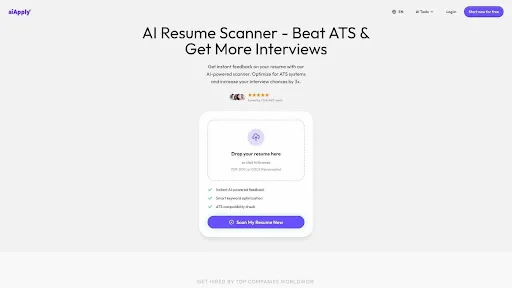
Tools like AIApply’s Resume Scanner can check your resume against 50+ ATS algorithms, flagging formatting issues and missing keywords before you apply.
The Resume Scanner provides instant feedback on ATS compatibility, helping you optimize your resume before submitting applications. It analyzes formatting, keyword usage, and identifies potential issues that could cause automated systems to reject your application.
How Are AI Chatbots Used in Job Interviews?
Companies increasingly use AI chatbots for initial screening. About 40% of companies now use AI chatbots to communicate with candidates. These bots ask pre-screen questions, analyze responses for keywords and grammar, and shortlist candidates or schedule interviews automatically.
Video interviews analyzed by AI are also growing. Tools like HireVue transcribe your answers, assess communication style and tone, and evaluate how well you address the questions. Research shows 23% of firms use AI to conduct interviews via video or chatbot.
For both formats, treat them like real interviews:
- Respond in full sentences with specific examples
- Check your grammar and spelling
- For video, ensure good lighting and audio while speaking with energy and enthusiasm
What AI Skills Tests Do Recruiters Use?
Recruiters use AI to automate skills testing through coding tests, written scenario responses, game-based assessments like Pymetrics, and personality questionnaires. Surveys indicate 64% of firms now use AI to evaluate candidate assessments.
Take these seriously:
→ Practice in the provided environment for technical tests
→ Approach calmly for logic puzzles
→ Always be honest on personality questions since AI quickly detects inconsistent answers designed to game the system
Can AI Screen Your Social Media During Hiring?
Your public online presence can be screened by AI. About 42% of companies use AI to scan candidates’ social media or personal websites as part of hiring. AI analyzes your LinkedIn, public tweets, portfolios, and verifies credentials against databases.
Assume anything publicly visible might be seen. Google yourself, keep your LinkedIn current and consistent with your resume, and audit social media for unprofessional content. Highlight positive assets like a well-maintained portfolio or active participation in professional communities.
What Are the Ethical Problems With AI Screening?
AI has transformed recruiting, but significant challenges remain. Amazon famously scrapped a hiring algorithm that started penalizing resumes containing the word “women’s” because training data reflected a male-dominated workforce. Over 46% of companies worry AI may introduce bias based on age, gender, or race.
Many AI hiring tools are “black boxes” where candidates have no idea why they were filtered out. Over half of employers (56%) worry AI might discard qualified applicants inadvertently. Industry surveys found only 26% of applicants trust AI to evaluate them fairly.
Best practice is using AI as an aid, not a final arbiter, with human review of borderline cases. The EU’s upcoming AI Act will likely classify recruitment AI as “high risk,” requiring strict compliance for bias auditing and explainability.
How to Get Past AI and Land More Interviews
Here’s what actually works:
Tailor each application. Always customize your resume to mirror the job description’s keywords and focus on the most relevant experience.
Keep formatting clean. Stick to a simple, one-column layout with standard headings. Put contact info in the main body (not headers).
Highlight achievements with keywords. Emphasize quantifiable results and use specific technical terms the job listing mentions.
Practice for AI interactions. Rehearse typing concise answers for chatbots and do trial runs recording yourself for video interviews.
Maintain professional online presence. Keep LinkedIn updated, Google yourself, and clean up any unprofessional public content.
Use AI tools for candidates. Modern platforms help candidates optimize their applications for ATS systems, practice for interviews, and track their job search progress. These tools level the playing field when facing algorithmic gatekeepers.
Be patient and persistent. Even with perfect optimization, you won’t land every job. Focus on what you can control: your materials and preparation.
Frequently Asked Questions
How do I know if AI screened my application?
Most companies don’t explicitly notify candidates, though some jurisdictions now require disclosure. If you applied through an online portal or ATS, assume AI played a role. Some employers mention automated screening in job postings or career page FAQs.
Can I request human review if AI rejected me?
This depends on company policies. Some allow reconsideration or human review of automated rejections, especially in jurisdictions with AI transparency requirements. It’s worth politely asking the recruiter, though many won’t reverse automated decisions.
Are AI resume scanners biased?
AI systems can perpetuate biases present in their training data. However, responsible employers regularly audit their AI tools for fairness. Regulators are increasing scrutiny of AI hiring tools, and many companies are implementing bias checks and human oversight.
What’s the best resume format to beat ATS systems?
Use a simple, one-column layout with standard section headings (Work Experience, Education, Skills). Avoid graphics, tables, text boxes, or unconventional formatting. Stick to common fonts like Arial, Calibri, or Times New Roman. Save as PDF or DOCX as requested.
Should I use AI tools to write my resume?
AI tools can help generate content and optimize for keywords, but always personalize and review carefully. Job-specific resume builders can create tailored resumes quickly, but ensure the content accurately reflects your experience and sounds natural.
How many keywords should I include in my resume?
There’s no magic number. Focus on naturally incorporating relevant keywords from the job description. Keyword stuffing can make your resume sound unnatural and may hurt your chances. Use variations of important terms and include both acronyms and full phrases.
Do AI chatbots really evaluate my personality?
Some analyze communication style and enthusiasm, but most focus primarily on whether you meet basic qualifications and can articulate relevant experience. Treat chatbot interviews professionally, but don’t overthink gaming personality assessments. Honest, clear responses work best.
Can AI detect if I used ChatGPT on my application?
Some AI tools can identify patterns typical of AI-generated text, though detection isn’t foolproof. The bigger issue is that purely AI-written applications often sound generic and don’t showcase your unique value. Always customize AI-generated content significantly.
What happens if my resume has a gap in employment?
AI systems typically flag employment gaps, but how this affects your application depends on employer criteria. Many companies now recognize that career gaps are normal. If asked, be honest and focus on any skills you developed during that time.
How long does AI screening typically take?
Initial AI resume screening usually happens within seconds to minutes of submission. However, you might not hear back immediately because companies often batch process applications. If you advance past AI screening, human review timelines vary widely.
Navigate AI Screening and Win More Interviews
AI has fundamentally changed how recruiters screen candidates. Your resume will likely be parsed by algorithms, your first interview might be with a chatbot or camera, and AI could be ranking your application against hundreds of others.
Rather than viewing AI as an adversary, think of it as a new gatekeeper with specific rules. Once you understand those rules (use relevant keywords, keep formatting simple, practice for video interviews, maintain a professional online presence), you can navigate through automated filters to showcase your qualifications to the humans who matter.
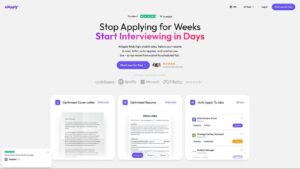
Platforms like AIApply exist specifically to help candidates navigate this AI-driven hiring landscape. From resume optimization and ATS compatibility checking to interview preparation and automated job applications, these tools level the playing field when facing algorithmic gatekeepers.
Stay informed, adapt as needed, and approach your job search with confidence. The algorithms might be reading first, but with proper preparation, they’ll be flagging your application as “Top Candidate” and routing you straight to human decision-makers.
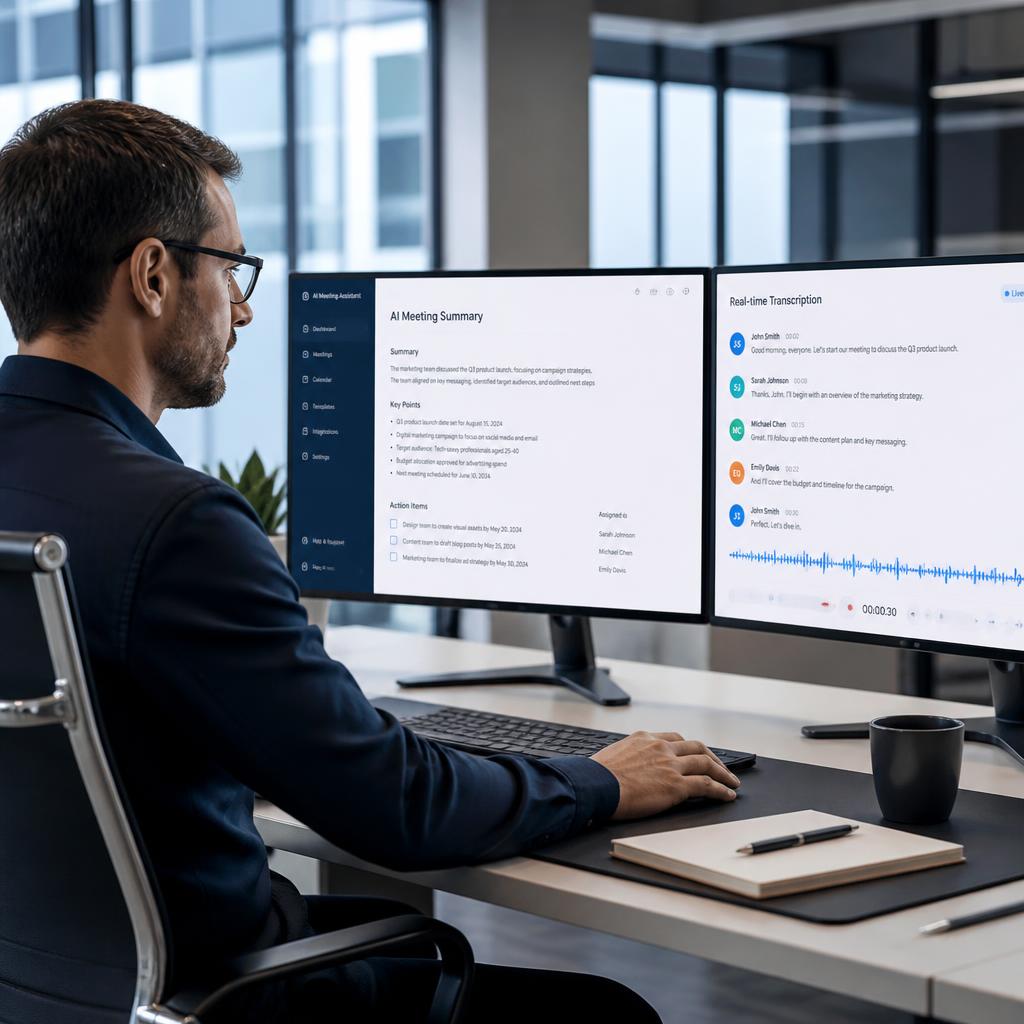
Best AI Tools for Meetings and Interviews in 2026

PPT to Video AI: Bring Your Slides to Life Fast
PDF to Video Converter AI: Transform Docs Fast