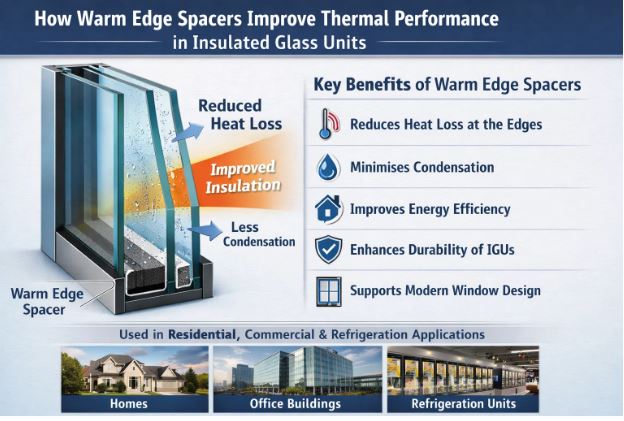
If you have ever stood near a window in winter and felt cold air even when it is closed, you have already seen a common problem in glass systems. The glass itself may be fine, but the edges often lose heat. That is where performance usually drops.
This is exactly why many window manufacturers now work with warm edge spacer suppliers to improve insulation at the weakest point of the glass unit. A well-designed warm edge spacer helps reduce heat loss, improve comfort, and increase the overall efficiency of insulated glass units.
What Is a Warm Edge Spacer?
A warm edge spacer is a component used between two glass panes in an insulated glass unit (IGU). It creates space between the panes and helps seal the unit while improving thermal insulation.
In simple terms:
It is the strip that runs around the edge of double-glazed glass and plays a big role in controlling heat transfer.
Common types include:
- Warm edge spacer bar
- IGU spacer profiles
- Double glazing spacer bar
- Window glazing spacer
Why Traditional Spacer Bars Cause Heat Loss
Older spacer bars were usually made from aluminium. While strong, aluminium conducts heat easily.
This leads to:
- Heat escaping from the edges of windows
- Cold spots near the frame
- Condensation buildup
- Reduced energy efficiency
I have seen many cases where the centre of the glass performs well, but edges become the weak point. That is exactly what warm edge solutions fix.
How Warm Edge Spacers Improve Thermal Performance
1. Reduce Heat Transfer at the Edges
A thermal spacer for windows is designed using materials that do not conduct heat easily.
This helps:
- Keep indoor temperature stable
- Reduce cold spots around the edges
- Improve overall insulation
In real projects, this difference is noticeable, especially in colder environments.
-
Minimise Condensation Issues
Condensation usually forms when warm indoor air meets cold glass edges.
With warm edge spacer profiles:
- Edge temperatures stay higher
- Moisture buildup is reduced
- Window clarity improves
This is especially useful in residential buildings and refrigeration systems.
-
Improve Energy Efficiency
Energy efficiency is not just about glass thickness. The spacer plays a key role.
An energy-efficient window spacer helps:
- Reduce heat loss
- Lower heating and cooling costs
- Improve building energy ratings
Even small improvements at the edge can make a noticeable difference over time.
-
Enhance Durability of Insulated Glass Units
A good spacer bar for insulated glass units also supports long-term performance.
It helps in:
- Maintaining proper sealing
- Preventing gas leakage between panes
- Improving the lifespan of IGUs
Poor-quality spacers often lead to early failure of insulated glass units.
-
Support Modern Window Design
Today’s window systems are more advanced and performance-driven.
With improvements in modern spacer bar technology in double glazing, manufacturers can achieve:
- Better thermal performance
- Slimmer and cleaner designs
- Improved compatibility with different frame systems
This is why warm edge solutions are becoming standard in many applications.
Real-World Insight
In one project involving commercial glazing, the initial design used standard aluminium spacers. Within months, condensation started appearing near the edges.
After switching to warm edge spacer profiles:
- Condensation reduced significantly
- Indoor comfort improved
- Customer complaints stopped
From my experience, this is one of the simplest upgrades that delivers clear results.
Types of Warm Edge Spacer Materials
| Material | Key Benefit |
| Plastic composite | Low thermal conductivity |
| Stainless steel hybrid | Balanced strength and insulation |
| Foam-based spacers | High flexibility and sealing |
| Polymer spacers | Good durability and energy performance |
Each type is chosen based on the application and performance requirement.
Where Warm Edge Spacers Are Used
Warm edge spacers are widely used in:
- Residential windows
- Commercial façade glazing
- Refrigeration glass doors
- Industrial enclosures
Any system using an insulated glass spacer can benefit from improved edge performance.
How to Choose the Right Warm Edge Spacer
Here is a simple approach based on practical use:
1. Check Thermal Performance
Look for low heat conductivity materials.
2. Consider Application
Residential, commercial, or industrial use may require different profiles.
3. Focus on Sealing Quality
A good seal ensures long-term performance.
4. Evaluate Durability
Choose materials that resist moisture and environmental stress.
Key Takeaways
- A warm edge spacer reduces heat loss at window edges
- It helps prevent condensation and improves clarity
- It increases energy efficiency in insulated glass units
- It supports longer lifespan of IGUs
- It plays a key role in modern window system performance
Conclusion
Most people focus on glass quality when thinking about window performance. But in reality, the edges are where many problems begin.
From what I have seen, upgrading to a warm edge spacer is one of the most practical improvements you can make. It is simple, effective, and delivers long-term benefits.
M3 Extrusion supports manufacturers with reliable spacer solutions designed for consistent performance in insulated glass systems. When the right spacer is used, the difference in thermal performance is clearly noticeable.
FAQs
-
What is a warm edge spacer used for?
A warm edge spacer is used in insulated glass units to separate glass panes and improve thermal insulation. It reduces heat transfer at the edges and helps maintain better indoor temperature while improving overall window performance.
-
How does a warm edge spacer improve energy efficiency?
It reduces heat loss through the edges of the glass by using low-conductivity materials. This helps maintain indoor temperature, reducing the need for heating or cooling and improving overall energy efficiency in buildings.
-
Are warm edge spacer bars better than aluminium spacers?
Yes, warm edge spacer bars perform better because they do not conduct heat as easily as aluminium. This helps reduce condensation, improve insulation, and increase the lifespan of insulated glass units.
-
Where are warm edge spacer profiles commonly used?
They are used in residential windows, commercial glazing systems, refrigeration units, and industrial enclosures where insulated glass is required for thermal performance and durability.
-
Do warm edge spacers prevent condensation completely?
They significantly reduce condensation by keeping edge temperatures higher, but they may not eliminate it entirely in extreme conditions. However, they perform much better than traditional spacer bars.
-
What materials are used in IGU spacer profiles?
IGU spacer profiles are made from materials like plastic composites, polymers, and hybrid metals. These materials are selected for low thermal conductivity and long-term durability.
-
How long do warm edge spacers last?
Warm edge spacers are designed for long-term use and can last for many years when properly installed. Their durability depends on material quality and environmental conditions.

Why Audiobook Narration Is Becoming a Popular Freelance Skill?

Understanding Angelnae: A Comprehensive Guide

Discover Fanisco: A Comprehensive Guide to Its Features, Benefits, and Industry Impact