Picture this: you’re standing in a sprawling, irregularly shaped loft space, wrestling with a 25-foot tape measure that keeps retracting on itself. The ceiling heights vary, there’s an alcove you can barely reach, and you’ve already scribbled three sets of conflicting numbers on your notepad. Your client expects precise floor plans by tomorrow morning, and you’re losing daylight—and patience. This scenario is painfully familiar to architects and interior designers who still rely exclusively on traditional measuring tools for complex projects.
The tension between trusted analog methods and emerging digital solutions has never been more relevant. As design projects grow in complexity and client expectations for accuracy intensify, the tools we use must evolve accordingly. This article offers a thorough comparison between conventional measuring tools—the tape measures and rulers that have served professionals for generations—and the advanced laser measuring devices engineered by HOZO Design specifically for the demands of modern design work. Whether you’re questioning the reliability of new technology or wondering if your current toolkit is holding you back, the following analysis will equip you with the clarity needed to make a confident, informed decision about where precision, efficiency, and workflow optimization truly lie.
The Enduring Legacy and Modern Limitations of Traditional Measuring Tools
Traditional measuring tools—tape measures, folding rulers, manual calipers, and spirit levels—have earned their place in every designer’s toolkit through decades of dependable service. They require no batteries, no calibration software, and no learning curve beyond basic competence. A quality steel tape measure can last years, functions in any weather, and provides immediate tactile feedback that many professionals find reassuring. There’s an undeniable elegance in their simplicity, and for straightforward tasks like checking a door frame width or confirming furniture dimensions, they remain perfectly adequate.
However, adequacy is not excellence, and modern design work demands the latter. When architects and interior designers confront the realities of complex projects—multi-room renovations, commercial spaces with irregular geometries, or heritage buildings with uneven surfaces—traditional tools reveal critical weaknesses. Human error compounds with every measurement: a slightly angled tape, a misread marking at the 18-foot extension point, or a sagging blade across a long span can introduce discrepancies of half an inch or more. Multiply these small errors across dozens of measurements, and floor plans begin to drift from reality in ways that cause expensive problems during construction.
Physical limitations present equally serious challenges. Measuring ceiling heights solo requires awkward ladder positioning. Capturing distances across occupied rooms means working around furniture and obstacles. Outdoor measurements on windy days turn a simple task into a two-person struggle. Each of these scenarios consumes time that professional designers simply cannot afford to waste, particularly when clients expect rapid turnarounds and millimeter-accurate deliverables.
The data recording problem compounds everything else. Traditional measurements live on handwritten notes, prone to transcription errors and illegible shorthand. Transferring dozens of figures into CAD software becomes a tedious manual process where a single transposed digit can cascade into hours of rework. For professionals whose competitive edge depends on both precision and speed, these accumulated inefficiencies represent a genuine bottleneck—one that directly delays project timelines, erodes profit margins, and undermines the quality of finished design work.
How HOZO Design Laser Measuring Devices Revolutionize Precision and Workflow
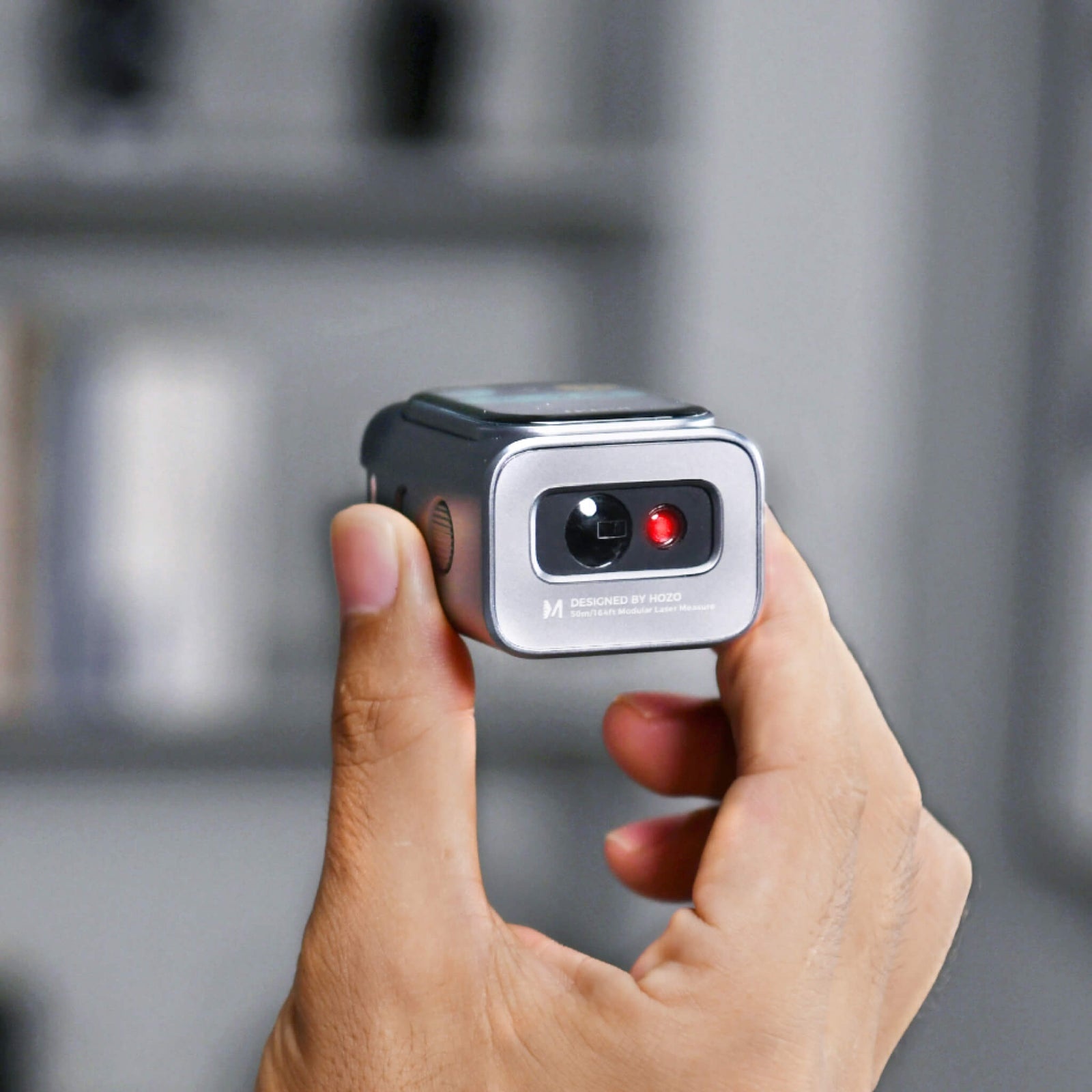
HOZO Design has positioned itself at the intersection of engineering rigor and design-world practicality, developing laser measuring devices built specifically for professionals who cannot afford approximation. Unlike generic laser measurers marketed to casual DIY users, HOZO’s instruments address the particular demands architects and interior designers face daily—complex spatial geometries, the need for rapid documentation, and seamless integration with digital design ecosystems.
The underlying technology operates on a straightforward principle: a laser diode emits a focused beam toward a target surface, and the device calculates distance by analyzing the phase shift of the reflected light. What elevates HOZO’s implementation is the precision of its optics and processing algorithms, achieving accuracy within +/- 1.5mm across substantial distances. This means that whether you’re measuring a compact bathroom or spanning a 60-meter warehouse interior, the reading you capture is virtually identical to physical reality—eliminating the cumulative drift that plagues tape-based workflows.
Beyond raw distance measurement, HOZO devices incorporate intelligent calculation modes that transform raw data into immediately useful figures. Area and volume computations happen automatically from sequential measurements, sparing designers the mental arithmetic and notebook scribbling that traditionally follow a site visit. Pythagorean functions enable indirect height measurements—point the device at the base and top of an exterior wall from ground level, and the tool calculates the true height without requiring ladder access. Continuous measurement mode allows you to sweep a room’s perimeter while the device tracks changing distances in real time, invaluable for mapping irregular curves or identifying the precise location of structural jogs.
Perhaps most transformative is the digital connectivity layer. Bluetooth-enabled HOZO devices transmit measurements directly to companion apps and compatible design software, creating an unbroken chain from physical space to digital model. Readings populate spreadsheets or floor plan applications the moment they’re captured, eliminating transcription entirely and creating timestamped records that serve as documentation long after the site visit concludes.
Key Advantages for Architects and Interior Designers
For professionals whose reputations depend on flawless plans, HOZO’s measurement precision translates directly into client confidence and construction-ready accuracy. When every dimension in your drawings reflects reality within 1.5mm, the costly surprises that emerge during build-out—cabinets that don’t fit, flooring that falls short, millwork that requires field modification—become virtually nonexistent. This level of reliability satisfies the fundamental professional need for measuring tools that guarantee precision without second-guessing.
Time savings on-site are equally compelling. Tasks that previously consumed 45 minutes with a tape measure and assistant—documenting a multi-room apartment layout, for instance—compress to under fifteen minutes working solo with a laser device. That reclaimed time shifts directly into creative design work, client communication, or simply taking on additional projects. For designers billing hourly or managing tight project schedules, this efficiency gain compounds into measurable financial benefit across every engagement.
Safety improvements deserve attention as well. Measuring stairwell heights, elevated architectural details, or distances across construction zones no longer requires precarious ladder positioning or navigating active work areas. A single point-and-shoot operation from a safe standing position captures data that would otherwise demand physical risk and setup time. Remote measurement capability also proves essential in occupied commercial spaces where disrupting ongoing business operations is unacceptable.
The digital data trail HOZO devices create eliminates an entire category of professional frustration. Every measurement is logged with sequence and context, exportable to CAD platforms, BIM software, or simple spreadsheets. Revisiting a project months later no longer means deciphering faded notebook entries—the complete spatial record exists in organized, searchable digital form.
Addressing Common Concerns: Durability, Ease of Use, and Cost
Professionals accustomed to the rugged simplicity of steel tape measures reasonably question whether an electronic device can withstand daily job site conditions. HOZO addresses this directly through reinforced housings designed to absorb impacts, dust-sealed optics, and construction-grade materials that tolerate the realities of active work environments. These are not fragile consumer electronics—they’re engineered for the same rough handling that traditional tools endure.
The learning curve concern dissolves quickly in practice. HOZO interfaces prioritize single-button operation for core functions, with clearly labeled mode selections for advanced calculations. Most professionals report full operational comfort within a single site visit—far less time than mastering any new design software. The intuitive design reflects HOZO’s understanding that tools must serve workflow, not interrupt it.
Regarding investment, the calculation favors laser measurement decisively when viewed across project volume. A single avoided rework incident—one mismeasured wall that would have required cabinet refabrication or flooring reorder—typically exceeds the device cost entirely. Factor in hours saved per project multiplied across a year’s workload, and the return on investment materializes within the first few months of regular use. The question shifts from whether you can afford the upgrade to whether you can afford the ongoing cost of not making it.
Making the Smart Transition: A Practical Guide for Professionals
Recognizing that laser measurement technology offers clear advantages is one thing—actually integrating it into an established professional workflow requires deliberate strategy. The most successful transitions happen when designers treat the shift as a phased evolution rather than an overnight overhaul, building confidence and competence incrementally while maintaining project quality throughout the process.
Begin by honestly evaluating where your current workflow creates friction. Spend one week logging every measurement-related delay, error, or frustration you encounter. Perhaps it’s the fifteen minutes wasted waiting for a colleague to hold the other end of a tape in a commercial space. Maybe it’s the recurring issue of discovering transcription errors only after you’ve begun drafting in CAD. Possibly it’s the anxiety of quoting renovation costs based on measurements you’re not entirely confident about. These pinch points become your priority targets—the specific scenarios where a HOZO laser device will deliver immediate, tangible improvement.
With your priorities identified, follow a structured integration approach. First, introduce a single HOZO device into your toolkit dedicated to the tasks where traditional tools cause the most problems—typically long-distance measurements, solo site visits, and projects requiring high volumes of dimensional data. Use it alongside your tape measure initially, cross-referencing readings until you’ve built personal confidence in the laser’s consistency. This parallel period rarely lasts more than two or three site visits before the laser’s reliability becomes self-evident.
Next, master the core measurement functions—point-to-point distance, area calculation from sequential wall measurements, and indirect height determination using the Pythagorean mode. These three capabilities alone address roughly eighty percent of typical site documentation needs. Once comfortable, explore Bluetooth data transfer by connecting the device to your preferred design application. Configure the companion app to organize measurements by room or zone, creating a systematic capture workflow that mirrors how you’ll later use the data in your drawings.
The third phase involves integrating captured data directly into your design software pipeline. Establish a consistent naming convention for measurement files, and develop a habit of exporting site data immediately after each visit while spatial context remains fresh in your memory. Many professionals find that pairing laser measurements with quick smartphone photos of each measured surface creates a comprehensive reference package that eliminates return visits for forgotten dimensions.
Finally, phase out traditional tools selectively rather than entirely. Tape measures retain genuine utility for quick furniture checks, material marking, and situations where you need a physical straight edge. The goal isn’t abandonment of analog tools but rather strategic deployment—using each tool where it performs best. Your tape measure becomes a supplementary instrument for close-range tactile tasks while the HOZO device handles everything requiring precision, distance, calculation, or digital documentation.
Maintain your device through simple best practices: store it in its protective case between uses, keep the laser lens clean with the provided microfiber cloth, and charge or replace batteries before site visits rather than discovering low power mid-measurement. Back up measurement data weekly to cloud storage, creating a searchable archive that serves future projects in similar spaces. Frame this entire transition not as replacing tools that served you well, but as strategically upgrading your capability to match the complexity and pace that today’s design market demands.
Precision, Speed, and Integration: Why Laser Technology Wins for Design Professionals
The comparison between traditional measuring tools and HOZO Design laser measuring devices reveals a clear divide shaped by three fundamental factors: precision, speed, and data integration. Tape measures and rulers deliver familiar simplicity but buckle under the demands of complex spatial documentation—introducing cumulative errors, consuming disproportionate time, and creating fragile paper-based records that resist efficient digital workflows. HOZO’s laser tools answer each of these limitations with millimeter-level accuracy across substantial distances, dramatic reductions in on-site measurement time, and seamless connectivity that carries dimensional data directly into the software where designs take shape.
For architects and interior designers operating in an increasingly competitive landscape, these measuring devices represent far more than technological novelty. They function as essential precision tools that protect professional reputations, accelerate project delivery, and eliminate the costly rework born from measurement uncertainty. The designers who thrive in tomorrow’s market will be those who strategically adopt instruments matching the complexity of their work. Embracing HOZO Design’s approach to measurement technology is not about discarding proven methods—it’s about ensuring your toolkit evolves as ambitiously as your creative vision demands.
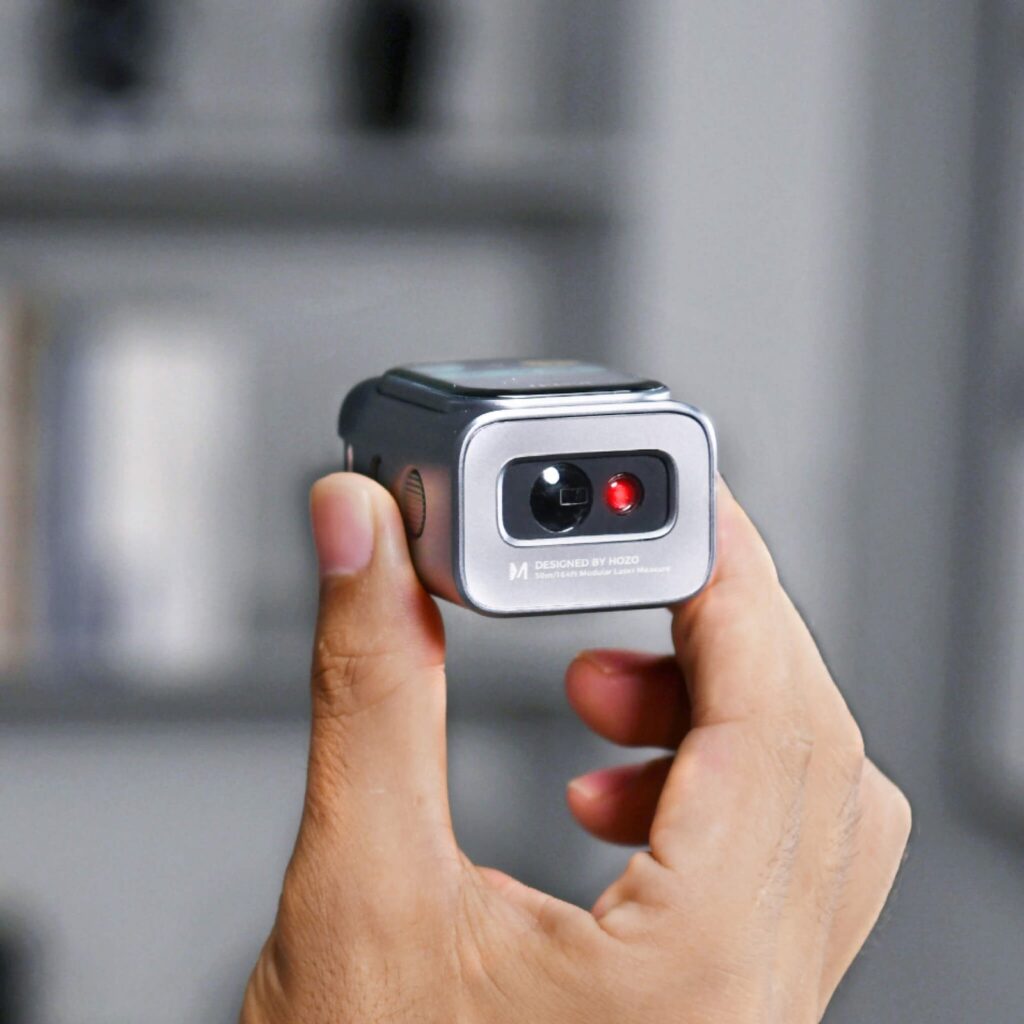
Traditional Tools vs. HOZO Design Laser Measuring Devices

How to Recover WhatsApp Data from iPhone

How Technology is Changing the Way Children Learn — and Why That Matters