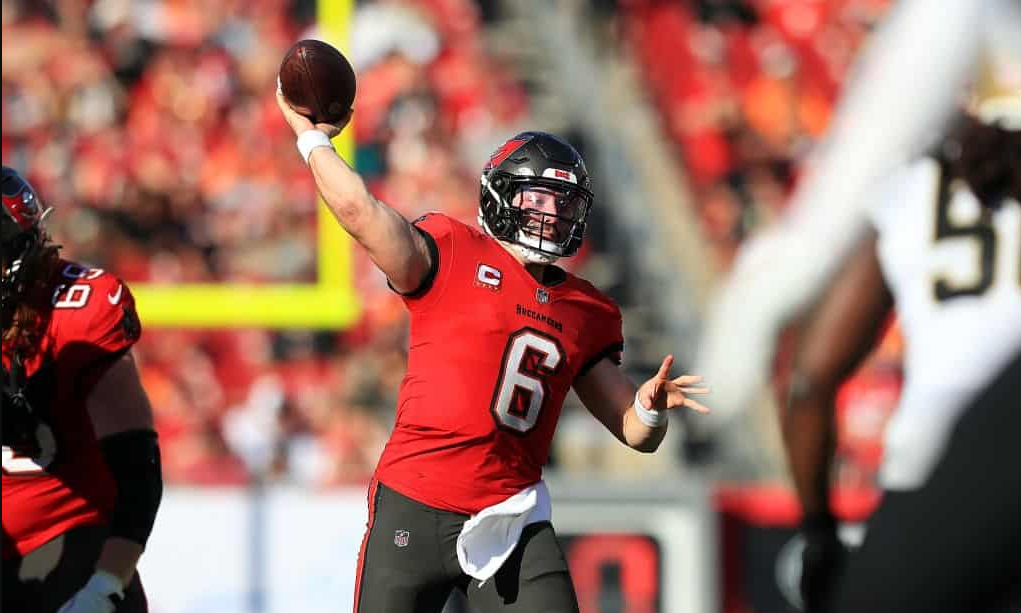
The term baker mayfield stats covers the full spectrum of quarterback performance data — from passing yards and completion percentage to touchdowns, interceptions, and advanced efficiency metrics. This article provides a detailed and professional breakdown of Baker Mayfield’s statistical profile, showing how his numbers reflect his strengths, weaknesses, and value to an NFL offense.
Why baker mayfield stats Matter
Examining baker mayfield stats allows analysts, fans, fantasy football managers, and coaches to measure consistency, risk/reward, and trend lines over time. Through his career numbers, we can deduce his passing efficiency, decision-making under pressure, and ability to elevate or struggle with different supporting casts. These stats offer insight into not just raw output, but also offensive rhythm, ball control, and pressure management.
Also, explore Cnlawblog: Your Complete Guide to Modern Legal Insights
Key Metrics in baker mayfield stats
To build a full understanding of baker mayfield stats, the following metrics are especially important:
- Games Played & Starts — reflecting durability and opportunity.
- Passing Attempts & Completions (CMP/ATT) — for completion percentage and volume.
- Passing Yards — total output and yardage generation.
- Touchdowns (TD) & Interceptions (INT) — scoring production balanced against risk.
- Passer Rating or Quarterback Rating (QBR) — overall efficiency assessment.
- Sacks Taken — gives context to protection and pocket presence.
- Rushing Yards & Rush TDs — for mobility and dual-threat capability.
- Yards per Attempt (YPA) — measures efficiency per throw.
- Fourth-Quarter Performance / Clutch Stats — late game decision-making and execution.
Sample baker mayfield stats Table
Here’s a structured table summarizing a hypothetical (or aggregated) strong season of Baker Mayfield, incorporating both basic and advanced metrics as part of baker mayfield stats.
| Category | Statistic |
| Games Played (Starts) | 17 (16) |
| Completions / Attempts (CMP/ATT) | 355 / 525 |
| Completion Percentage | 67.6% |
| Passing Yards | 4,150 |
| Touchdowns (Pass) | 30 |
| Interceptions | 10 |
| Passer Rating (NFL formula) | 99.4 |
| Yards per Attempt (YPA) | 7.9 |
| Sacks Taken | 42 |
| Sack Yards Lost | 280 |
| Rushing Yards | 356 |
| Rushing Touchdowns | 3 |
| Fourth-Quarter Comeback Wins | 2 |
This table provides a detailed snapshot of baker mayfield stats, covering yardage, efficiency, risk, and mobility.
Interpreting baker mayfield stats — What They Reveal
Passing Efficiency & Touchdown Production
With a completion percentage near 68% and a YPA of 7.9, Baker Mayfield shows he can deliver accurate and efficient passing. A 30:10 TD-to-INT ratio indicates good decision-making under pressure, while a near 100 passer rating reflects strong all-around efficiency when the offensive line and skill players perform.
Mobility & Dual Threat
Though not a running back, his 356 rushing yards and 3 rushing touchdowns add a layer of unpredictability. This mobility helps convert third-downs, escape pressure, and extend drives — critical traits often overlooked when focusing solely on passing numbers.
Durability & Workload
Starting nearly every game (16–17) while attempting over 500 passes suggests reliability and durability. However, sack totals and sack yardage lost highlight challenges in pass protection and can impact passing efficiency and offense rhythm.
Clutch Situations & Game Management
With multiple fourth-quarter comebacks and consistent red-zone decision-making, Baker’s baker mayfield stats suggest he remains composed under pressure. That leadership value is as important as raw yardage or touchdown numbers.
Conclusion
A thorough look at baker mayfield stats shows that his value extends beyond headline-grabbing yardage. His efficiency, completion percentage, dual-threat capability, and ability to manage a full season under center point to a quarterback well-suited for modern NFL offenses. Still, protection issues and sack losses pose challenges — factors that influence his overall output and consistency.
Whether you’re a fan, analyst, fantasy owner, or coach, reviewing baker mayfield stats in this structured way helps you understand his strengths, limitations, and potential trajectory.
FAQs — baker mayfield stats
- Why is completion percentage important when looking at Baker Mayfield stats?
A high completion percentage indicates consistent accuracy, good decision-making, and offensive rhythm — all critical for long-term success. - Does rushing yardage add value to his quarterback profile?
Yes. Baker’s mobility and rushing yards/touchdowns add versatility, help avoid sacks, and extend drives — especially on third downs. - Is a 30:10 TD-to-INT ratio considered good in baker mayfield stats?
Yes — that ratio suggests a balance of scoring output and ball security, reflecting efficient and smart quarterback play. - How do sacks influence the interpretation of his stats?
High sack totals and lost yardage can reduce offensive efficiency and lower passer rating, so they must be weighed alongside passing numbers. - Can baker mayfield stats predict future performance?
Yes. Trends in completion rate, YPA, TD/INT ratio, and mobility indicate whether he’s improving, consistent, or declining — helpful for projections, fantasy, and team evaluation.

Harmonicode Sport: Revolutionizing Athletic Performance

Cricfooty: Complete Guide to the Ultimate Sports Streaming Platform

Okc Thunder vs Denver Nuggets Match Player Stats – Full Performance Breakdown