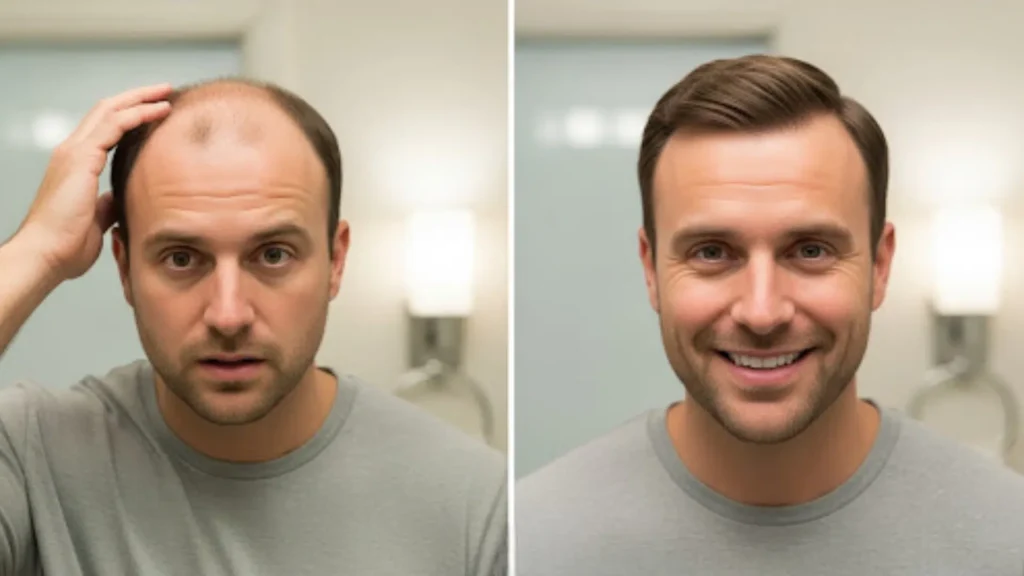
Women experience hair loss when internal or external factors disrupt the normal hair growth cycle. The causes of hair loss in women often include hormonal changes, genetics, stress, nutritional gaps, and certain medical conditions.
These factors can affect how the hair follicle grows, rests, or sheds. In many cases, more than one cause is involved at the same time. Understanding the main trigger is the first step toward choosing the right treatment and supporting healthy hair regrowth.
Key Takeaways
- Hair loss in women often results from a mix of hormonal changes, genetics, stress, and medical conditions that disrupt the normal hair growth cycle.
- Different types of hair loss, such as female pattern hair loss and telogen effluvium, require different treatment approaches, making accurate diagnosis essential.
- Early signs like thinning at the top of the head or increased shedding should prompt evaluation, as early treatment improves the chances of preserving existing hair.
- Treatment options range from medical therapies and platelet rich plasma PRP to lifestyle changes and, in selected cases, hair transplantation.
- Consistent care, realistic expectations, and long-term follow-up play a major role in supporting hair regrowth and managing ongoing hair loss.
Understanding Hair Loss in Women
Hair loss in women looks different than male pattern hair loss. Most women do not lose hair in clear bald spots. Instead, they see thinning across the scalp. The top of the head is often the first area affected.
Women’s hair loss usually keeps the front hairline intact. This can delay diagnosis. Hair loss often has more than one cause. Medical review helps identify the main trigger.
How the Hair Growth Cycle Affects Hair Loss
Hair grows in three main stages: growth, rest, and shedding. Most hair should stay in the growth stage. When too many hairs enter the resting stage, shedding increases. This leads to thinning hair women often notice.
The hair follicle controls hair strength and thickness. Stress, illness, or hormones can weaken the follicle. Hair then grows thinner and shorter. Over time, volume decreases.
Common Causes of Hair Loss in Women
There is no single common cause of hair loss for all women. Many factors can act together. Some causes are short term. Others continue without treatment.
Common reasons for hair loss in women include:
- Hormone changes
- Family history
- Stress
- Poor nutrition
- Certain medical conditions
Each cause affects the hair follicle in a different way. Correct diagnosis helps guide care.
Female Pattern Hair Loss and Genetics
Female pattern hair loss is very common. It causes thinning at the top of the head. The hairline usually stays in place. This pattern is different from male pattern hair loss.
The medical name is androgenetic alopecia. Hair follicles react to hormones called androgens. Over time, follicles shrink. Hair becomes finer and grows more slowly.
Female Pattern Baldness and Hair Changes
Female pattern baldness rarely causes total bald areas. Instead, hair density slowly decreases. The part line may widen. Scalp may show more in bright light.
Genetics play a strong role. Hormone changes can speed up loss. Early treatment helps slow progress. Waiting too long reduces results.
Types of Hair Loss Seen in Women
Not all hair loss is genetic. Some types appear suddenly. Others develop from damage or inflammation. Knowing the type of hair loss matters.
Common type of hair loss includes:
- Telogen effluvium
- Traction-related hair loss
- Autoimmune hair loss
- Inflammatory scalp issues
Each type needs a different approach. One treatment does not fit all cases.
Telogen Effluvium and Sudden Shedding
Telogen effluvium causes sudden hair shedding. It often starts after stress, illness, or surgery. Hair falls out in large amounts. This can be very alarming.
Shedding usually starts months after the trigger. The scalp often looks normal. Hair follicles stay alive. Hair regrowth usually begins once the cause ends.
Medical Conditions Linked to Hair Loss
Some medical conditions affect hair growth. Thyroid problems are a common example. Autoimmune diseases may attack the hair follicle. Hormone disorders can worsen shedding.
Some treatments cause side effects related to hair loss. Medications may affect growth cycles. Others reduce nutrient levels. Reviewing health history is important.
Hormonal Changes and Life Stages
Hormones strongly affect women’s hair loss. Pregnancy and menopause often change hair growth. Estrogen levels shift during these times. This can cause hair loss including heavy shedding.
Some women notice a receding hairline. Others see thinning along the part. These patterns may mix with genetic hair loss. Hormone testing may help in some cases.
Hair Products and External Damage
Daily habits affect hair health. Heat tools weaken the hair shaft. Tight styles pull on follicles. Over time, this can cause breakage.
Some hair products irritate the scalp. Buildup blocks follicles. Chemical treatments raise risk. Gentle care supports healthier growth.
When Hair Loss Becomes Noticeable
Noticeable hair loss often means the issue has progressed. Many women wait too long before seeking help. By then, follicles may be weaker. Early care works better.
Signs include thinner ponytails and wider parts. Scalp may show more. Hair regrowth may slow. These changes should be evaluated.
Hair Loss Treatment for Women
Hair loss treatment for women depends on the cause. There is no single solution. Most plans combine several methods. Consistency is key.
Women’s hair loss treatment options include:
- Medical treatments
- Nutrition support
- Scalp therapies
- Clinical procedures
Each option targets a different issue. Personalized care improves results.
Female Hair Loss Treatment Options
Female hair loss treatment often focuses on slowing loss. Some treatments also support hair regrowth. Most require long-term use. Stopping early reduces the benefit.
Side effects can occur. Medical guidance helps manage risk. Follow-up visits help adjust treatment. Progress takes time.
Platelet Rich Plasma PRP Therapy
Platelet rich plasma PRP uses growth factors from blood. These factors support the hair follicle. PRP helps improve hair thickness. It does not create new follicles.
This option works best in early thinning. Several sessions are needed. Results appear over time. Maintenance may be required.
Hair Transplantation for Women
Hair transplantation may help some women. It works best when donor hair is strong. Healthy follicles are moved to thin areas. Growth appears slowly.
Hair restoration procedures can also address areas beyond the scalp. In cases where thinning affects the brows due to genetics, medical conditions, or over-plucking, an eyebrow hair transplant in NYC may be considered.
This option uses the same principles as scalp hair transplantation to restore natural-looking eyebrow density. Treatment planning depends on donor hair quality and the underlying cause of hair loss.
Women need special planning. Hair direction and density matter. Not all women qualify. Proper evaluation is essential.
Supporting Hair Regrowth at Home
Medical care works best with healthy habits. Nutrition supports follicle health. Protein and iron are important. Deficiencies slow recovery.
Helpful habits include:
- Gentle washing
- Balanced meals
- Stress control
- Loose hairstyles
These steps protect follicles. They support women’s hair loss treatment plans.
Hair Fall Treatment for Women and Expectations
Hair fall treatment for women takes time. Results take months. Early shedding may happen. This is often part of healing.
Tracking progress helps stay patient. Regular checkups allow changes. Gradual improvement is normal. Consistency brings results.
Final Thoughts on Causes of Hair Loss in Women
The reasons for hair loss in women differ widely. Some causes are short term. Others need long-term care. Clear diagnosis guides treatment.
If you lose hair or notice thinning hair women often report, early action helps. Women’s hair loss responds best to timely care. Protecting the hair follicle supports hair regrowth. This approach improves long-term hair health.
The Importance of Maintaining Implant Stability: A Comprehensive Review

How to Know You Have Impacted Wisdom Teeth in Chelsea NYC

How to Remove Food Stuck Between Teeth Safely