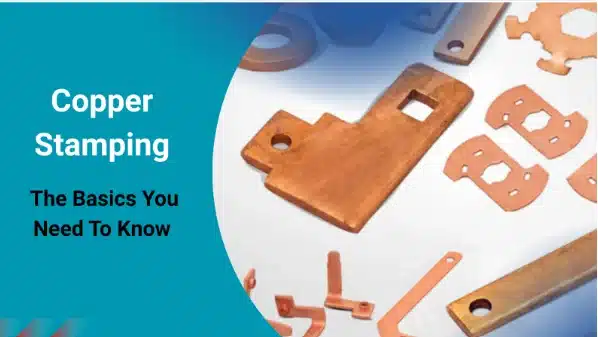
Why Industrial Automation and Robotics Are Essential for High-Precision Manufacturing

Over the past couple of decades, precision manufacturing has drastically changed. What used to depend largely on the skill of operators, manual inspection and mechanical adjustments now depends on something much more reliable: smart machines, digital networks and adaptive control. What it is, essentially, is industrial automation and robotics.
Manufacturers face pressures from every side these days. Tolerances are getting tighter, production volumes bigger and customers now take near-perfect quality as a given rather than a nice bonus. It’s getting so traditional processes alone are unrealistic for meeting those expectations. This is where automation and robotics technology comes in and changes the equation.
So, why have automation and robotics become essential, not optional add-ons, in high-precision manufacturing?
The Rising Demand for Precision in Modern Manufacturing
Across industries aerospace, electronics, automotive, medical devices, the threshold for what is considered acceptable accuracy keeps tightening. An exception that could have been overlooked in the past operational protocols may now result in a part rejection, system shutdown, or safety hazard.
Variable: manual processes, even with the most experienced of workforces, will always have variability. Fatigue, slight misalignment, environmental vagaries and human fallibility: they all come into play. Precision manufacturing on the other hand is all about repeatability.
That is one of the main reasons robotics and automation technology has taken off. There are a lot of other benefits of automated systems: They don’t get tired, they don’t lose focus, and they don’t drift from programmed accuracy. And they produce the same results, time and time again, after countless thousands or even millions of cycles.
Understanding Industrial Automation and Robotics
Before we get deeper in the weeds, it will be useful to see what can and cannot be disentangled.
An industrial automation system is the bigger infrastructure, controllers, signals, actuators, interfaces, communication protocols, that orchestrates machinery and processes. Robotics is one component of this bigger system.
Versus industrial automation robotics, which is just a fancy way to say programmable machines that can perform work with controlled motion. Robots can build; weld, pick parts, inspect and grind, measure and handle materials with such exactness.
Industrial automation coupled with robotics builds environments for production that are no longer the preserve of devices that “talk” to each other, take decisions dictated by information and ensure stable functioning during peak times.
Why Precision Manufacturing Needs Automation
High-precision manufacturing isn’t just about advanced machines. It’s about controlling every variable that affects quality. That level of control is nearly impossible without automation.
1. Repeatability Without Variation
One of the most critical advantages of automation is repeatability. A well-designed industrial automation solution ensures that every cycle follows the same parameters, speed, force, position, timing.
Robotic systems excel here. Once programmed, they execute movements with accuracy measured in microns. This eliminates inconsistencies common in manual setups.
2. Elimination of Human Error
Even highly trained operators can introduce small mistakes. Incorrect torque, slight misplacement, inconsistent pressure, these issues accumulate quickly in precision-dependent processes.
Automation reduces this risk dramatically. Sensors, feedback loops, and robotic controls continuously validate conditions, preventing deviations before they affect output.
3. Consistent Quality Across High Volumes
Scaling production while maintaining precision is notoriously challenging. Automation makes this not only achievable but predictable.
An industrial automation system does not compromise accuracy as volumes increase. Whether producing ten parts or ten thousand, performance remains stable.
The Role of Robotics in Precision Tasks
Robots are particularly valuable in operations where precision is non-negotiable.
Micro-Assembly
In electronics and medical device manufacturing, components are often too small for reliable manual handling. Robotics provides controlled motion that prevents damage and misalignment.
Controlled Force Applications
Robots equipped with advanced sensing systems can regulate force with exceptional accuracy. This matters in polishing, grinding, delicate assembly, and testing.
Complex Multi-Axis Movements
Certain geometries and machining paths are difficult or impossible with manual adjustments. Robotics enables precise multi-axis control without mechanical complexity.
This is where industrial automation robotics becomes indispensable, not merely improving processes but enabling entirely new manufacturing capabilities.
Data-Driven Precision: The Automation Advantage
Precision manufacturing today is inseparable from data. Measurement, monitoring, and adjustment occur continuously rather than periodically.
Modern automation and robotics technology integrates sensors that capture:
- Position and alignment
- Force and torque
- Temperature and vibration
- Cycle time and performance metrics
This data flows into controllers and analytics platforms. Machines adapt in real time, correcting minor deviations before defects appear.
Without such feedback, maintaining high precision would demand constant manual oversight, inefficient, costly, and prone to error.
Productivity Gains Without Sacrificing Accuracy
There’s a persistent myth that precision and speed are trade-offs. Automation challenges that assumption.
Robotic systems operate at high speeds while preserving accuracy. This combination produces substantial productivity gains:
- Faster cycle times
- Reduced rework
- Minimal downtime
- Higher throughput
An optimized industrial automation solution does not simply accelerate processes. It stabilizes them, ensuring that speed never compromises quality.
Flexibility: A Hidden Strength of Automation
Manufacturing requirements rarely stay fixed. Product designs are altered, order quantities vary, and customization increasingly reigns.
These could provide the flexibility which is quite often lacking in old mechanical solutions.
It is frequently quicker to reprogram a robotic cell for a new part than it is to design new tooling, or train operators hoe. Job changeover is a 2 Pokémon and the packaging mug remains accurate throughout various applications.
This agility is especially important in markets with short product lifecycles and accuracy still matters.
Safety and Precision Often Go Hand in Hand
Precision environments frequently involve sensitive equipment, high-speed operations, or hazardous conditions. Robotics contributes not only to accuracy but also to workplace safety.
Robots handle tasks that may be repetitive, physically demanding, or risky for human operators. Meanwhile, sensor-driven controls ensure movements remain predictable and controlled.
A safer environment naturally supports higher precision. Fewer disruptions, fewer accidents, and fewer manual interventions translate into more stable operations.
Cost Efficiency Over the Long Term
Yes, implementing automation requires investment. But evaluating cost purely in terms of purchase price misses the larger picture.
Automation reduces expenses across multiple dimensions:
- Lower scrap rates
- Reduced rework
- Extended tool life
- Less downtime
- Predictable production output
An efficient industrial automation solution often pays for itself through sustained operational savings rather than immediate cost reduction.
Precision Manufacturing Without Automation: The Challenges
To grasp the full value of automation, it is also useful to consider working in its absence today.
For manual configurations, it means constant adjustment of weights and regularly checking the exposure variation. Tolerances become tight and it becomes labor intensive and more delicate.
Small deviations can throw off the process, a different operator, a change in ambient conditions, fatigue that’s just a little too much. That precision manufacturing just becomes more difficult to keep up.
Automation, on the other hand, removes/takes in/varies those parameters and stabilizes.
Industry Examples Where Automation Drives Precision
Aerospace
Aircraft components demand extreme accuracy and traceability. Industrial automation robotics ensures repeatable machining, assembly, and inspection.
Electronics
Miniaturization requires micrometer-level precision. Robotics handles delicate parts without damaging sensitive components.
Automotive
High-volume production with tight tolerances benefits from consistent robotic welding, fastening, and testing.
Medical Devices
Safety-critical products rely on automation for reliable assembly and quality assurance.
Across sectors, the pattern is clear, precision scales better with automation.
Integration: The Real Power of Modern Systems
What truly defines modern manufacturing is not isolated machines but connected ecosystems.
An advanced industrial automation system links robotics, sensors, controllers, and analytics. Machines exchange information, coordinate actions, and respond dynamically.
This interconnected structure enhances precision by ensuring every component operates in harmony rather than independently.
The Evolution of Robotics and Automation Technology
Robotics is evolving rapidly. Systems are becoming smarter, more compact, and more collaborative.
Emerging developments include:
- AI-assisted motion control
- Predictive maintenance algorithms
- Adaptive force control
- Enhanced sensing capabilities
These advancements push robotics and automation technology beyond rigid programming toward intelligent, context-aware operation.
Precision manufacturing benefits directly from this shift.
Future of Precision Manufacturing
Looking ahead, precision requirements will only intensify. Components will grow more complex, tolerances tighter, and production expectations higher.
Automation will not merely support these demands; it will define how manufacturers meet them.
Factories increasingly resemble coordinated digital environments rather than purely mechanical spaces. Robotics, data, and automation become foundational rather than supplementary.
Final Thoughts
Fifty years of precision manufacturing has brought us to the age where reliability, consistency and flexibility are more important than anything else. Old approaches, though useful as ever, cannot always provide with the stability that is needed these days in industries.
That’s why production low-precision works has been automated with industrial automation and robotics being something essential. From removing variability to allowing real-time adjustments, automation changes the way accuracy is attained and sustained.
Whether it’s creating an industrial automation software application that has been optimized to perfection, a comprehensive industrial automation control system or advanced industrial automation robotics, the goal is straightforward, precision on scale.
Manufacturing isn’t just about parts anymore. It’s not about making them perfect; it’s about making them well, over and over again, efficiently. Automation is what allows for that.
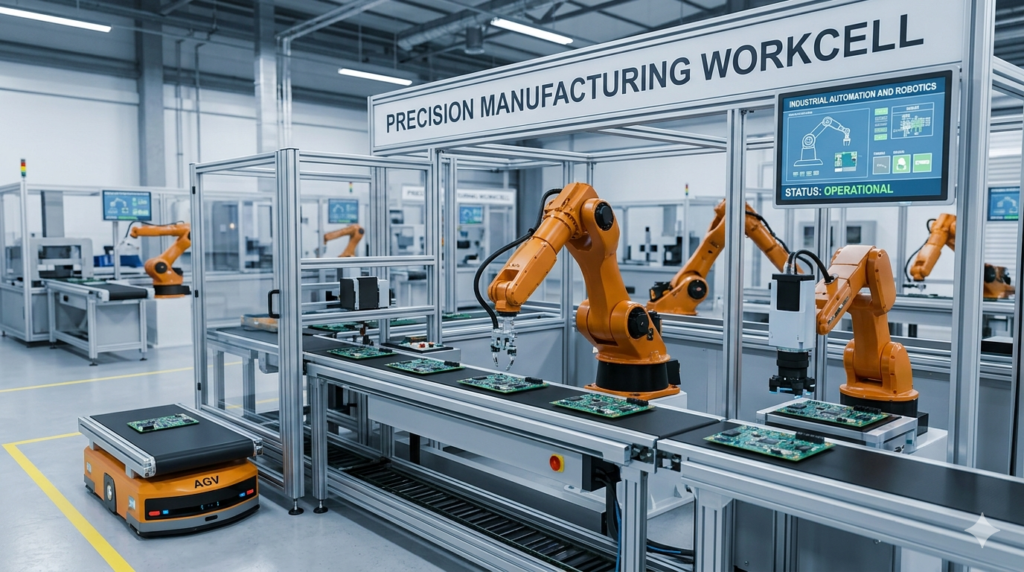
Why Industrial Automation and Robotics Are Essential for High-Precision Manufacturing
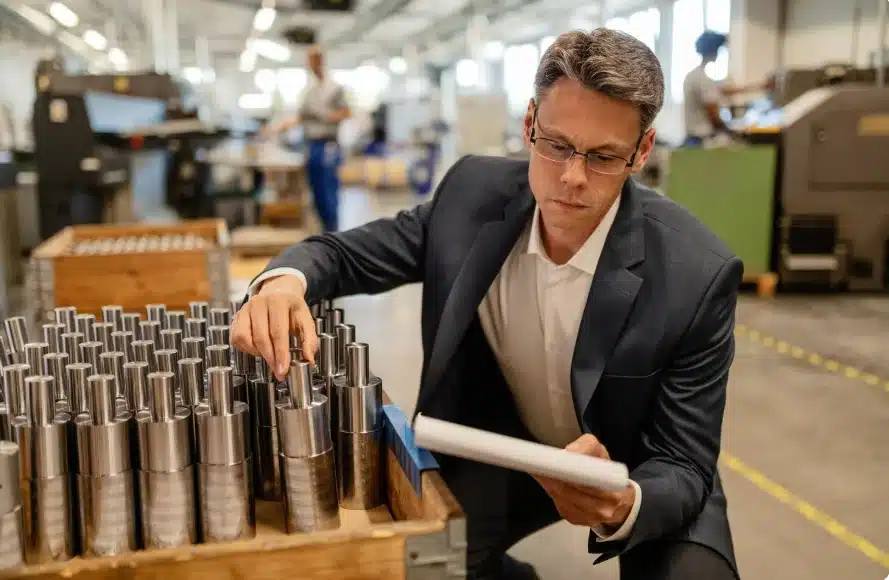
Is Investment Casting Right for Your Industry? Here’s What to Know
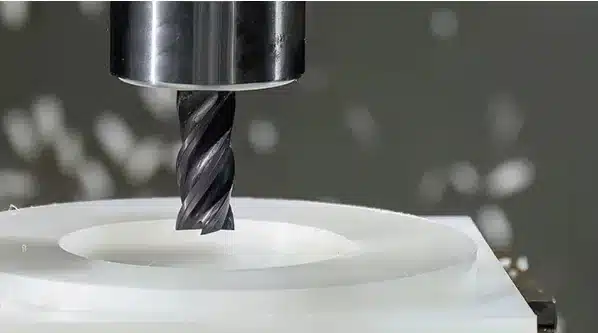
Why CNC Machining is Premium Choice for Prototyping?