How Effective Is PRP Therapy for Hair? The Definitive Guide to Restoring Your Hair
Hair loss can be deeply frustrating, particularly when it starts taking a toll on your self-esteem and the way you carry yourself every day. With regenerative medicine advancing rapidly, more and more people are now asking, how effective is PRP treatment for hair? If you’ve been exploring nonsurgical, natural options for hair restoration, you’ve landed in the right place.
What Is PRP Therapy for Hair?
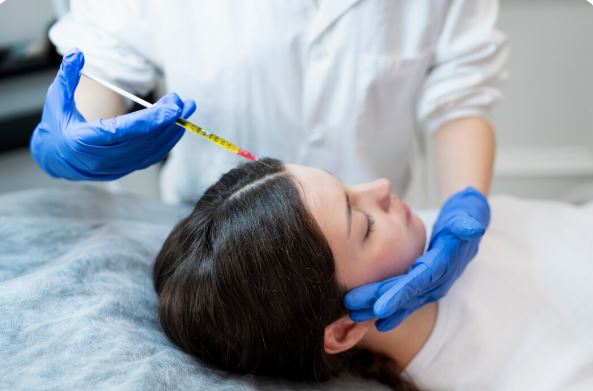
PRP treatment for hair, Platelet-Rich Plasma Therapy, is an advanced procedure that works with your body’s own biological healing system to stimulate hair regrowth. It begins with drawing a small sample of your blood, which is then spun in a centrifuge to separate and concentrate the platelets before being carefully injected into areas of the scalp that need attention.
Platelets carry a high concentration of growth factors that act on damaged hair follicles, increase blood flow to the scalp, and initiate an environment that is conducive to new hair growth. Since this treatment is based entirely on your blood, it is a low-risk treatment with no surgical intervention required.
How Effective Is PRP Therapy for Hair?
One of the most asked questions about PRP treatment in relation to hair restoration is about the efficacy of this treatment in restoring hair in a real and visible manner. This is answered based on the extent of hair loss, individual health background, and their ability to keep up with treatment.
What clinical studies show, alongside feedback from actual patients, is that PRP therapy carries a genuinely strong track record, especially for people catching hair loss in its earlier stages. The kinds of changes patients typically experience include:
- Reduced hair shedding
- Visibly thicker strands
- Greater hair density in thinning areas
- An overall healthier scalp condition
Changes usually start showing up after 3 to 4 sessions, and they tend to build gradually with each follow-up. That said, PRP isn’t a single-visit fix. Maintenance appointments are part of the process if you want to hold onto those gains long term.
Who Is the Ideal Candidate?
The PRP treatment for hair loss is likely to show the strongest outcomes for people facing:
- Hair thinning in early stages
- Androgenetic baldness
- Weak or damaged hair follicles, provided they are still present
In people whose baldness is in advanced stages, where their hair follicles have already ceased to function, PRP treatment is unlikely to show any strong outcomes, and this is exactly why timing is so crucial in this case.
The Science Behind PRP Hair Treatment
To really get a feel for how effective is PRP treatment for hair, it helps to look at what’s happening at a biological level. Platelets are loaded with growth factors, including PDGF (Platelet-Derived Growth Factor) and VEGF (Vascular Endothelial Growth Factor), that the body relies on for tissue repair and cellular regeneration.
Once those concentrated platelets reach the scalp, the growth factors begin doing several important things:
- Waking up follicles that have gone dormant
- Drawing more blood supply and nutrients to the scalp
- Prolonging the anagen phase, which is the active stage of the hair growth cycle
The combined effect is a scalp environment that’s far more conducive to sustained, natural hair growth.
What to Expect During the Procedure
A standard PRP session is simple and moves quickly:
- Blood is drawn from your arm
- It’s placed in a centrifuge to isolate the platelet-rich plasma
- The PRP is then injected into the scalp at targeted locations
From start to finish, appointments run around 45 to 60 minutes. Downtime is minimal the vast majority of patients walk out and carry on with the rest of their day without any issues.
How Many Sessions Are Needed?
Most providers structure treatment like this:
- 3 to 4 initial sessions, each spaced 4 to 6 weeks apart
- Follow-up maintenance every 4 to 6 months going forward
How consistent you are plays a direct role in determining how effective PRP is treatment for hair over time. Keeping to the recommended schedule is one of the most important things you can do to protect your results.
Benefits of PRP Treatment for Hairs
There are some clear reasons why interest in this therapy has grown steadily:
- Natural approach: Relies entirely on your body’s own healing components
- Minimally invasive: No surgery, no significant recovery period
- Safe procedure: Very low risk of allergic reactions or complications
- Improves hair quality: Not just regrowth but also texture and thickness improve too
For anyone who wants real results without going under the knife, PRP sits in a genuinely attractive space.
Are There Any Side Effects?
PRP is well-tolerated by the majority of users, and some minor side effects may include:
- Mild redness and/or swelling around the injection sites
- Briefly, users may feel some sensitivity across the scalp
- Slight discomfort during the injections themselves
These side effects tend to resolve within a day or two and do not interfere with daily life.
Realistic Expectations
If someone asks how effective is PRP treatment for hair loss, the honest answer is that it is a promising treatment, but it’s not an overnight fix. The effectiveness of PRP treatment for hair loss varies from person to person, and it is not a quick fix.
The best results seem to be achieved by those who incorporate PRP with a healthy lifestyle and proper hair care and guidance from an experienced practitioner.
Why Choose a Trusted Provider?
The provider you choose matters just as much as the treatment itself. Technique, equipment quality, and the concentration of platelets all influence what you get out of each session.
At Premier Wellness Florida, every patient receives a treatment plan built around their individual hair concerns, not a generic template. The clinic’s emphasis on advanced regenerative care is aimed at delivering results that look natural and hold up over time.
Is PRP the Right Step for You?
For a significant portion of people dealing with hair loss, PRP represents one of the more credible, low-risk paths toward real restoration. Results take time and commitment, but those who stay consistent, especially early on tend to come away with meaningful improvements.
If you’re ready to explore a non-surgical approach to getting your hair and confidence back, consulting a qualified provider like Wellness center Southwest Florida is a solid first step toward understanding whether PRP is the right fit for you.
FAQs
-
How effective is PRP treatment for hair loss?
PRP treatment has been found to be an effective solution in controlling hair loss, particularly in the initial stages. This helps in controlling hair fall, improving hair thickness, and promoting hair growth. This response varies from person to person, but regular PRP sessions can increase its effectiveness.
-
How many sessions of PRP treatment are required to promote hair growth?
It has been found that 3 to 4 initial sessions are required, which need to be taken 4 to 6 weeks apart. After that, regular sessions need to be taken every 4 to 6 months to maintain hair growth.
-
When can I expect results from PRP treatment?
It has been found that hair fall reduces within a few weeks, but hair growth can be seen 2 to 3 months after undergoing PRP treatment.
-
Is PRP treatment for hair safe, and are there any side effects?
PRP treatment for hair loss is safe, as the treatment is made of the patient’s own blood. The patient may experience some side effects after the treatment, such as redness, swelling, or discomfort; however, these side effects disappear in a couple of days.
-
Who is the best candidate for PRP treatment for hair?
The best candidates for PRP treatment for hair loss are people with early stages of hair loss, balding patterns, or weakened hair follicles. The treatment may not be as effective for people with advanced stages of balding; therefore, early treatment is recommended for the best results.

Fullimedia Com: Elevate Your Digital Media Strategy

Edunexas: Revolutionizing Online Education

NewsApollo: Your Gateway to Reliable News