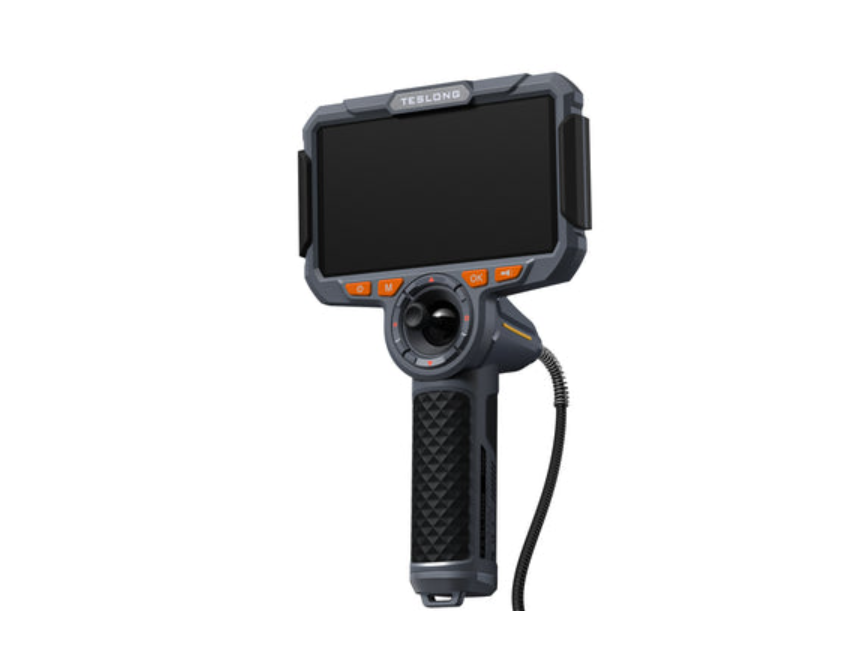
Every technician knows the frustration of trying to inspect components buried deep within an engine block, turbine housing, or complex mechanical assembly. Traditional methods often demand hours of disassembly, specialized rigging, or simply accepting blind spots that could hide critical defects. The cost isn’t just labor—it’s the extended downtime, the risk of missed damage, and the uncertainty that comes with incomplete visual data. How can maintenance professionals overcome these persistent limitations without sacrificing thoroughness or accuracy? The answer lies in a 4-way articulating borescope, a tool engineered specifically to navigate the tortuous internal geometries of modern machinery. By placing a controllable camera exactly where it needs to be, this instrument transforms how technicians approach diagnostics. This article explores how adopting a 4-way articulating borescope directly improves maintenance efficiency, reduces costly guesswork, and empowers technicians working in automotive and aerospace environments to perform inspections that are faster, more accurate, and far less invasive than conventional approaches.
What is a 4-Way Articulating Borescope? Beyond a Simple Camera Probe
A borescope is essentially a remote visual inspection instrument—a camera probe designed to peer inside enclosed spaces without requiring disassembly. At its simplest, it consists of a long, slender insertion tube with a camera and light at the tip, transmitting images back to the operator. However, not all borescopes offer the same capability when navigating complex internal geometries. A fixed borescope provides only a straight-ahead view, while a 2-way articulating model allows the camera tip to bend up and down along a single plane. The 4-way articulating borescope advances this concept significantly by enabling the operator to steer the camera tip in four independent directions—up, down, left, and right—using a joystick or thumb-controlled mechanism. This omnidirectional control means the technician can guide the camera around bends, over obstacles, and into recesses that would otherwise remain invisible. The core components work together as a precision system: the articulating tip provides directional control, the flexible probe allows insertion through narrow and curved passages, the high-resolution camera captures detailed imagery, and integrated LED lighting illuminates surfaces that never see daylight. Together, these elements make the 4-way articulating borescope a specialized mechanical inspection tool purpose-built for the demanding realities of engine, turbine, and assembly diagnostics.
Key Features That Empower Tight Space Inspection
The articulation range of a quality 4-way borescope typically spans 150 to 360 degrees in all directions, controlled through a precision joystick that translates small thumb movements into smooth, proportional tip deflection. This level of control allows technicians to methodically scan surfaces at exact angles rather than hoping the probe happens to face the right direction. Probe diameters commonly range from 2.8mm to 6mm, with insertion lengths extending from one to several meters depending on the application—thin enough to pass through spark plug ports or borescope access holes while long enough to reach deep into turbine stages or cylinder bores. The camera module delivers high-definition imagery with adjustable focus, ensuring that surface details like hairline cracks, pitting, or carbon deposits appear sharp and distinguishable at close working distances. Integrated LED illumination at the tip provides consistent, shadow-reducing light in environments where ambient visibility is zero—inside combustion chambers, gear housings, and sealed cavities. Equally important is construction resilience: tungsten-braided insertion tubes, scratch-resistant sapphire lenses, and sealed housings protect the instrument from oil exposure, elevated temperatures, and the inevitable contact with metal surfaces during navigation through tight passages.
Solving Technician Needs: Direct Benefits for Maintenance Efficiency
For technicians tasked with keeping equipment operational under tight schedules, the primary demand is an inspection method that delivers reliable results without consuming hours of preparation and teardown. A 4-way articulating borescope directly addresses this by eliminating the blind spots that plague less maneuverable instruments. When a camera tip can sweep in all directions, a single insertion point provides comprehensive coverage of surrounding surfaces—cylinder walls, valve seats, weld joints, and bearing races all become visible from one access location rather than requiring multiple entry points or repositioning. This capability translates into dramatic time savings. Instead of removing cylinder heads to visually check for valve erosion, or pulling a gearbox apart to examine gear tooth wear, technicians insert the probe through existing ports and navigate to the area of concern in minutes. The inspection itself becomes more diagnostically accurate because the operator controls exactly what the camera sees, adjusting angles to catch light reflections off cracks, distinguish corrosion from staining, or measure deposit thickness against known reference points. When diagnostics are precise, repair decisions follow immediately—no second-guessing, no exploratory disassembly to confirm what a limited view suggested. The downstream effect compounds: accurate first-time diagnosis means ordering the correct parts, scheduling the right repair scope, and returning equipment to service faster. Reduced disassembly also means fewer opportunities to introduce new problems—stripped fasteners, damaged gaskets, or contamination from an open engine. For maintenance operations measured by uptime and cost-per-repair, these efficiency gains represent measurable financial returns that justify the instrument as a core diagnostic asset rather than a convenience.
Practical Applications: Automotive and Aerospace Inspection Scenarios
In automotive maintenance, the 4-way articulating borescope proves indispensable when diagnosing internal engine conditions without major teardown. Technicians routinely insert the probe through spark plug holes to inspect cylinder walls for scoring, piston crown condition, and carbon buildup on valves—work that would otherwise require head removal. Turbocharger inspections become straightforward by navigating the probe through the intake or exhaust housing to examine compressor and turbine wheel blades for erosion, cracking, or foreign object damage. Transmission diagnostics benefit similarly: access ports or dipstick tubes allow visual confirmation of gear wear patterns, synchronizer condition, and debris accumulation without splitting the case. Fuel system inspections—checking injector tips, intake manifold passages, and EGR channels for carbon restriction—are completed in minutes rather than hours. In aerospace environments, the stakes and complexity increase but the principle remains identical. Turbine engine inspections require examining individual blade airfoils through borescope ports built into engine casings, checking for thermal fatigue cracks, tip rub, and coating loss across multiple turbine stages. Combustion chamber liners are scanned for hot spots, cracking, and fuel nozzle coking. Landing gear assemblies with internal cavities and hydraulic passages benefit from articulated visual checks that confirm corrosion status and seal integrity without disassembly. In each scenario, the 4-way articulation solves the fundamental problem of reaching and clearly viewing hard-to-access engine parts that define whether equipment remains airworthy or roadworthy.
A Step-by-Step Guide: Using Your Borescope to Improve Maintenance Processes
Maximizing the value of a 4-way articulating borescope requires more than simply powering it on and feeding the probe into an opening. A structured workflow ensures consistent, thorough results while protecting both the equipment being inspected and the instrument itself. Begin with pre-inspection planning: review service manuals or technical drawings to identify available access points—borescope ports, spark plug holes, drain plugs, or sensor openings—and determine which entry provides the most direct path to your target area. Selecting the right access point eliminates unnecessary probe bending and reduces inspection time significantly. Before insertion, verify the probe tip and lens are clean, confirm the camera image is sharp on the display, and ensure adequate battery life or power supply for the full session. During insertion, advance the probe slowly and deliberately, using gentle articulation adjustments to navigate past bends and obstructions rather than forcing the tube forward. Avoid applying lateral pressure against internal surfaces that could damage both the probe and the component. Once positioned near the inspection zone, employ a systematic scanning pattern—sweep the articulating tip methodically through its full range of motion at each depth position, covering 360 degrees of surrounding surface before advancing further. This disciplined approach eliminates the common mistake of fixating on one visible area while missing adjacent defects. When anomalies appear, capture high-resolution still images and video clips with consistent lighting angles to document the finding’s exact location, size, and character. Record reference landmarks—bolt holes, port edges, or machining marks—that allow you to relocate the defect during future inspections or communicate its position to other team members. After completing the visual survey, integrate your documented findings directly into the maintenance decision process: compare captured images against serviceable limits published in technical manuals, determine whether the condition warrants immediate repair, continued monitoring, or no action, and update the equipment’s maintenance record with visual evidence supporting your conclusion. This closed-loop approach transforms raw inspection data into actionable maintenance intelligence.
Choosing the Right Tool: Comparison with Other Inspection Methods
When evaluating inspection approaches for complex internal geometries, the differences between available methods become decisive. Rigid borescopes offer excellent optical clarity but are limited to straight-line access paths—useful for simple bores and cylinders with direct line-of-sight, yet completely ineffective when the target surface sits around a bend or behind an obstruction. A 2-way articulating borescope improves on this by allowing vertical tip deflection, but it forces the operator to physically rotate the entire insertion tube to redirect the camera laterally, introducing imprecision and increasing the risk of surface contact damage in tight passages. Visual inspection without instrumentation—using mirrors, flashlights, or the naked eye through access ports—remains the most limited option, offering no magnification, inconsistent lighting, and zero documentation capability. The 4-way articulating borescope eliminates each of these constraints simultaneously. Its omnidirectional tip control means the operator navigates freely without rotating the probe body, covering every surrounding surface from a single insertion point with repeatable precision. Complex geometries that defeat rigid scopes and frustrate 2-way models—such as turbine blade root platforms viewed from a casing port, or the backside of intake valves accessed through a spark plug hole—become routine inspection targets. Manufacturers like Teslong have made 4-way articulating models increasingly accessible to independent shops and fleet operations, broadening adoption beyond large aerospace MRO facilities. For any maintenance environment where internal components feature curves, recesses, and multi-angle surfaces, the 4-way articulating design represents the most capable and efficient specialized mechanical inspection tool available, delivering coverage and control that simpler alternatives simply cannot match.
Transforming Maintenance Diagnostics with Articulated Visual Inspection
The 4-way articulating borescope fundamentally changes how maintenance professionals approach internal inspections, replacing guesswork and invasive teardowns with precise, controlled visual diagnostics. By delivering omnidirectional camera navigation through a single access point, this instrument eliminates the blind spots that compromise inspection quality while dramatically reducing the time and labor traditionally consumed by disassembly-based methods. The benefits compound across every maintenance operation: technicians gain immediate access to hard-to-reach engine parts, capture diagnostically accurate imagery that supports confident repair decisions, and return equipment to service faster with fewer secondary issues caused by unnecessary teardown. For automotive and aerospace professionals working under constant pressure to minimize downtime while maintaining the highest safety and reliability standards, the 4-way articulating borescope has transitioned from a specialized luxury to an essential diagnostic asset. As machinery grows more complex and maintenance windows shrink further, teams that integrate advanced visual inspection tools into their standard workflows will consistently outperform those relying on outdated methods—delivering better outcomes, lower costs, and the operational confidence that comes from truly seeing what’s happening inside the machines they maintain.

Art Prompt Generator: Ignite Your Creative Spark

BarAPK Org: Your Go-To Platform for Secure APK Downloads

Measuring Investment Progress: Practical Ways to Use Return Projections