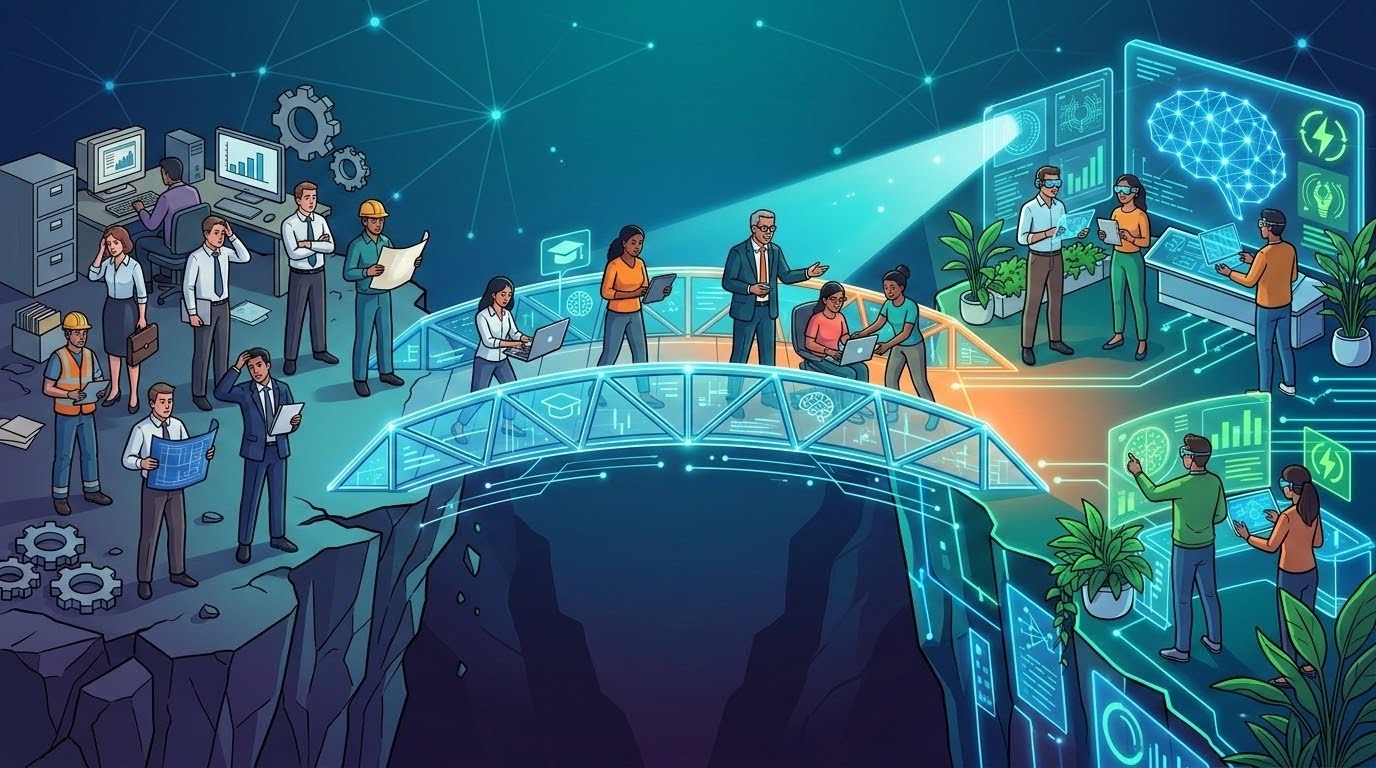
Humanity has stumbled into an era where intelligence is no longer the exclusive property of those who wear silk waistcoats or suffer from existential boredom. Intelligence is now purchased by the gigabyte, polished by mathematicians, and delivered to the desk of the ordinary clerk.
Yet, a striking comedy unfolds within the modern office. The machinery is magnificent, while the humans remain delightfully, stubbornly uninstructed. A vast chasm has opened between what the apparatus can achieve and what the operator understands.
It’s become evident that the belief of society that progress is automatic is false. No, artificial intelligence does not make the observer intelligent.
Society has long harbored the illusion that progress is automatic, that the mere presence of genius in a room elevates the crowd. The presence of artificial intelligence does not make the observer intelligent. Business houses across the globe are discovering that acquiring brilliant code is a simple matter of expense, whereas cultivating the ability to utilize it is an art.
Businesses across the globe are discovering that acquiring brilliant code is a simple matter of expense, whereas cultivating the ability to utilize it is an art. The deficit in comprehension grows larger each day, not because the human mind is declining, but because the machinery is advancing with an indecent lack of modesty.
Aesthetic Education
Education was once thought to be a finished product, a lacquer applied to a young mind at Oxford or Harvard, never to be disturbed again. The modern enterprise reveals that education is merely a temporary reprieve from ignorance.
When a newcomer enters a business today, the tradition of handing them a dusty manual and a broken pen is dead. New recruits are greeted by responsive systems that tailor instruction to the specific limitations of the individual. Onboarding with AI allows an enterprise to measure the exact depth of a newcomer’s ignorance and cure it with systematic precision.
This method of introduction replaces the haphazard mentorship of old with flawless patience. A human instructor eventually tires of repetition, grows irritable, and sighs for their luncheon. A synthetic instructor has the exquisite courtesy of never becoming bored. It guides the novice through complicated operational mazes, tracking progress without judgment or malice.
By the time the human supervisor intervenes, the heavy lifting of instruction is finished. The newcomer enters the arena of commerce fully armed, possessing a polished familiarity with corporate tools that previously required months of painful fumbling to acquire.
The Drama of the Commercial Transaction
Art is a beautiful way of telling beautiful untruths, and salesmanship is perhaps the most commercial form of art known to civilization. Persuasion requires a delicate touch, an intuitive grasp of human vanity, and a flawless sense of timing. Historically, the art of the deal was taught through cruel experience, where young salesmen were thrown to the wolves of the marketplace to be devoured or hardened. Today, persuasion is rehearsed in the safety of the digital salon; through AI training for sales, the modern representative practices the delicate dance of commerce against an adversary that never loses its temper but always notices a flaw in the argument.
These advanced simulation systems mimic the stubborn client, the skeptical buyer, and the aggressive negotiator with terrifying accuracy. A salesman can test their charm, refine their rhetoric, and discover their weaknesses without risking a single dollar of corporate revenue. The machine records every hesitation, analyzes the tone of voice, and evaluates the logic of the pitch. It is a dress rehearsal where the audience is made of silicon, yet the critiques are devastatingly accurate. When the representative finally stands before a living, breathing customer, the performance is no longer an experiment; it is a carefully calculated execution of proven strategies.
The Unsanctioned Pursuit of Efficiency
True genius is always a little lawless, and the modern employee, when frustrated by bureaucratic delays, displays a marvelous capacity for rebellion. When the official tools provided by an enterprise are cumbersome, the clever clerk does not wait for a committee to pass a resolution. They simply discover a rogue solution online, enter corporate data into an unverified portal, and complete their labor in minutes rather than hours. This practice of employing shadow AI is a quiet mutiny born of a desperate desire to appear competent in a fast-moving world.
Control cannot be achieved through simple prohibition, for a prohibition always makes the forbidden object twice as attractive. Management cannot merely forbid the use of external intelligence; they need to understand why the temptation exists. Typically, employees turn to unsanctioned tools because their official alternatives are inadequate or non-existent. To solve the problem, businesses are forced to accelerate their own adoptions, providing authorized versions of the very tools their staff are stealing in the dark.
The Clear Vision of Synthetic Discernment
The world is full of obvious things which nobody by any chance ever observes, especially when those things are buried beneath thousands of rows of a spreadsheet. Data is the new aristocracy, wealthy but incredibly boring, until it is interpreted by a mind capable of seeing the poetry within the numbers. Businesses are no longer suffering from a lack of information; they are drowning in it. The remedy for this modern deluge is growing with AI analytics, a process that transforms the chaotic noise of commerce into a clear melody that even a director can understand.
These analytical tools peer into the vast archives of corporate activity, identifying patterns that would remain forever invisible to the human eye. They predict consumer desires before the consumer has felt them; they locate waste before the accountant has noticed the loss. The clarity provided by these insights allows an enterprise to make decisions based on mathematical certainty rather than emotional guesswork.
This clarity of vision alters the very nature of executive authority. A leader is no longer a prophet who must guess the future. The strategy of a business is laid bare by the cold, impartial analysis of the machine, leaving no room for vanity or personal prejudice.
The Refined Future
The pursuit of efficiency is a relentless master, and those who refuse to adapt are condemned to the worst fate known to high society: irrelevance. The gap in knowledge that currently plagues the commercial world will not be closed by wishing for simpler times or by hiring expensive consultants to write meaningless reports. Instead, it will be closed by businesses that treat instruction as a critical element of their daily routine.
Ultimately, the integration of these synthetic marvels into the daily life of the office will lose its novelty and become as ordinary as the telephone or the electric lamp. The anxiety that currently surrounds the growth of artificial intelligence will fade into the background of history.

Everyday Situations Where Ray-Ban Meta Glasses Can Be Useful
FastTurnPCBs Trends Driving Innovation in Electronics Manufacturing

Tech Hence: The Future of Technology Unveiled