Team Collaboration: Agile Role Definition: Defining the Data Scientist’s specific responsibilities and interaction points within a Scrum or Kanban framework.
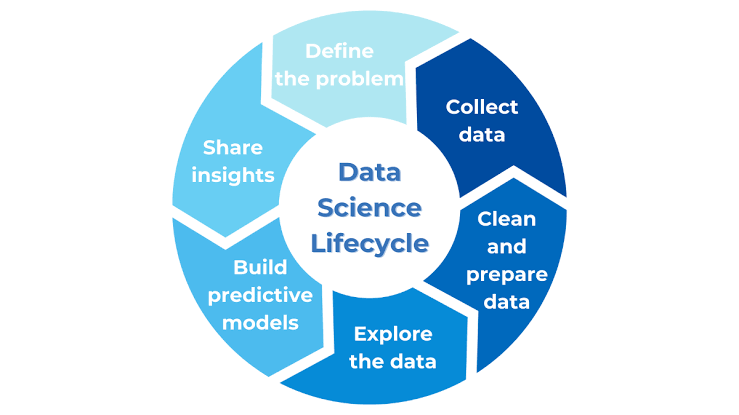
Data science teams rarely work in isolation. Models and insights must land within products, operations, and business processes that already operate under timelines and constraints. That is why many organisations adopt Agile frameworks such as Scrum or Kanban for analytics and machine learning work. However, Agile only helps when roles are clear. If the data scientist is treated as a “one-person lab” who does everything end-to-end, teams often face unclear ownership, shifting priorities, and last-minute surprises. Agile role definition makes collaboration smoother by clearly defining responsibilities, handoffs, and interaction points. Many professionals first practise these habits during a data science course, where projects are run in sprint-like cycles and require teamwork rather than solo experimentation.
Why Role Definition Matters in Agile Data Teams
In software delivery, Agile roles are often well understood. In data science, the work has added uncertainty: data quality issues, changing target definitions, and unpredictable experiment outcomes. Without clear role boundaries, two common problems appear:
-
Hidden work and missed dependencies: Data sourcing, labelling, access approvals, and feature pipelines are not visible on the board, so delivery slips.
-
Misaligned expectations: Stakeholders expect a “production model” when the team has only validated a hypothesis, or they expect weekly improvements when drift requires deeper changes.
Role definition helps by converting data science activities into explicit Agile work items and defining who owns each part.
The Data Scientist’s Responsibilities in Scrum or Kanban
A well-scoped data scientist role typically spans four core responsibility areas. The exact split depends on whether the team also has data engineers, ML engineers, and analysts.
1) Problem framing and metric ownership
In Agile, the data scientist helps convert a broad business request into a testable objective. This includes:
-
defining the prediction target or analytical question,
-
agreeing on evaluation metrics that match business needs,
-
setting baselines and acceptance criteria for “done.”
This is not a one-time step. It often repeats as stakeholders learn what is feasible with available data.
2) Data understanding and feature logic
Even with strong data engineering support, the data scientist owns the logic of what the data means:
-
identifying the right signals and limitations,
-
proposing feature ideas and validating leakage risks,
-
documenting assumptions and data definitions.
In Kanban, this work should appear as small tasks in the flow, not as invisible “research time.”
3) Modelling, evaluation, and experimentation
This is the expected core: selecting algorithms, training models, and validating performance. In Agile terms, the emphasis should be on incremental value:
-
early baseline models first,
-
small experiments that reduce uncertainty,
-
evaluation by segments and edge cases, not only averages.
A useful habit is to treat each modelling step as a deliverable that can be reviewed, even if it is not yet production-ready.
4) Communication and decision support
The data scientist must translate model behaviour into decisions:
-
explaining trade-offs and thresholds,
-
clarifying uncertainty,
-
recommending next actions based on results.
This communication is often what unlocks adoption. Programmes like a Data Science Course in Delhi commonly include peer reviews and stakeholder-style presentations for this reason.
Interaction Points Within Scrum
In Scrum, role definition becomes practical when you specify how the data scientist participates in each ceremony.
Sprint planning
The data scientist helps estimate tasks that are uncertain and suggests spikes (time-boxed research). They should flag dependencies early, such as data access approvals or label creation. Sprint goals should include learning outcomes, not only “model delivered.”
Daily stand-up
A key interaction point is surfacing blockers that look small but can halt progress: missing data fields, pipeline failures, unclear target definitions, or unstable environments. The data scientist also confirms whether yesterday’s results change today’s plan.
Backlog refinement
This is where many data teams win or lose. The data scientist works with the Product Owner to:
-
rewrite vague items into measurable outcomes,
-
split large modelling work into testable slices,
-
define acceptance criteria such as “baseline AUC achieved” or “error reduced for priority segment.”
Sprint review and demo
Instead of only showing dashboards, the data scientist should demo what stakeholders care about:
-
lift in a target group,
-
confusion matrix trade-offs,
-
examples of correct and incorrect predictions,
-
risks and next steps.
Retrospective
The data scientist contributes lessons on process issues: data delays, unclear definitions, over-scoped tasks, or insufficient review time for experiments.
Interaction Points Within Kanban
Kanban fits well when requests arrive continuously, such as marketing analytics, fraud monitoring, or pricing optimisation. For Kanban, the data scientist’s role is defined by flow control.
-
Work item sizing: Break tasks so they move through the board in days, not weeks.
-
WIP limits: Avoid running too many experiments at once, which reduces quality and increases context switching.
-
Definition of Done: Include documentation, reproducibility, and a clear decision recommendation, not just a notebook output.
-
Service classes: Differentiate urgent fixes (model drift) from standard experiments and long-term improvements.
A Simple Role Map for Collaboration
Even small teams benefit from a role map that clarifies hand-offs:
-
Product Owner: prioritises outcomes and clarifies business constraints.
-
Data Scientist: owns modelling logic, evaluation, and decision framing.
-
Data Engineer: owns data pipelines, reliability, and governance controls.
-
ML Engineer (if present): owns deployment patterns, serving, monitoring automation.
-
Domain SME: validates labels, edge cases, and operational feasibility.
Where roles overlap, define interaction points: for example, the data scientist specifies features and quality checks, while the data engineer implements pipelines and monitors freshness.
Conclusion
Agile role definition improves team collaboration by making the data scientist’s responsibilities and interaction points explicit within Scrum or Kanban. It reduces hidden work, improves planning, and helps stakeholders understand what “done” means at each stage of a model’s lifecycle. When the data scientist is integrated into Agile ceremonies, planning, refinement, review, and continuous flow, delivery becomes more predictable and business value becomes clearer. Practising these behaviours during a Data Science Course or a Data Science Course in Delhi can prepare professionals to contribute effectively in real cross-functional Agile teams.
For more details visit us:
Business Name:ExcelR- Data Science, Data Analyst, Business Analyst Course Training in Delhi
Address: M 130-131, Inside ABL Work Space,Second Floor, Connaught Cir, Connaught Place, New Delhi, Delhi 110001
Phone Number:9632156744
Email Id: enquiry@excelr.com
Team Collaboration: Agile Role Definition: Defining the Data Scientist's specific responsibilities and interaction points within a Scrum or Kanban framework.

What to Look for in an SEO Agency in Dubai (Before You Sign Anything)

How Creative Fabrica Desktop AI Tool Can Save Time in Your AI Creative Workflow