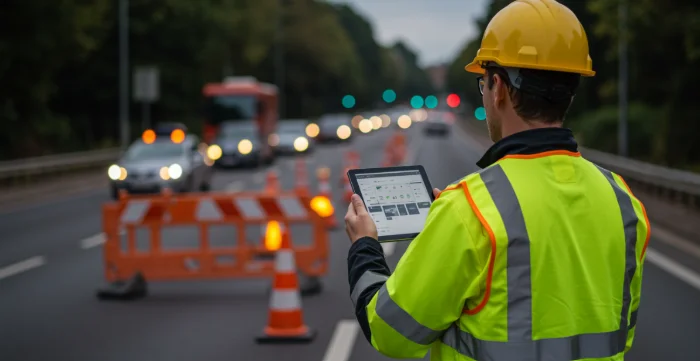
Traffic management isn’t a desk job; it’s mud, rain, high-speed zones, and constant chaos. With crews scattered, weather changes, and client calls about misplaced signs, how do you stay accountable?
Accountability isn’t micromanaging; it’s knowing the job’s done right, crews are safe, and you can sleep at night.
The top companies aren’t working harder; they’re using better systems. Here’s how modern traffic control businesses turn chaos into clockwork.
Why Accountability Can Be Challenging?
Traffic management is distributed by nature. You can’t be on every job site at once. Crews move, shifts change, and road conditions flip on a dime.
In the old days, which for many is still “today,” accountability lived in text messages, crumpled paper forms, and memory.
What does that look like?
- The Handoff Fumble: “I thought the night crew handled that.”
- The Paper Trail Dead End: Missing forms mean missing proof.
- The “He Said, She Said”: Disputes over what got done and when.
When information only exists in a phone call, it vanishes the second you hang up. By the time you realize there’s a problem, the crew is gone, and the client is annoyed.
Top businesses are fixing this by baking accountability directly into their workflow. It’s no longer an afterthought; it’s the default setting.
1. Clear Job Assignments Foster Accountability
Accountability starts way before the truck leaves the yard.
If you toss a job into the void and hope someone grabs it, don’t be surprised when things get missed. When every job has a defined scope, a specific crew, and a set time window, expectations are crystal clear.
Everyone needs to know their role. Literally.
With digital scheduling tools (like the ones we build at Field Promax), you can:
- Tag the human: Assign responsibility to specific crew members.
- Share the details: Push locations and notes directly to their phones.
- Stop the guessing: Eliminate confusion about start times.
When work is clearly assigned, accountability feels fair. Crews aren’t guessing what they are responsible for, and supervisors aren’t wasting hours by hunting information.
2. Digital Records: The Single Source of Truth
Verbal updates just don’t work. A supervisor might remember that signage was adjusted at noon on Main Street, but will they remember that detail next week? Or for the other 15 jobs they’re managing? Probably not.
That’s why modern traffic businesses are moving to digital records, a shared, cloud-based source of truth. With a tool like Field Promax, you can stop texting “Is the site secure?” Instead, crews update job statuses in real time.
- Live updates: Status changes as they happen.
- Digital notes: Log delays or changes instantly.
- Permanent history: Everything stays tied to the job record.
It eliminates the guesswork, reduces disputes, and saves your sanity.
3. Pics or It Didn’t Happen: The Power of Visual Proof
In this industry, visual proof is everything.
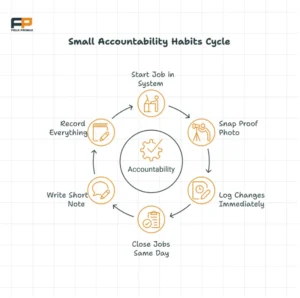
A photo taken before, during, and after setup provides immediate accountability without adding a mountain of paperwork. It proves compliance. It confirms placement. And with a tool like Field Promax, it protects your business when a client or a regulator asks questions later.
Why does this work so well?
- Verification: Supervisors can check setups from the office.
- Client Confidence: You can show the client the work done without driving them to the site.
- Habit Forming: When snapping a photo is part of closing the job, compliance goes up.
It’s simple. If the photo isn’t there, the job isn’t done.
4. Time Tracking That Actually Works
“When did the crew arrive?”
If you have to ask that question, you’re already losing money. Disputes around hours are a massive friction point. Rounding errors on timesheets can bleed your margins dry over a year.
Digital time tracking tied to specific jobs removes the guesswork.
Clear time records protect everyone. They protect you during audits. They protect you during client reviews. And honestly? They protect your crews from payroll disputes.
This isn’t about watching the clock like a hawk. It’s about trusting data rather than assumptions.
5. Context Is Everything
Traffic management rarely goes exactly to plan.
Maybe it rained. Maybe the construction crew was late. Maybe a moose walked onto the highway (hey, it happens).
Accountability improves when crews can record the context, not just the completion. Simple field notes allow teams to document the “why.”
- Why did the layout change?
- Why did the start time shift?
- What unexpected mess happened on site?
When these notes are attached to the digital job record, office teams understand the full story without needing a debrief meeting.
6. Shift from Reactive to Proactive
Most accountability issues are disasters because you find out about them too late.
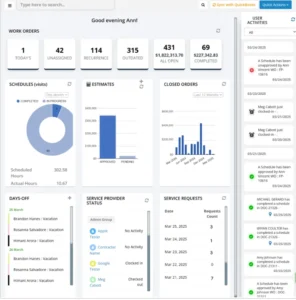
When supervisors have real-time visibility with tools like Field ProMax, small problems stay small. A delayed crew? You can see it. A missing sign? You can catch it.
Centralized dashboards allow you to play offense instead of defense. You see which jobs are active, which are delayed, and where your people are. This visibility shifts the culture from blame (who messed up?) to prevention (how do we fix this before the client notices?).
7. Safety Culture vs. Safety Rules
Here is the secret: Accountability is actually just safety in disguise.
When crews document their setups, follow the digital workflow, and communicate changes, safety improves naturally. Everyone knows the work is visible. Everyone knows the standard.
It creates a culture where shortcuts aren’t worth it because the work is on the record. Accountability stops feeling like punishment and starts looking like professionalism.
What Clients Notice First?
Your clients don’t care about your software.
- They don’t care about your internal struggles.
- But they definitely feel the results.
Here’s what successful traffic management businesses do:
- Deliver faster answers with strong field accountability.
- Provide clear documentation.
- Reduce billing disputes.
When clients trust your reporting, they trust your operation.
And that trust wins contracts.
The Bottom Line
Traffic management is complex, mobile, and high-stakes. Relying on memory and sticky notes is a great way to stay small and stressed.
The businesses winning right now aren’t adding unnecessary steps; they’re using better systems like Field Promax. They make responsibility visible, work verifiable, and communication automatic.
When accountability is built into the workflow, everyone wins. Crews feel supported. Managers stay informed. And you? You might actually get to eat lunch without your phone ringing.
Frequently Asked Questions
- What does “field accountability” actually mean for traffic control?
It means knowing the who, what, when, and where without having to call anyone. It means having clear digital trail photos, time logs, and notes that prove the job was done right and on time.
- Why is this so critical for traffic crews specifically?
Because the stakes are high. You’re dealing with public safety and strict regulations. If an incident happens, “I think we did it right” doesn’t hold up in court. Documented proof does.
- Won’t digital tools slow my guys down?
Not if you choose the right ones. Modern tools (like Field Promax) are built for guys with big thumbs and zero patience for technology. Snapping a photo or tapping “Start Job” takes seconds. It’s faster than writing out a paper form or calling the office.
- Can better accountability help me win contracts?
Absolutely. Municipalities and large construction firms love paper trails. If you can promise (and deliver) instant reporting and verifiable compliance, you instantly look less risky than the competitor running their business on a whiteboard.
Renting vs. Buying an Aerial Work Platform: Which Is Better for Your Business?

How LED Backlit Displays Are Transforming Trade Show Marketing
Permanent Building vs Dome Shelter for Sale: The Real Cost Comparison