The Quad FX CPU is one of the most unusual and ambitious experiments in desktop processor history. Introduced by AMD in the mid-2000s, Quad FX was not a traditional quad-core processor but a dual-CPU desktop platform designed to deliver four total CPU cores at a time when native quad-core chips were not yet available.
Often misunderstood and frequently misrepresented, the Quad FX platform played a critical role in AMD’s transition toward multi-core computing. This article explains what Quad FX is, how the Quad FX CPU architecture works, why AMD created it, how it performed in real-world use, and why it ultimately disappeared from the market.
What Is Quad FX?
At its core, Quad FX refers to a desktop computing platform developed by AMD, not a single processor chip.
Quad FX CPU Definition
The term Quad FX CPU describes a system configuration where two dual-core AMD processors are installed on the same motherboard, resulting in four physical CPU cores available to the operating system. Instead of integrating four cores onto a single silicon die, AMD used a dual-socket design to achieve quad-core performance.
In simple terms:
- 1 Quad FX system = 2 CPUs
- Each CPU = 2 cores
- Total = 4 physical cores
This design made Quad FX fundamentally different from later quad-core CPUs that housed all four cores on one chip.
Quad FX Platform vs Traditional Quad-Core CPUs
Traditional quad-core CPUs:
- Use a single processor package
- Share on-chip cache and memory pathways
- Are more power-efficient
Quad FX:
- Uses two separate processors
- Relies on inter-CPU communication
- Consumes significantly more power
This architectural difference defined both the strengths and weaknesses of the Quad FX CPU platform.
Why AMD Created the Quad FX Platform
To understand Quad FX, it’s important to look at the competitive landscape of the time.
Market Pressure and Intel Competition
In the mid-2000s, Intel was rapidly gaining momentum with its Core microarchitecture. While Intel prepared native quad-core processors, AMD faced delays in delivering its own true quad-core design. Quad FX was AMD’s stopgap solution—a way to offer quad-core computing on the desktop without waiting for a new processor architecture.
The AMD 4×4 and “Quadfather” Concept
Before its official release, Quad FX was internally known as:
- 4×4 platform
- Quadfather
The idea was simple: bring server-class multi-CPU technology to enthusiast desktop users. AMD targeted power users, gamers, and professionals who wanted extreme multitasking performance, even at the cost of higher power consumption.
Quad FX CPU Architecture Explained
The architecture behind the Quad FX CPU platform is what made it technically fascinating—and practically challenging.
Dual Socket Direct Connect Architecture
Quad FX used a dual Socket F motherboard, allowing two processors to be installed simultaneously. Each CPU had:
- Its own memory controller
- Its own memory channels
- A direct communication link to the other CPU
This design was borrowed from AMD’s server-grade Opteron processors.
HyperTransport Communication
The two CPUs communicated using HyperTransport, AMD’s high-speed interconnect technology. HyperTransport enabled:
- Low-latency CPU-to-CPU communication
- Direct access to shared system resources
- Improved scalability compared to older front-side bus designs
While technically impressive, this setup introduced complexity that desktop operating systems were not fully optimized to handle.
NUMA Memory Design
Quad FX relied on NUMA (Non-Uniform Memory Access) architecture. Each CPU accessed its own local memory faster than memory attached to the other CPU.
In theory, NUMA offered:
- Higher memory bandwidth
- Better parallel performance
In practice, many desktop applications and operating systems struggled to manage memory efficiently across NUMA nodes, reducing real-world performance gains.
Supported Quad FX CPUs and Specifications
The Quad FX platform supported a limited set of processors.
Athlon 64 FX Processors
AMD released the following Quad FX CPU combinations:
- Athlon 64 FX-70 – 2.6 GHz (dual-core)
- Athlon 64 FX-72 – 2.8 GHz (dual-core)
- Athlon 64 FX-74 – 3.0 GHz (dual-core)
Each system required two identical CPUs installed together.
Process Technology and Thermal Design
- Manufacturing process: 90 nm
- Cache: 2×1 MB L2 cache per CPU
- Thermal Design Power (TDP): 125W per CPU
With two processors installed, Quad FX systems often exceeded 250W CPU power consumption alone, not including GPUs or other components.
Quad FX Motherboards, Chipsets, and Platform Features
nForce 680a Chipset
Quad FX relied on a specialized chipset:
- NVIDIA nForce 680a SLI
This chipset enabled:
- Dual-socket support
- Multiple PCIe x16 slots
- Enthusiast-grade overclocking features
Memory and Expansion Support
Quad FX systems supported:
- DDR2 memory
- Dual independent memory banks
- Multi-GPU SLI configurations
- Extensive PCI Express lanes
On paper, Quad FX offered unmatched expansion potential for a consumer desktop.
Quad FX Performance in Real-World Use
Performance is where Quad FX became controversial.
Multitasking and Professional Workloads
In heavily threaded workloads such as:
- Video rendering
- 3D modeling
- Encoding
- Virtualization
Quad FX could outperform many dual-core CPUs of its era, especially when applications were optimized for multiple threads.
Gaming Performance Limitations
Gaming performance was less impressive. Many games at the time:
- Used one or two CPU threads
- Failed to scale across four cores
- Suffered from memory latency issues
As a result, Quad FX often performed no better—and sometimes worse—than cheaper dual-core alternatives in gaming scenarios.
Quad FX vs Intel Core 2 Quad
The arrival of Intel’s Core 2 Quad sealed Quad FX’s fate.
Performance Comparison
- Intel’s quad-core CPUs delivered similar or better performance
- Lower clock speeds but higher efficiency
- Better per-core performance
Power Efficiency and Heat
- Quad FX: Extremely power-hungry
- Core 2 Quad: Far more efficient
- Intel systems required less cooling and lower-wattage power supplies
Platform Efficiency
Intel’s single-chip quad-core design:
- Reduced latency
- Simplified memory access
- Lower manufacturing costs
By comparison, Quad FX appeared bulky and inefficient.
Why the Quad FX CPU Platform Failed
Several factors contributed to Quad FX’s short lifespan.
Excessive Power Consumption
Running two high-TDP CPUs created:
- Extreme heat output
- High electricity usage
- Loud cooling requirements
Operating System Limitations
Operating systems like Windows XP struggled with:
- NUMA scheduling
- Thread allocation across CPUs
Later versions improved support, but damage to Quad FX’s reputation was already done.
Cost and Market Timing
Quad FX required:
- Two premium CPUs
- Specialized motherboards
- Robust cooling solutions
When Intel released more efficient quad-core CPUs at lower prices, Quad FX quickly became uncompetitive.
Is Quad FX Still Relevant Today?
From a practical standpoint, Quad FX is obsolete.
Modern Usability
- Incompatible with modern software expectations
- Inefficient compared to even entry-level CPUs
- Limited upgrade paths
Collector and Historical Value
Today, Quad FX is mainly relevant for:
- Hardware collectors
- Retro PC enthusiasts
- CPU architecture research
- Technology history discussions
It represents an important transitional moment in desktop computing.
Key Takeaways About Quad FX CPU
- Quad FX is a dual-CPU desktop platform, not a single quad-core chip
- It delivered four cores by using two dual-core processors
- Based on server-style architecture with NUMA and HyperTransport
- Powerful for its time, but inefficient and expensive
- Quickly replaced by native quad-core CPUs
Frequently Asked Questions About Quad FX CPU
Is Quad FX a true quad-core CPU?
No. It uses two dual-core processors rather than one quad-core chip.
How many CPUs does Quad FX use?
Two physical CPUs in one system.
Why did AMD discontinue Quad FX?
High power consumption, poor efficiency, and strong competition from Intel.
Is Quad FX better than Core 2 Quad?
No. Core 2 Quad offered better performance per watt and lower costs.
What replaced Quad FX?
AMD’s native quad-core processors, starting with the Phenom series.
Final Verdict
The Quad FX CPU platform was bold, experimental, and technically impressive—but ultimately impractical. While it failed commercially, it played a key role in shaping AMD’s future multi-core designs and remains a fascinating chapter in CPU history.

Team Collaboration: Agile Role Definition: Defining the Data Scientist's specific responsibilities and interaction points within a Scrum or Kanban framework.

What to Look for in an SEO Agency in Dubai (Before You Sign Anything)
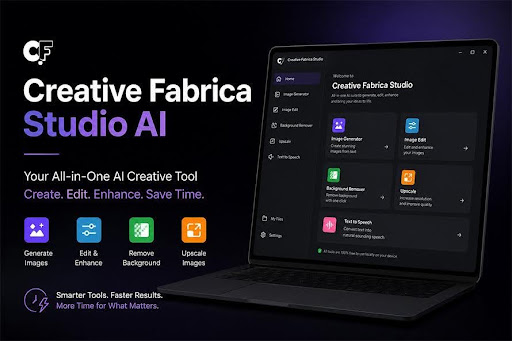
How Creative Fabrica Desktop AI Tool Can Save Time in Your AI Creative Workflow