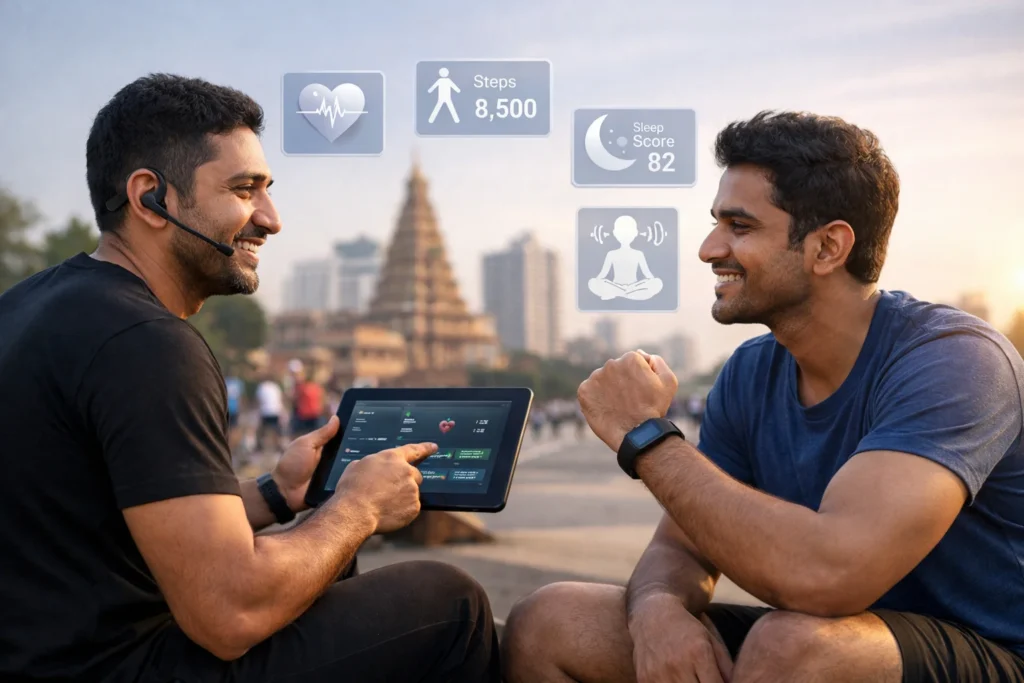
India is a huge country with more than 1.4 billion people, and classic one‑to‑one coaching can never reach everybody. Many people live in crowded cities with long commutes or in smaller towns with almost no access to professional coaches. AI wearables offer a more affordable and scalable way to bring both fitness and mental coaching directly to the wrist or in the pocket. They collect body and behaviour data all day and use simple AI models to turn it into small tips, while a human coach gives meaning to this data and guides real change.
Why India Is Ready For AI Coaching
India has a very large and young population, with fast growth in smartphone and internet use in cities and smaller towns. Many people already wear basic fitness bands or watches for step counting, heart rate tracking and sleep monitoring, so the idea of using a device for coaching feels natural. At the same time, income differences are big, and many cannot pay for regular personal coaching sessions every week. AI wearables make it possible to support large groups at once with similar digital programs, which lowers the cost per person and makes simple coaching more reachable for middle‑class and lower‑income users. For a country with more than a billion people, scalable tools are the only realistic way to offer guidance at any serious size. Human coaches stay important in this model, but they can use technology to reach more people without burning out.
Everyday Fitness Coaching On The Wrist
In fitness coaching, AI wearables focus on movement, heart rate, sleep and sometimes GPS data. They track steps, active minutes and training intensity, and then give simple suggestions like walking goals, workout ideas or reminders to stand up after long sitting time. Office workers in Indian cities can get micro‑workouts that fit between meetings, for example ten‑minute walks, short mobility routines or easy strength sets at home. Runners and cyclists can follow training plans that adapt to their pace, recovery and sleep, without paying for a full‑time personal trainer. People in smaller towns or villages can use basic walk‑and‑bodyweight programs guided by the wearable, even when there is no modern gym nearby. A human fitness coach can design the overall plan and review data from many clients, making changes without seeing everyone in person every week. This mix of AI wearable and human supervision helps to save time but still keeps a personal touch.
Mental Coaching And Stress Support With AI Wearables
For mental coaching, AI wearables look less at speed and more at stress patterns, sleep quality and daily behaviour. They can detect signals like elevated heart rate during work, poor recovery during the night or long periods without movement, which often connect to stress and mood problems. The AI system then offers small interventions, such as breathing exercises, short breaks, calming routines or reminders to wind down before sleep. Users can also get gentle prompts to reflect on their mood or write down simple thoughts, which helps to build awareness. A mental or life coach can use this collected data in video calls or chats to talk about triggers, boundaries and coping strategies in a concrete way. Sessions become more efficient, because both sides see how the week really looked instead of relying only on memory. Even with these tools, deeper emotional topics, trauma and clinical issues must stay with human experts, not with the device.
Key Technical Features In Indian AI Wearables
One reason why AI wearables are attractive for coaching in India is the combination of sensors and simple AI software.
| Feature | Coaching Focus | Benefit For Indian Users |
| Heart rate sensor | Training intensity, stress signals | Safer workouts, stress awareness |
| Accelerometer/gyros | Steps, movement patterns | Tracking in crowded everyday life |
| Sleep tracking | Recovery and rest quality | Better routines in busy environments |
| App or device AI | Pattern detection, suggestions | Tips even with limited live coaching |
Many devices are sold at budget prices but still include heart rate and motion sensors, which is important in a price‑sensitive market. The AI models run on the device or in the phone app and turn raw numbers into simple messages like “time to move”, “slow down a bit”, or “you slept less than usual”. For coaches, this constant stream of data makes it easier to design and adjust programs for large groups, because they can see trends instead of reading long diaries. Over time, coaching becomes more data‑driven and less based on guesswork, while still allowing personal interpretation in calls or chats. The human coach is the one who connects numbers with the real life story of the person.
Benefits, Limits And Time Savings For Coaches
For a country with so many people, AI wearables bring several clear benefits for both fitness and mental coaching. They make support more scalable, because one coach or digital program can guide hundreds or thousands of users in parallel with similar structures. They also reduce the cost per person, since the same content and AI logic can run for many clients without extra working hours. Remote coaching becomes easier, because data flows automatically from the wearable to the app, and the coach can work by phone, chat or video instead of in‑person meetings. At the same time, there are real limits: devices cannot understand complex emotions, family dynamics or cultural stories behind stress, and they can make people feel alone if coaching is only digital. The healthiest model is to see AI wearables as small assistants that support daily behaviour change while human coaches stay in charge of motivation, meaning and difficult topics.
- Scalable help for a huge population
- Lower cost per coached person
- Remote work for coaches and clients
- Time savings on tracking and routine tasks
- Risk of cold experience if no human contact
How Indian Coaches Can Combine Fitness And Mental Coaching
Indian coaches can use AI wearables to offer programs that connect body and mind in a simple way. A fitness coach can link step goals and workout plans with basic stress‑reduction tasks, so heavy days at work lead to lighter training and more calming exercises. A mental coach can ask clients to notice how movement and sleep influence their mood by looking at trends on the device and then discussing them in sessions. Companies and colleges can run group challenges where people work on step counts, sleep and short mindfulness breaks at the same time, using the wearable to track progress. Remote coaching becomes a natural option, since the coach can review data dashboards and talk to clients from anywhere in the country. This integrated approach fits well with the Indian reality, where many people want better health and a calmer mind but have limited time and budget for classic one‑to‑one coaching.
Coaching For Busy Urban Professionals
In big cities like Mumbai, Delhi or Bengaluru, many young professionals spend long hours at desks and in traffic. For them, AI wearables give small nudges during the day, such as stand alerts, short breathing exercises between meetings and reminders to drink water. Coaches who work with this group can build remote programs that respect long workdays but still push for realistic micro‑changes, using chat, video calls and shared data instead of frequent in‑person sessions.
Support In Smaller Cities And Towns
Outside the major metros, access to specialist coaches and modern gyms is often limited, but smartphone use continues to grow. AI wearables and simple coaching apps can fill this gap by offering step‑by‑step fitness and stress‑management plans that do not depend on expensive equipment. Local trainers can organise group walks, basic strength classes and community breathing or relaxation sessions around the data from wearables, while staying connected to remote coaching experts when needed.
Group Programs For Large Communities
India has many companies, colleges and housing societies that like to run wellness and performance challenges for big groups. AI wearables make it easy to track participation and progress, because steps, active minutes, sleep and sometimes stress markers are collected automatically. Coaches can use team goals, friendly competitions and shared milestones, which fit well with the social and community‑oriented culture in many places. This format allows one or two coaches to support hundreds of people without managing manual reports.
Moving From Pure Fitness To Whole‑Person Coaching
Most AI wearables in India today are still marketed mainly for fitness and activity tracking. Slowly, more apps also include simple mood check‑ins, gratitude prompts, focus sessions or guided breathing, which help with mental resilience. Coaches who care about whole‑person development can use these features as a bridge between body and mind in their programs. Over time, people start to see the device not just as a fitness gadget but as an everyday growth companion, always with the clear message that it supports coaching but does not replace a human partner.
Frequently Asked Questions
Can AI Wearables Replace Human Coaches In India?
No, AI wearables are support tools that handle tracking, reminders and simple suggestions. Human coaches are still needed for motivation, deeper questions and emotional topics, so the best results come from a mix of both.
How Do AI Wearables Make Coaching More Affordable In India?
Because one digital program and one coach can support many people at the same time, the cost per person can be lower. Users often need fewer live sessions and get more continuous light support from the device and the app.
Are AI Wearables Useful For Mental Coaching Or Only For Fitness?
AI wearables are strongest in fitness, but they can also help mental coaching by showing stress patterns, sleep quality and daily routines. Coaches then use this information to talk about habits, boundaries and coping strategies in a more concrete way.
Final Thoughts
India is one of the most interesting places for AI wearables in personal coaching, because there are many people, fast digital growth and rising interest in health and well‑being. Affordable devices and AI‑driven apps make it possible to give both fitness and mental coaching support to users who never had access to a personal trainer or mentor before. At the same time, privacy, data security and the danger of “AI only” programs are real challenges, so human coaches and clear communication stay essential. If technology companies and coaches work together, AI wearables can become practical everyday tools that help millions of Indians improve both their bodies and their minds through a mix of remote and personal coaching.

Brian Ferdinand of EverForward Trading Joins Forbes Finance Council, Expanding His Voice on Markets and Risk

Get Any Company Objectives or News of rox.com

How Tax Accountants Support Entrepreneurs And Startups







Why "Best Planner Apps" Dont Fix Bad Planning Habits

Brian Ferdinand of EverForward Trading Joins Forbes Finance Council, Expanding His Voice on Markets and Risk

How a Nephrology CCM Platform Supports Better Chronic Kidney Care?

Serverless Architecture: Building Scalable Applications Without Infrastructure Management
How AI Wearables Are Redefining Personal Coaching In India