What Makes a Litter Box Safe for Cats?
Cat litter box safety isn’t a single feature — it’s a combination of factors that work together to protect your cat’s physical health and behavioral well-being. At the most fundamental level, any litter box must be made from non-toxic, BPA-free materials, since cats dig, scratch, and sometimes chew on surfaces. Sharp interior edges are a hidden danger that many owners overlook, particularly in lower-cost plastic models where molding seams can cut paw pads over time.
Size and entry design matter more than most first-time owners realize. A box that’s too small forces your cat into uncomfortable positions, discouraging use and increasing the risk of elimination outside the box — a behavioral red flag that often signals physical discomfort. Entry height is equally critical: kittens and senior cats need low-threshold openings, while larger breeds require more interior clearance. Stability is another non-negotiable — a box that tips or shifts underfoot creates anxiety and potential injury, especially for cats who dig vigorously.
Beyond the physical structure, safety also means supporting your ability to monitor your cat’s health. Litter boxes are one of the most reliable windows into a cat’s well-being. Changes in urine frequency, stool consistency, or bathroom habits can signal urinary tract infections, kidney issues, or digestive problems. A safe litter box — whether traditional or smart — should make observation easy, not harder. These core criteria apply equally to both design philosophies, setting the baseline against which every other feature must be measured.
Traditional Litter Boxes: Pros, Cons, and Safety
Traditional litter boxes come in three main forms: open trays, covered enclosures, and furniture-style units designed to blend into home décor. Each has its place, and collectively they’ve served cats reliably for generations — which speaks to something real about their fundamental design.
The advantages are straightforward. Traditional boxes have no mechanical components to fail, no software to update, and no electrical hazards. They’re affordable, widely available, and easy to replace if damaged. For cats who are sensitive to noise or new environments, the silent, static nature of a traditional box is genuinely reassuring. Covered models offer privacy, while cat litter box furniture options — cabinets or side tables with hidden compartments — satisfy owners who want discretion without sacrificing function.
That said, traditional boxes carry their own safety concerns. The burden of cleaning falls entirely on you, and inconsistent scooping allows ammonia and bacteria to accumulate rapidly. Prolonged exposure to waste residue isn’t just unpleasant — it can contribute to respiratory irritation and urinary tract issues in cats who avoid a dirty box altogether. Open trays also offer no odor containment, which can drive owners to use heavily scented litters that irritate sensitive feline airways. Covered designs solve some odor issues but can trap harmful gases inside if not cleaned frequently. The core limitation is human dependency: traditional boxes are only as safe as the maintenance routine behind them.
Smart Litter Boxes: Advanced Features and Safety Mechanisms
Smart litter boxes represent a genuine leap in design thinking. At their core, these units automate the cleaning cycle — rotating, raking, or sifting waste into a sealed compartment after each use. But the more meaningful advancement isn’t the automation itself; it’s the safety architecture built around it. Modern smart boxes are engineered with the assumption that a cat might re-enter at any moment, and that assumption drives every protective feature.
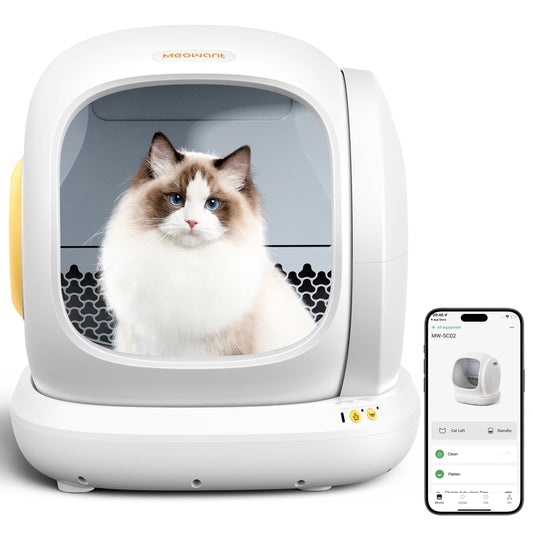
The most important safety component is the motion or weight sensor system. When a cat steps onto or into the unit, sensors detect its presence and immediately halt any active cleaning cycle. This automatic pause prevents the mechanism from operating while the cat is inside — a critical safeguard that addresses the most obvious concern new owners have about motorized equipment. Most quality units also incorporate a post-use timer, waiting several minutes after the cat exits before initiating a cleaning cycle, giving even slow or hesitant cats time to fully clear the space. Brands like Meowant have built their smart litter box designs around this layered sensor approach, prioritizing feline safety as a baseline rather than an afterthought.
Odor control is another area where smart boxes genuinely outperform traditional options. Many models feature a built-in anti-odor cover or sealed waste drawer that isolates clumps immediately after cleaning. Some units pair this with carbon filtration or UV sterilization, reducing airborne bacteria without relying on heavily scented litters that can irritate feline respiratory systems.
Key Safety Innovations in Smart Boxes
Beyond sensors and odor management, thoughtful fail-safes address edge-case risks. During a power outage, most smart boxes default to an unlocked, open position so cats retain access without becoming trapped. App connectivity allows owners to receive alerts if a cleaning cycle fails or if usage patterns change — an indirect but valuable health monitoring tool. That said, smart boxes aren’t without drawbacks. The motor produces sound that can startle noise-sensitive cats, and electrical components introduce hazards absent in traditional designs. Complexity also means more potential failure points, and maintenance requires understanding the specific mechanism rather than simply wiping down a tray.
Direct Comparison: Safety in Traditional vs. Smart Litter Boxes
When measured against the same safety criteria, traditional and smart litter boxes reveal distinct strengths and vulnerabilities. On the question of injury risk, traditional boxes win by default — no moving parts means no mechanical hazards. However, smart boxes counter this with engineered safeguards that eliminate the primary risk they introduce: sensors that detect feline presence and halt operation instantly make entrapment or contact injuries extremely unlikely in well-designed units.
Waste exposure tells a different story. Traditional boxes depend entirely on your cleaning schedule, and even a single missed day allows ammonia levels to rise enough to irritate a cat’s respiratory tract and discourage use. Smart boxes address this directly by removing waste within minutes of each use, keeping the interior consistently cleaner than any manual routine realistically achieves. For cats prone to urinary issues, this difference is clinically meaningful.
Reliability favors traditional designs — there’s simply nothing to break. A smart box with a malfunctioning motor or failed sensor reverts from a safety asset to a potential hazard, whereas a traditional tray remains functional indefinitely with basic care. That said, smart boxes with manual override options and open-default power-failure modes substantially close this gap. Ultimately, traditional boxes are safer in the hands of inconsistent cleaners only when the technology fails — and smart boxes are safer in practice when maintained and functioning correctly.
Solutions for First-Time Cat Owners: Choosing the Right Option
Choosing between a traditional and smart litter box doesn’t have to feel like a gamble. Working through a few deliberate steps will point you toward the right fit for both your cat and your lifestyle.
Step 1: Assess your cat’s size, age, and habits. A kitten or senior cat needs a low-entry design to avoid straining joints, while a large or active breed needs generous interior space. Anxious or noise-sensitive cats may reject a motorized unit entirely, making a quiet traditional box the safer starting point.
Step 2: Prioritize core safety features. For smart boxes, confirm the unit includes weight or motion sensors with an automatic pause function — this is non-negotiable. For traditional boxes, check that interior surfaces are smooth, edges are rounded, and the base is wide enough to resist tipping during vigorous digging.
Step 3: Evaluate user-friendly design before purchasing. A litter box you find difficult to clean will inevitably be cleaned less often, which directly harms your cat. Look for removable components, wide access panels, and dishwasher-safe parts. Smart boxes should have clearly labeled waste drawers and straightforward app interfaces that don’t require technical expertise to navigate.
Step 4: Address odor control proactively. If you choose a traditional box, pair it with an unscented clumping litter and a fitted anti-odor cover rather than relying on heavily fragranced products. Smart box owners should verify the unit includes a sealed waste compartment or carbon filtration — these features reduce airborne bacteria without irritating your cat’s respiratory system.
Step 5: Balance budget and space realistically. Smart boxes require upfront investment and ongoing consumable costs. If budget is tight, a well-maintained traditional box cleaned twice daily is genuinely safer than a neglected smart unit.
Implementing User-Friendly Maintenance
Regardless of which type you choose, consistency is the foundation of safe litter box ownership. For traditional boxes, scoop at minimum once daily and perform a full wash with mild, unscented soap weekly — avoid bleach, which leaves residue that irritates cats. Replace the box entirely every one to two years, since scratched plastic harbors bacteria that cleaning can’t fully eliminate. For smart boxes, empty the waste drawer every three to five days depending on usage, and wipe sensors monthly with a dry cloth to maintain accurate detection. Check manufacturer guidelines for deeper cleaning cycles. Both types benefit from placement in low-traffic, well-ventilated areas — good airflow reduces ammonia buildup naturally and encourages consistent use.