Hidden Mold in PG County, MD Homes: What Maryland’s Humidity Is Doing Behind Your Walls
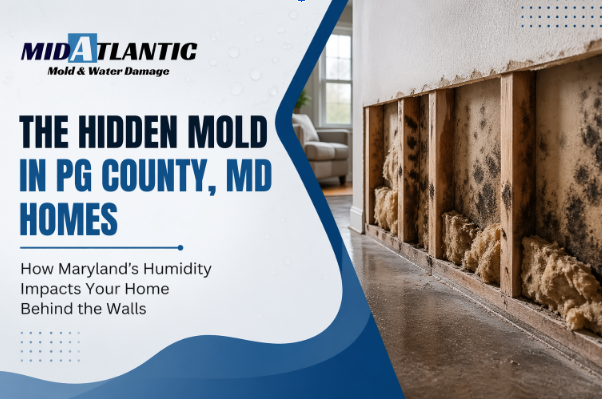
If you’ve ever walked into a room and noticed a faint musty smell — but couldn’t find anything obviously wrong — you’re not alone. Thousands of Prince George’s County homeowners live with hidden mold every year without realizing it. The culprit? Maryland’s relentless humidity, aging housing stock, and the simple fact that mold doesn’t need to be visible to be a problem.
The Climate Problem No One Talks About
Maryland summers are notoriously humid. Prince George’s County, situated between the Chesapeake Bay region and the DC metro area, experiences some of the most moisture-laden air in the Mid-Atlantic. When warm, humid outdoor air meets cooler interior surfaces — inside walls, beneath flooring, inside attic insulation — condensation forms. Over days and weeks, that trapped moisture becomes the perfect breeding ground for mold spores.
What makes this especially dangerous is the invisibility of the problem. Mold doesn’t always announce itself with black spots on the bathroom ceiling. It colonizes inside wall cavities, under carpeting, behind drywall, and inside HVAC ductwork — areas that are completely out of sight during a typical walkthrough of your home.
By the time visible signs appear, a mold colony may have been growing silently for months.
Why PG County Homes Are Particularly Vulnerable
Older homes throughout Prince George’s County — many built before modern moisture control standards — are especially susceptible. Basements with minor seepage, crawl spaces with poor vapor barriers, and roof systems that took on water during one of the county’s frequent summer storms are all common entry points for moisture intrusion.
Even newer construction isn’t immune. A single plumbing leak left undetected for a week or a poorly sealed window frame can introduce enough sustained moisture to trigger mold growth inside wall cavities. And once mold takes hold in a structural area, it doesn’t stop on its own.
Common problem zones in PG County homes include:
-
Basements and crawl spaces with ground moisture or minor flooding
-
Bathroom and kitchen walls with aging grout or pipe condensation
-
Attic spaces with inadequate ventilation
-
HVAC systems circulating contaminated air throughout the home
What Poor Indoor Air Quality Is Actually Doing to Your Family
Mold isn’t just a structural issue — it’s a health issue. Elevated mold spore concentrations in the air have been linked to respiratory irritation, chronic coughing, worsening asthma, and allergic reactions. For children, the elderly, and anyone with a compromised immune system, prolonged exposure to elevated indoor mold levels can have serious consequences.
This is why indoor air quality testing in Prince George’s County has become an essential service, not just a precaution. Measuring airborne spore concentrations — and comparing indoor samples to outdoor control samples — gives homeowners objective, laboratory-based data about what they’re actually breathing inside their homes.
Why a Professional Mold Inspection Company Matters
A visual check simply isn’t enough. You can look at every wall, ceiling, and corner of your home and still miss what’s growing inside your walls or beneath your floors. Professional mold inspection companies use a combination of thermal imaging cameras, moisture meters, air sampling, and surface swab testing to evaluate the full picture of your indoor environment.
This is where a trusted, certified team makes all the difference. MidAtlantic Mold and Water Damage is a licensed mold inspection and testing service serving homeowners throughout Prince George’s County and the broader Maryland region. Their certified assessors conduct detailed visual inspections, collect air and surface samples, and submit everything to an independent third-party laboratory — ensuring results are unbiased and scientifically reliable.
Working with a dedicated mold testing company in PG County, MD like MidAtlantic Mold and Water Damage means you’re not getting a guess or a quick scan. You’re getting a documented, laboratory-confirmed assessment of your home’s indoor environmental conditions — with clear recommendations on what to do next.
Don’t Wait for Visible Signs
The biggest mistake PG County homeowners make is waiting until they can see mold before calling anyone. By the time mold is visible on a surface, the contamination behind that surface is almost always more extensive. Hidden moisture problems that have been present for even a few weeks can produce elevated airborne spore counts that affect your entire home’s air quality.
If your home has had any water intrusion, experienced flooding, or if you’ve simply noticed unexplained musty odors or allergy-like symptoms in certain rooms, professional testing is the only way to know for certain what’s happening inside your walls.
offers comprehensive mold testing and indoor air quality testing in Prince George’s County for homeowners, buyers, renters, and property managers. Whether you’re investigating a specific concern or conducting due diligence before purchasing a home, their certified assessors provide the documentation and guidance you need to protect your home and your family’s health.
Frequently Asked Questions
Q1: How do I know if I need a mold testing company in PG County, MD, or if I can just look for mold myself?
Visual inspection alone is rarely sufficient. Mold commonly grows inside wall cavities, beneath flooring, and inside HVAC systems where it can’t be seen. If you’ve had any water intrusion, notice musty odors, or are experiencing unexplained respiratory symptoms, a certified mold inspection company can use air sampling and moisture detection technology to identify problems that no visual check would catch.
Q2: What does indoor air quality testing in Prince George’s County actually involve?
A certified assessor collects air samples from inside your home and compares them to an outdoor control sample. The samples are analyzed by an independent laboratory to measure airborne mold spore concentrations and identify the specific species present. In some cases, surface swab samples are also collected from areas of visible concern. Results come back as a written laboratory report, which your inspector will explain and use to guide next steps.
Q3: How long does a mold inspection take, and how soon will I get results?
A typical residential mold inspection by a company like MidAtlantic Mold and Water Damage takes one to two hours, depending on the size and complexity of the property. Laboratory results are generally returned within two to three business days. After results are received, you’ll receive a full written report with findings and recommendations — giving you a clear, actionable picture of your home’s indoor environmental health.

Hidden Mold in PG County, MD Homes: What Maryland's Humidity Is Doing Behind Your Walls

Natural vs Professional Gum Disease Treatment: What Works?