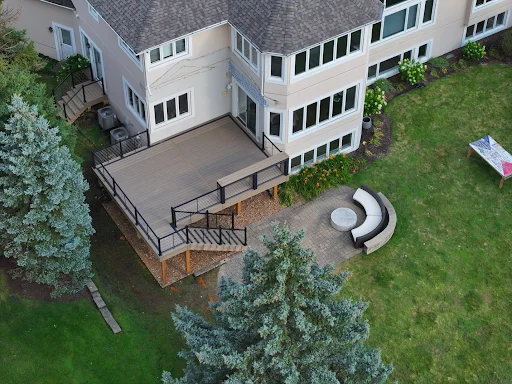
The climate in Naperville is hot, humid in summertime and cold and snowing in winter and often seasonal precipitation. Temperatures in summer can go up to 80s (°F), with annual rainfall around 37-38 inches. All this contributes to long periods of humidity in the area, and it becomes a problem for outdoor living spaces like decks, pergola and porches.
As the climate affects the outdoor structure, local citizens try to pick the best decking materials for their new decks so that they last for a long time. When selecting materials, local specialists like Wolf Spirit Deck Builders in Naperville often advise homeowners to look beyond surface aesthetics and prioritize moisture-resistant framing to handle the region’s high-water table and humidity.All of this will be discussed in this post and other tips for a better deck building project.
Climate Challenges
The challenge that most of the local deck contractors face are all related to the climate. This is what is killing the materials they use to build decks. Especially if they are building wood decks. Wood has to be properly sealed or painted to protect it from water. There are other materials that are popular here like composite and some people who want to get even farther with their outdoor area they might choose to install a steel deck frame instead of a wood frame. This is one of the best options available by far in the suburbs of Chicago.
On top of all this, the town also required permits and code compliance for deck construction. So, all this has to be taken seriously.
Best Deck Materials
And like you probably already guessed, there are resistant materials that most of the local deck specialists recommend. These are durable, don’t require much maintenance and are resistant against moisture, insects and other things that would ruin a traditional wood deck.
-
Composite Decking
The most popular is composite decking. This is a material made out of wood fibers and polymers. It’s a great choice for this area’s climate because it resists moisture, mold, insects, doesn’t require maintenance the way wood needs to be sealed, stained, painted, etc. Composite lasts a lot longer than wood too and it comes with warranties. The only downside of it is that the installationwill cost a little higher than wood. But in the long run homeowners save a lot of money on maintenance.
-
PVC Decking
PVC is another extremely resistant material against moisture. It’s fully synthetic and it doesn’t absorb water and it doesn’t fade over time or get mold. Like composite, it doesn’t need much maintenance, but the installation cost can be a little higher than wood.
-
Pressure-Treated Wood
Pressure-treated lumber remains a common cost-effective option. The chemical treatment helps resist rot and insects, though humidity still demands regular sealing and staining.
Pros: Lower initial cost.
Cons: Requires maintenance; may warp or crack in time.
-
Tropical Hardwoods (Ipe, Cumaru, etc.)
Dense tropical hardwoods naturally resist moisture, decay, and insects. They are visually appealing and can last many years with proper care.
Pros: Excellent durability and appearance.
Cons: High cost; may require occasional sealing.
-
Stainless/Galvanized Fasteners
No matter the deck boards chosen, fastening hardware should be corrosion-resistant (stainless steel or hot-dipped galvanized) to combat moisture effects.
Local Building Authority Requirements
Homeowners planning to build or replace a deck must comply with local permits and codes:
You will need a permit to build a new deck in Naperville. The permit is to make sure that your need deck is safe to be used. Your deck builders will be able to help with that. In most cases they handle the permitting process for you.
- Deck Permits Required: All elevated decks and structural improvements require a permit before construction. Componentslike structural replacement, stairs, railings, and connected lighting need permits.
- Building Code Standards: Decks are designed under the 2018 International Residential Code and 2018 International Property Maintenance Code as adopted by the city, including local amendments.
- Material Standards: Structural members (joists, beams, posts, ledger boards) must use pressure-treated wood or approved equivalent with corrosion-resistant fasteners.
Compliance with these standards is essential for legal construction, safety, and longevity of the deck structure.
Cost Comparison of Deck Materials
We mentioned above that certain materials can me more expensive than other, and here is a table that compares the cost of the materials we discussed above. The price doesn’t include the labor. It’s just the material cost.
| Material Type | Estimated Cost (per sq ft)* | Notes |
|---|---|---|
| Pressure-Treated Wood | $3 – $7 | Most affordable lumber option; requires maintenance |
| Composite Decking (standard) | $12 – $20 | Durable and low maintenance |
| Premium Composite (e.g., MoistureShield Vision) | $20 – $22+ | Higher performance & aesthetics |
| PVC Decking | $20 – $30 | Superior moisture resistance |
| Tropical Hardwood (Ipe, Cumaru) | $22 – $30+ | Premium natural wood option |
*These figures are approximate ranges for materials only and reflect regional pricing trends as of 2025-2026 projected pricing; labor and additional components (fasteners, rails, permits) will increase the total cost of the deck.
Practical Tips from Local Builders
There are a few strategies that experienced deck builders recommend to their clients. These are great tips for homeowners who want tokeep their deck as long as possible.
- Proper Ventilation:Make sure there is airflow beneath the deck surface to get rid of the trapped moisture.
- Slope and Drainage: Slight slope and good water runoff design helps prevent standing water.
- Regular Inspections: Annual checks for rot, loose fasteners, and moisture damage help extend the life your deck.
- Surface Finishes: For wood decking, you should frequentlyseal and stain it to keep the water away.
Conclusion
The humid climate is probably more dangerous to your deck than you thought, but with the right plan and the right deck builder by your side, you can build a deck that would resist all this for year to come. Composite decking might be a little expensive as you saw in the pricing table, but it lasts a lot longer than a traditional wood deck. Wood decks are cheaper initially but then when the moisture starts to kick in, you will spend a lot more money on maintenance stuff like sealing, staining, painting, replacing old boards, checking the frame if it’s stable, taking care of the nails that stick out of the deck, and more.
The main idea behind this post is to let people know that there are solutions to the climate of Naperville for people who want to build a long-lasting deck.

Why Retail Software Testing is Critical for Effective E-commerce Development?

How Sales Teams Increased Productivity with Parallel Dialers

Curtain Dry Cleaning and Leather Sofa Cleaning – Reliable Care by Duo Nini






Bespoke in the South: How Charlotte’s Elite Are Personalizing Their Rolls-Royce

The Ultimate Guide to Family-Friendly Communities: Planning Your Family Vacation to Destin Florida

Bespoke in the South: How Charlotte’s Elite Are Personalizing Their Rolls-Royce

How Condensed Fonts Improve Packaging and Label Design

What to Expect During Your First NDIS Support Visit