

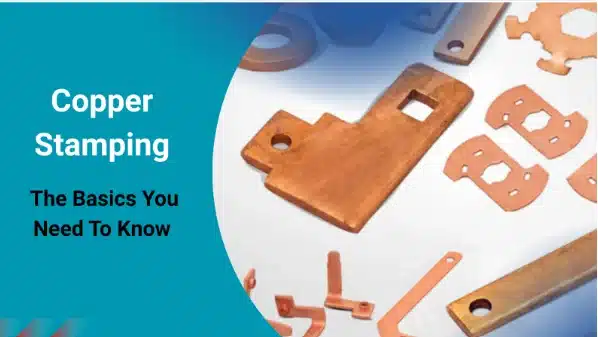
Copper stamping is the process of transforming raw copper sheets into intricate designs using specialized tools and techniques. Copper alloys produce highly usable stamped parts that are valued for their corrosion resistance, good appearance, ductility, and cost-effectiveness.
From standard stamping methods to more advanced ones like engraving, there are more than enough ways to craft exciting parts from the material. Despite a few processing challenges, manufacturers serve many industries with these parts.
Automotive, aerospace, medical, and mining are only examples of where to use copper-stamped parts.
To demonstrate the market relevance of copper stamping, here is a quick discussion of the properties, stamping methods, pros & cons of copper, and applications of stamped parts.
Learn more about custom copper stamping
What is Copper Stamping?
In copper stamping, a die and press setup shapes copper coil or sheet to produce parts as designed. It is the transformation of flat copper raw material into 3-dimensional parts of varying complexities.
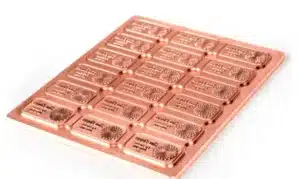
Electrical contacts and brackets are just examples of what copper stamping can achieve. The suitable copper properties and the versatility of stamping allow for different approaches to the process, including high-volume manufacturing.
Properties of Copper
Talking of properties, we all know about the superior electrical conductivity of the non-ferrous metal. Other than that, copper offers unmatched formability and thermal performance; thus, it is common in stamping projects.
Parts with tight tolerances can be easily made from the material because of its high malleability. It is also rare for this transition metal to crack when bent.
Considering the equally good antimicrobial properties and corrosion resistance, it is no wonder users prefer the material for demanding applications.
Benefits of Copper Stamping
Copper stamping delivers the following benefits.
- High heat and electrical conductivity
- Outstanding corrosion resistance
- Food-safe properties
- Impact-resistant material
- Easy to alloy with other metals
Limitations of Copper Stamping
Here are the limitations of copper stamping.
- High tooling cost for low-volume stamping
- Thicker sheets have design limitations
- High initial investment
Copper Grades/Alloys for Stamping
The most common copper grades for stamping include C10100, C11000, C51000, C17200, C26000, and C36000. Each of these grades has unique properties that suit specific stamping requirements.
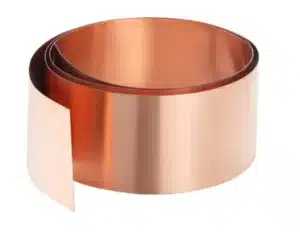
For instance, phosphor bronze (C51000) has very high fatigue resistance, while C11000 and C10100 provide the best electrical conductivity.
Copper Stamping Techniques
Copper stamping allows for different techniques, the main ones being blanking, bending, drawing, and embossing. Moreover, there are notable copper stamping strategies – progressive die stamping and transfer stamping.
Bending: This stamping operation entails pushing the copper sheet metal against a die to attain a desired angle.
Drawing: Here, the copper sheet metal is hit with a punch of equal cross-section to take the envisaged shape.
Engraving: This is a material removal process that produces recessed designs.
Embossing: Embossing creates a protruding design on the copper sheet.
Blanking: Blanking is defined as cutting a small section of a copper part from a larger sheet. The edges are usually rough, so blanking is followed by other refining processes.
For a manufacturer, the key is determining if and when to use either of the stamping approaches. Progressive stamping is ideal for high-volume production, while transfer stamping is excellent for large copper sheet metal stamping.
Copper Stamping Steps
Stamping copper is a systematic process that entails material preparation, die setup, press operation with close monitoring, and final inspection. Each step is an important buildup to the next one, particularly in terms of accuracy and overall part integrity.
Once ProleanTech has undertaken all these steps, the resulting copper stamp part has the best dimensional accuracy and surface finish. These and other critical elements are aligned with the customer’s specifications.
Copper Stamping Tool Categories
There are special copper stamping tools, including the press, the tooling, and the die. Each of these is designed to meet the special forming requirements of copper.
The press can be hydraulic, mechanical, or servo-type.
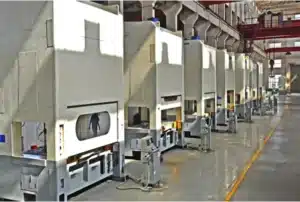
The stamping operations are also enabled by auxiliary equipment such as lubrication systems and straighteners.
Copper Stamping Applications
Copper-stamped parts are present in HVAC, automotive systems, electronics manufacturing, telecommunications equipment, and aerospace components. The properties of copper – formability, thermal conductivity, electrical conductivity, and others – are useful in these applications.
Here are some applications of the stamped parts for common industries.
Automotive – Steering components, braking systems, fuel systems, seating components, transmission components
Construction – Cord clips, sign hangers, collet locks
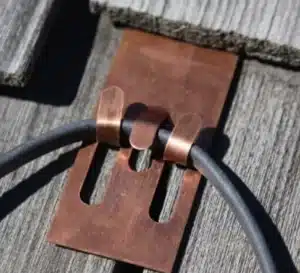
Healthcare – Fasteners
Medical devices – Instrument connectors, equipment enclosures, pump parts, implants, displays
Mining – Mining drill bit clips and snap buttons
Sporting equipment – fasteners
Things Manufacturers Must Avoid in Copper Stamping
Copper stamping is highly valued in industrial applications, but the manufacturing processes are performed professionally while avoiding the following mistakes.
- Not annealing the harder copper sheets
- Stamping the material too hard
- Wrong choice of stamp design
- Using dirty stamps
- Wrong choice of copper grade/alloy
Conclusion
Whether you are looking for stamped parts from pure copper or one of its alloys, the malleability, corrosion resistance, decorative appeal, and hygienic nature of copper-based parts are unbelievable. Combine this with the right choice of stamping service provider and you will never regret.
Top sheet metal stamping services always provide the answers when copper or other materials are required for their unique properties.
Why Industrial Automation and Robotics Are Essential for High-Precision Manufacturing
Is Investment Casting Right for Your Industry? Here’s What to Know
Why CNC Machining is Premium Choice for Prototyping?