Xilinx FPGA: Complete Guide to Architecture, Programming, Applications, and Real-World Uses
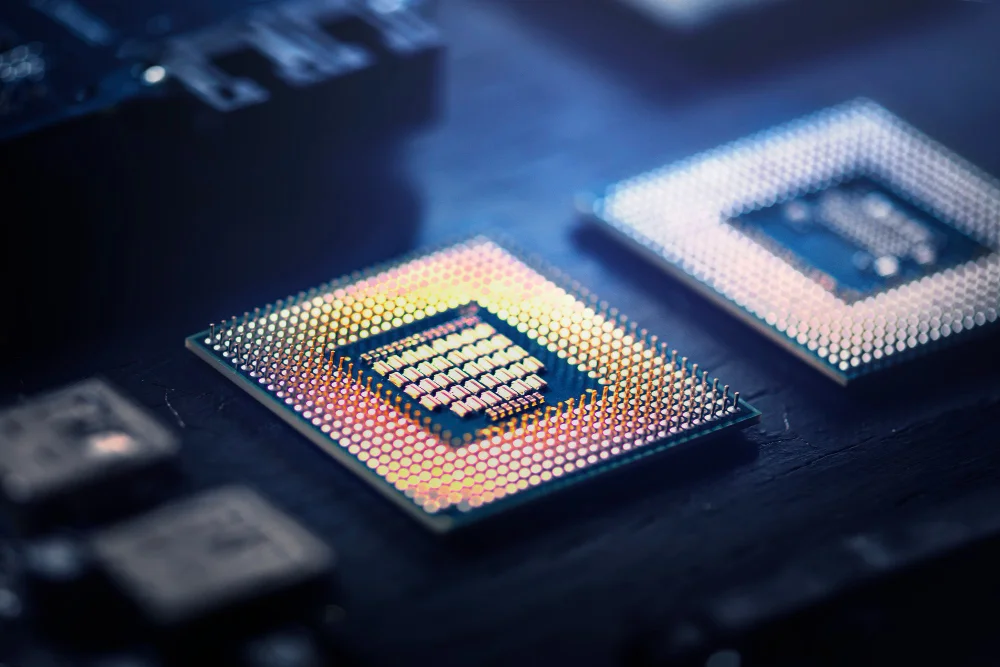
Technology is evolving fast, and hardware acceleration is becoming more important than ever. One technology that stands out in modern computing is the xilinx fpga. Engineers, developers, and researchers are using it to build highly optimized digital systems that go far beyond traditional CPUs or GPUs.
In simple terms, an FPGA allows you to design hardware behavior instead of just running software instructions. That makes it powerful, flexible, and ideal for real-time processing. In this guide, you will learn what a Xilinx FPGA is, how it works internally, how it is programmed, and why it plays a key role in AI, telecommunications, and embedded systems.
What is a Xilinx FPGA?
A Field Programmable Gate Array (FPGA) is a semiconductor device that can be programmed after manufacturing to perform specific digital logic tasks. Unlike a fixed processor, an FPGA lets engineers configure the hardware structure itself.
Xilinx, now part of AMD, is one of the pioneers of FPGA technology. The company introduced commercially successful programmable logic devices and helped shape modern adaptive computing.
Instead of writing instructions that run sequentially, developers describe hardware logic using special languages. Once programmed, the FPGA becomes a custom circuit tailored to a specific task.
Key characteristics include:
- Reconfigurable hardware design
- Massive parallel processing
- Low latency performance
- High flexibility compared to ASICs.
How Xilinx FPGA Works Internally
Understanding architecture is essential because the power of FPGA technology comes from its internal structure.
Configurable Logic Blocks (CLBs)
CLBs are the main building units inside an FPGA. They contain logic resources that implement digital functions. Engineers use them to create counters, state machines, and control logic.
Look-Up Tables (LUTs)
LUTs store truth tables. Instead of hardwired logic gates, they calculate outputs based on programmed input combinations. This allows any logical function to be implemented efficiently.
Flip-Flops and Registers
Flip-flops store data temporarily. They enable sequential logic and synchronization between clock cycles.
DSP Slices
Digital Signal Processing blocks accelerate math-heavy operations such as multiplication, filtering, and signal analysis. These blocks are widely used in AI and communication systems.
Block RAM (BRAM)
Embedded memory provides fast storage for data buffers and lookup tables. It reduces external memory dependency.
Programmable Interconnect
Routing resources connect all blocks together. Engineers define how signals travel across the chip.
Clock Management
Clock managers maintain precise timing and synchronization, which is critical for high-speed digital systems.
Xilinx FPGA Families Explained
Different FPGA families serve different use cases. Choosing the right one depends on performance needs and budget.
Spartan Series
Entry-level devices. Suitable for education, simple embedded projects, and cost-sensitive designs.
Artix Series
Low power consumption with balanced performance. Popular for portable or embedded applications.
Kintex Series
Mid-range performance and power efficiency. Common in communication systems.
Virtex Series
High-performance devices used in data centers, aerospace, and advanced research.
Zynq SoC
Combines FPGA fabric with ARM processors. Developers can run software and hardware acceleration together.
UltraScale and UltraScale+
Advanced architectures with higher speed, better power optimization, and improved scalability.
How Programming a Xilinx FPGA Works
Programming an FPGA is different from traditional software development. Instead of writing step-by-step instructions, engineers describe hardware behavior.
Hardware Description Languages
Common languages include:
- Verilog
- VHDL
These languages define logic circuits, signal timing, and data flow.
Vivado Design Flow
The development process typically follows these steps:
- Design entry using HDL or graphical tools.
- Synthesis converts logic descriptions into hardware elements.
- Implementation performs placement and routing.
- Bitstream generation creates the configuration file.
- Uploading the bitstream programs the FPGA.
Simulation and Debugging
Simulation tools help verify functionality before deploying hardware. Engineers test timing, performance, and signal behavior.
Xilinx FPGA vs CPU vs GPU
Understanding differences helps clarify when FPGA is the best choice.
| Feature | CPU | GPU | FPGA |
| Execution | Sequential | Parallel threads | Custom hardware parallelism |
| Flexibility | High software flexibility | Optimized for graphics/math | Hardware-level customization |
| Latency | Moderate | Moderate | Very low |
| Efficiency | General-purpose | High for specific tasks | Extremely efficient for custom tasks |
CPUs excel at general workloads. GPUs handle massive data parallelism. FPGA technology shines when low latency and hardware optimization are required.
Real-World Applications of Xilinx FPGA
The xilinx fpga ecosystem covers many industries.
Artificial Intelligence
FPGAs accelerate neural network inference at the edge. They offer energy efficiency compared to GPUs.
Telecommunications
Used in 5G infrastructure for signal processing and network optimization.
Video Processing
Real-time video encoding, image recognition, and broadcast systems benefit from FPGA acceleration.
Automotive Systems
Advanced driver assistance systems rely on fast sensor processing.
Aerospace and Defense
Radar, satellite communication, and mission-critical control systems use FPGAs due to reliability and flexibility.
Data Centers
Cloud providers use FPGA acceleration cards for search algorithms, compression, and encryption.
Advantages and Limitations
Balanced analysis improves trust and aligns with Google quality guidelines.
Advantages
- High performance through parallelism
- Customizable hardware architecture
- Low latency processing
- Reprogrammable without replacing hardware.
Limitations
- Steep learning curve
- Complex design tools
- Higher initial development effort compared to software solutions.
Why Engineers Choose Xilinx FPGA Today
Modern computing increasingly requires specialized acceleration. Engineers select FPGA technology for several reasons:
- Edge AI processing with low power consumption
- Real-time analytics in telecom networks
- Custom hardware pipelines for financial trading or video processing.
The xilinx fpga platform continues to evolve toward adaptive computing. New architectures combine programmable logic, CPUs, and AI engines into one device.
Beginner Learning Roadmap
Many users searching about xilinx fpga want to know how to start. Here is a simple roadmap.
- Learn digital logic basics.
- Understand binary operations and timing concepts.
- Study Verilog or VHDL fundamentals.
- Install Vivado design tools.
- Practice with simple projects such as LED blinking or counters.
- Move toward complex designs like signal processing pipelines.
Common beginner mistakes include trying to treat FPGA programming like software coding. Hardware design requires thinking in parallel rather than sequential execution.
Common FAQs About Xilinx FPGA
Is FPGA better than a microcontroller?
Not necessarily. Microcontrollers are simpler and cheaper for basic control tasks. FPGA devices are better for high-speed parallel processing.
Is FPGA difficult to learn?
It has a learning curve, but structured practice makes it manageable.
Can FPGA run an operating system?
Some devices like Zynq integrate CPUs that can run Linux alongside programmable logic.
Which industries use FPGA the most?
Telecommunications, AI acceleration, automotive electronics, aerospace, and industrial automation.
Future of Xilinx FPGA Technology
The future of programmable hardware lies in adaptive computing platforms. Modern devices integrate:
- programmable logic
- AI acceleration engines
- CPU subsystems
- high-speed connectivity.
As workloads become more specialized, hardware flexibility becomes more valuable. This makes FPGA technology a critical component of future computing architectures.
Conclusion
A xilinx fpga is more than just a programmable chip. It is a flexible hardware platform that allows engineers to build custom digital circuits tailored to specific workloads. By combining parallel processing, low latency, and reconfigurable architecture, it fills the gap between general-purpose processors and fixed hardware solutions.
Whether you are a beginner exploring digital design or a professional optimizing high-performance systems, understanding FPGA technology opens the door to powerful and efficient computing solutions.

How Federal Assistance Programs Now Support More Than Their Original Purpose

How Email Widgets Can Support Time-Sensitive Email Marketing
Deepseekplay com: A Comprehensive Guide to Features and Benefits