Introduction
Busy mornings can feel stressful before the day has even started. You may need to get dressed, prepare breakfast, pack lunch, find your keys, check the weather, answer messages, and leave on time. When all of these decisions happen at once, even simple tasks can feel overwhelming.
Planning makes mornings easier because it removes unnecessary decisions. Instead of rushing around looking for items, you can follow a routine that has already been prepared. A few small habits the night before can help the next morning feel calmer, faster, and more organized.
This does not mean every minute needs to be scheduled. The goal is to prepare the essentials so your morning has fewer surprises.
Why Busy Mornings Feel So Stressful
Morning stress usually comes from three common problems: too many decisions, missing items, and not enough time. When these problems happen together, the entire morning can feel rushed.
Common morning stress points include:
- Searching for keys, wallet, or phone
- Choosing an outfit at the last minute
- Forgetting lunch or documents
- Packing a bag while trying to leave
- Realizing the weather requires different clothing
- Running out of time for breakfast
- Forgetting errands or appointments
Most of these problems can be reduced with simple preparation. When items are ready and decisions are made in advance, the morning becomes more predictable.
Prepare Important Decisions the Night Before
The night before is the best time to handle small decisions. You are usually less rushed, and you have more time to notice what is missing.
Useful things to prepare include:
- Tomorrow’s outfit
- Lunch or snacks
- Work documents
- School materials
- Gym clothes
- Weather items
- Shopping list
- Chargers
- Keys and wallet
This preparation does not need to take long. Even ten minutes can make a major difference. You can also create a short evening checklist if you regularly forget the same items.
For example, if you often leave without your water bottle, place it next to your bag at night. If you forget paperwork, put it near your keys. Small visual reminders can prevent morning mistakes.
Create a Simple Grab-and-Go Area
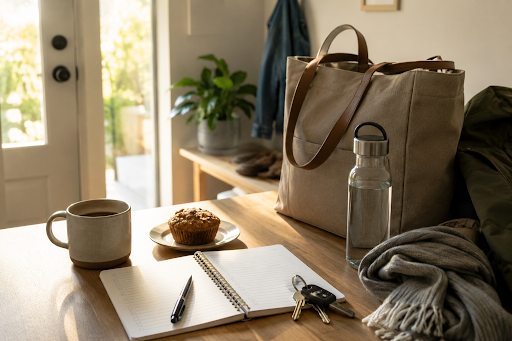
A grab-and-go area near the door helps keep daily essentials in one place. This area can be a shelf, basket, hook, tray, or small table. It should hold only the items you use frequently.
Useful items for this area include:
- Keys
- Wallet
- Sunglasses
- Umbrella
- Water bottle
- Work badge
- Transit card
- Reusable bags
- Items to return or mail
Keeping canvas tote bags near the door is helpful because they can be used for errands, groceries, work items, or unexpected carry needs. When bags are visible, you are more likely to remember them before leaving.
The key is to keep this area simple. If it becomes crowded with random items, it will stop being useful.
Choose Reliable Carry Items
A consistent everyday carry bag can make mornings easier because you do not need to repack from scratch every day. Choose a bag that fits your routine and has enough room for essentials without becoming too bulky.
Good features include:
- Comfortable handles
- Durable fabric
- Neutral design
- Easy access
- Enough room for daily items
- Pockets or space for pouches
Inside the bag, use small pouches to organize items such as chargers, cosmetics, pens, receipts, or personal care products. This makes it easier to find what you need quickly.
A reliable carry system is especially useful for students, commuters, parents, and professionals who move between different places during the day.
Keep the Morning Routine Easy to Repeat
The best morning routine is simple enough to repeat even when you are tired. A complicated routine may work for a few days but become difficult to maintain.
A practical routine might look like this:
- Wake up
- Get dressed in the outfit prepared the night before
- Eat or pack breakfast
- Check the grab-and-go area
- Take your prepared bag
- Leave with a small time buffer
Try to avoid adding too many steps. The goal is to reduce pressure, not create another task list.
Conclusion
Planning makes busy mornings easier by reducing decisions, preventing forgotten items, and creating a smoother routine. With a little preparation the night before, a simple grab-and-go area, and reliable carry items, mornings can feel calmer and more controlled.

The Power of Durable Choices: Why Longevity Is Becoming a Consumer Priority

Delores Nowzaradan: Unveiling Her Life Story
Why Planning Makes Busy Mornings Easier