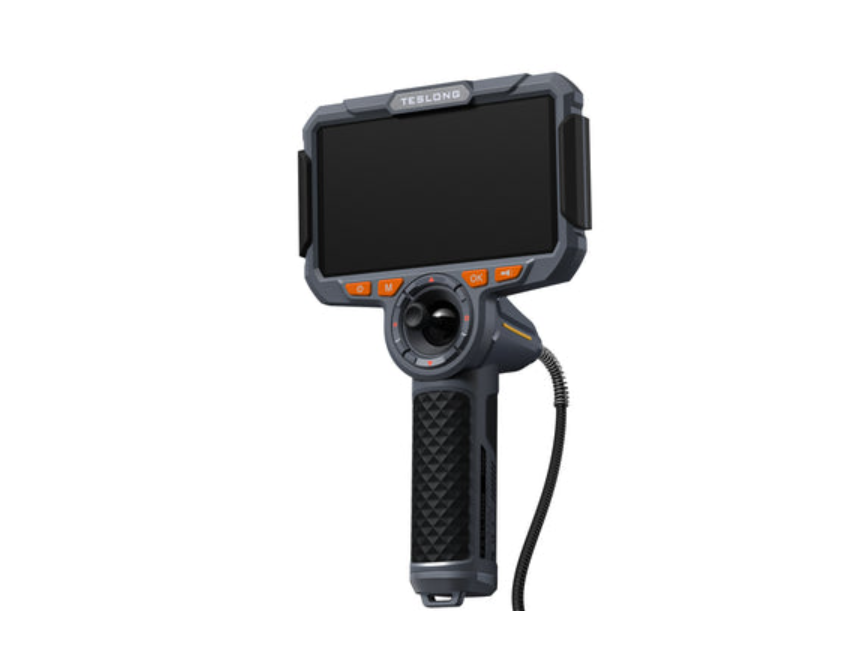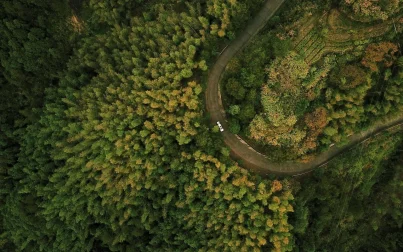
LiDAR and laser range finders are two revolutionary technologies that are used to capture accurate data on physical environments. Both these technologies work by analysing reflections and sending signals for active remote sensing. However, they have some common differences in terms of operation, cost, range, application, and accuracy.
This article can help you discover these differences so you can make a smart choice.
Operation
Laser scanning uses a process called the time of flight to calculate the distance between the target and the scanner. During this process, pulses of laser light are sent toward a surface. These laser beams return to the scanner, and the travelling time for these pulses is recorded. The laser scanner rotates in a 360-degree arc and pulses continuously. This process helps in capturing data from various angles.
Light Detection and Ranging, or LiDAR, is not dependent on natural light and is used in day and night applications. This remote sensing technology is used for larger data collection as it emits a thousand pulses per second. You can get high-quality LiDAR from a trusted LiDAR company for aerial, terrestrial, and mobile systems.
Range and Coverage
The laser range finder is usually considered a point-to-point measurement and covers a limited area. Its range usually covers a few meters of measuring distance between specific targets. Moreover, these are best suited for capturing detailed images in confined spaces and smaller areas.
LiDAR technology is best suited to cover larger areas and even create detailed 3D models for several kilometres. A long-range LiDAR can have a range beyond 100 meters for detecting objects for faster-moving vehicles. For professional applications like mapping, this range may be extended to 200 meters or more.
Cost-Effectiveness
Laser range finders are comparatively less expensive due to their minimal application and simple technology. You can get a variety of laser range finders for a couple of hundred dollars with the latest features.
LiDAR systems are considered an investment as they require specialised equipment and softwares. The cost associated with data processing makes it expensive for smaller projects. Due to their professional applications and complex technology, LiDAR can cost thousands of dollars.
Application
A laser range finder is used for applications like hunting, surveying a small area, construction, and golf. It is also used while travelling to measure the distance between specific targets and points. Industries like sports and the military also use these devices to observe objects and positions.
LiDAR is a highly flexible and versatile technology that is used for urban construction, architecture, vehicles and forestry. This technology can also be used for topographic mapping, environmental management, and infrastructure planning.
Accuracy
Laser range finders can be affected due to sunlight, rain, mist, or wind. This decreases their accuracy and makes them more suitable for a controlled environment and indoor applications.
LiDAR is more accurate as it uses a 3D point cloud for data about a wide range of environments. Moreover, it is not suited for minute and granular details of a close-range application.
Conclusion
Both LiDAR and laser range finder can help you with specific applications, whether it’s personal or professional. While selecting one of these technologies, focus on range, budget, model and required level of detail. Keep the above differences in mind to understand which of these is better suited for your requirements.

The "Bugsisdead" Phenomenon: Unraveling the Mystery Behind the Viral Trend

Exploring the Life of Rebecca Liddicoat: Beyond the Headlines
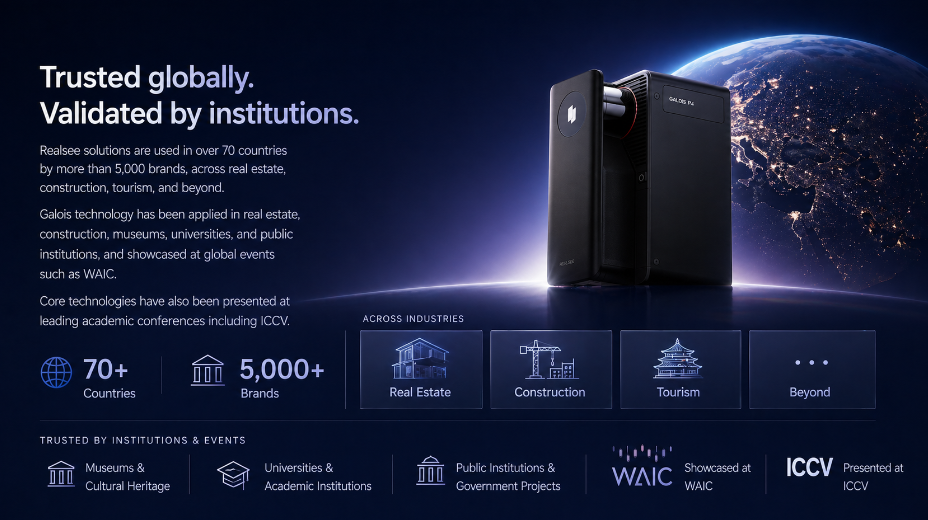
Real Estate Photography Lens for High-Precision 3D Models