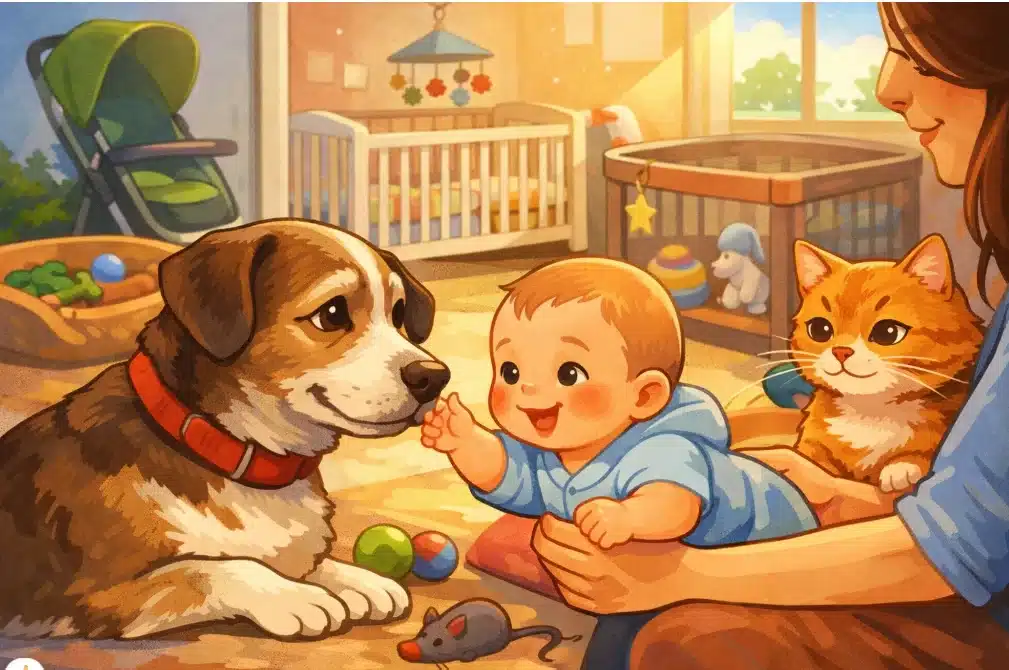
A new baby changes the mood of the whole home. Your older dog or cat notices right away. Still, you can keep things calm with a few steady habits, clear rules, and close supervision.
You don’t need perfect training. You need simple steps, done every day, and done the same way each time.
Start before the baby comes home
A little prep helps a lot. Small changes now can lower stress later.
Book a vet visit for your pet. Ask about:
- Nail trim and skin itching
- Tooth pain and gum checks
- Flea and tick plan
- Deworming schedule
- Hearing or vision loss in older pets
Pain can make an older pet short tempered. When you treat pain, many pets relax fast.
Teach two cues and practice daily:
- “Place” or “Bed”
- “Leave it”
Keep practicing short. Use tiny treats. Stop after a few wins.
Do you want a quick way to prep your pet for baby sounds? Play a baby crying clip at low volume for 2 to 3 minutes, reward calm behavior, then stop. Repeat once a day, and raise the volume a little over time.
Set up safe zones in the house
Your baby needs a pet free space. Your pet needs a baby free space. This lowers mistakes and keeps everyone calmer.
Use barriers that fit your home:
- Baby gates, with a small pet door for cats
- A playpen for the baby
- A crate, or a quiet room, for a dog
- A tall cat tree or shelf zone
Put food and water where a crawling baby cannot reach. Keep the litter box behind a gate, or in a separate room.
Set one firm rule. No pet in the baby’s sleep space. That means no pet in the crib, bassinet, or baby lounger.
Practice the new gear routine
Strollers, swings, and bouncers can feel strange to an older pet. Let your pet inspect them in a calm moment, not during a rush.
Try this pattern:
- Bring the item in
- Let your pet sniff
- Reward calm behavior
- Move the stroller a few steps
- Reward again
Do the same with baby smells. Put a clean baby blanket near your pet’s bed for short periods, then take it away.
The first meeting. Keep it calm and short
Plan the first hello like a short training session. Pick a quiet time. Use a second adult if you can.
For dogs:
- Keep your dog on a leash
- Ask for “sit” or “place”
- Bring the baby in from a distance
- Reward calm behavior
- End the session after 1 to 2 minutes
For cats:
- Let the cat choose distance
- Do not carry the cat to the baby
- Reward calm curiosity
- Keep a clear escape route
Short and positive works best. Repeat later, and keep the tone easy.
Supervision rules that prevent accidents
Most problems happen in normal moments. A tired parent looks away, and a pet reacts in a split second.
Use these rules every day:
- Keep an adult within arm’s reach during contact
- Separate baby and pet during feeding time for either one
- Separate during high energy moments, like zoomies or rough play
- Pick the baby up before you move bowls or toys
Never leave a pet alone with a sleeping baby. Even a gentle pet can step on a face, block airflow, or startle a baby awake.
Keep your older pet’s routine steady
Older pets feel safer with predictable days. A new baby can shake that up, so keep a few anchors.
Choose three fixed points:
- Walk time
- Meal time
- Calm cuddle time
Keep those close to the old schedule. Ask visitors to greet your pet quietly, not with loud excitement.
Add simple enrichment that stays calm:
- A snuffle mat
- A frozen lick mat for dogs
- Food puzzles
- Short scent games in a hallway
- A window perch for cats
These activities burn energy without chaos, and they help your pet settle.
Learn the stress signals quickly
Pets give warnings. Many people miss them, then feel shocked by a growl or swat.
Common dog stress signs:
- Lip licking without food
- Yawning in a tense moment
- “Whale eye,” where you see the white of the eye
- A stiff body and a closed mouth
- Moving away, then freezing
Common cat stress signs:
- Ears pinned to the sides
- Tail flicking hard
- Hissing, growing, or swatting
- Hiding for long periods
- Sudden litter box changes
When you see these signs, add distance right away. Move the baby back. Give your pet a quiet place. Reward calm once your pet settles.
Hygiene that protects baby and pet
Babies touch everything. Pets shed hair and track dirt. You can keep things clean without turning your home into a scrub fest.
Stick to the basics:
- Wash hands after litter box cleaning, bowls, or outdoor walks
- Keep the litter box away from baby areas
- Vacuum high traffic spots a few times per week
- Wash pet bedding often
- Keep claws trimmed
Do not let pets lick the baby’s face or hands. Redirect with a toy or treat, and guide your pet to a bed or mat.
Extra safety for busy days
New parents forget doors and gates. Pets slip out. That risk goes up during the first months.
Update ID and recovery basics:
- Collar tag with current phone number
- Microchip details checked and current
- A clear photo of your pet on your phone
If your dog bolts through doors, a tracker can help you find them fast. You can browse options here: GPS Trackers .
For dog routines, house rules, and training tips that fit family life, start here: Dog Guides .
When you should get outside help
Some signs call for help early, not late.
Get support fast if you see:
- Growling near baby gear
- Snapping, lunging, or stalking
- Guarding toys or food
- Freezing with hard staring
Call your vet to rule out pain. Then work with a reward based trainer. Harsh methods can raise fear and raise risk.
A calm home comes from small, steady steps
You can keep a new baby and an older pet safe under one roof. Set up barriers. Keep routines steady. Reward calm behavior. Supervise every interaction. Over time, your pet learns the new normal, and your baby grows up around a pet that feels secure.
A Practical Guide to Choosing Baby Essentials for Australian Families
Breastfeeding Essentials Every New Mum Should Keep Within Reach
New Baby and Old Pet. How to Keep Everyone Safe and Happy