Instant Viral Content with an AI Anime Generator. A 2026 Playbook for AI Anime Shorts
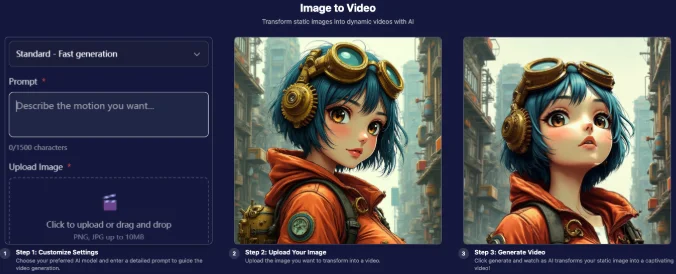
Hey creators and marketers. Are you struggling to keep up with TikTok and YouTube Shorts without burning out your team. You are not alone. Short form algorithms reward consistency, speed, and strong retention. Manual production often cannot keep pace, especially when you need fresh visuals every day.
That is why the ai anime generator workflow is exploding right now. With an ai anime generator, you can turn a simple idea into scroll-stopping ai anime content fast, then iterate in minutes instead of days. Tools like aianime.io position this approach as a streamlined, automated process designed for rapid short video creation, with scripting, illustration, voice, and editing handled in one flow.
This blog is performance-first on purpose. It shows you how to plan, produce, and scale ai anime shorts using an ai anime generator, including a step-by-step workflow, content ideas, prompt templates, and a simple scaling timeline you can follow.
The short form content challenge
Short form video looks easy until you try to publish consistently. To win on TikTok and Shorts, you typically need:
- Consistent quality across posts
- Rapid production to match the platform tempo
- Visual appeal that stops the scroll in the first second
- Storytelling that lands fast, often in under 30 seconds
- A repeatable format you can scale without losing your mind
Traditional workflows are linear. Script. Storyboard. Production. Voice. Edit. Export. That takes time and coordination. AI-powered creation is designed to compress those steps into a smoother loop, which is exactly why an ai anime generator is so attractive for teams that need speed.
If your content backlog keeps slipping, an ai anime generator is less about replacing creativity, and more about removing repetitive labor so your creative direction can move faster.
Why an AI anime generator works for modern teams
A good ai anime generator is built for output. It helps in four big ways.
Speed to market
Instead of weeks of production, the goal is to go from idea to published short fast. With a tool like aianime.io, the promise is a streamlined pipeline where you can draft, generate, and export in minutes. That kind of speed changes how you plan campaigns. You can respond to trends the same day, not next week.
Brand consistency
Short form channels grow faster when viewers recognize your “world.” A recurring character, mascot, or visual style becomes a retention tool. An ai anime generator makes that practical because you can reuse the same character setup, visual style, and prompt structure to keep your ai anime look cohesive.
Platform-ready formatting
Creators waste time resizing, reframing, and exporting. A strong ai anime generator reduces those steps by producing vertical-friendly output that is already aligned with Shorts and TikTok formats. When your ai anime generator output is ready to publish, you ship faster.
Cost efficiency
Outsourcing animation or running an internal edit team gets expensive fast. For many brands, an ai anime generator becomes the always-on content engine, while higher-budget shoots are reserved for flagship moments.
What you can create with ai anime today
An ai anime generator is not only for entertainment creators. It is increasingly used across marketing, education, and community building.
1. Viral storytelling shorts
Short narratives are powerful because they create a reason to watch to the end. Mini dramas, transformations, rival arcs, and cliffhangers work extremely well in ai anime format. If you keep characters consistent, you can turn a single concept into a series that grows compound interest over time.
2. Educational explainers
Explainers that feel like a story beat a talking-head lecture in short form. With an ai anime generator, you can produce a consistent series like “Finance in 30 Seconds,” “Science Mythbusters,” or “Language Hacks,” all in a recognizable ai anime style.
3. Product launches and feature reveals
Instead of static product posts, animate a character-led teaser that shows the benefit in 3 beats. Problem. Tension. Reveal. Then end with a clear CTA. An ai anime generator is perfect for creating variations for different audiences.
4. Community prompts and UGC loops
People love seeing themselves represented. Use an ai anime generator to run a “community avatar” theme and invite followers to submit prompts. Then feature the best entries as weekly ai anime episodes. You get engagement and idea fuel at the same time.
What results are realistic
Be careful with promises, but benchmarks are useful for planning. In real production, the biggest advantage of an ai anime generator is not one magical viral video. It is the increase in volume and iteration speed.
More iterations means more chances to discover a winning hook, pacing, character dynamic, and call to action. Short form is a probability game. An ai anime generator gives you more at-bats without turning your calendar into chaos.
Step-by-step. Creating ai anime shorts with an ai anime generator
Here is a repeatable workflow you can use with aianime.io or any similar ai anime generator. The key is consistency. Build a loop you can run daily.
Step 1. Start with a trend, then add a twist
Pick one trend hook. A meme format, a viral sound, a hot keyword, or a community question. Then add your twist so it becomes yours.
Examples:
- “POV: Your future self gives you one rule”
- “3 mistakes everyone makes with skincare”
- “When the villain is actually the mentor”
- “One tiny habit that changes everything”
Trend gives you attention. Twist gives you identity.
Step 2. Generate the script fast
Whether you draft manually or with AI help, aim for clarity and pace. For 25 to 35 seconds, you generally want 80 to 120 words. Keep sentences short. Make the first line a hook. Add a midpoint surprise. End with either a payoff or a question.
A simple structure that works:
- Hook in 1 second
- 2 to 3 quick beats of value or story
- A turn or reveal
- A tight ending that drives comments
Step 3. Choose one ai anime style that matches your brand
Pick one baseline look and stick with it long enough to build recognition. If you are doing ai anime, commit to a consistent palette, line vibe, and character proportions. Style consistency is a growth strategy, not just aesthetics.
Step 4. Lock a character library
Character consistency is the difference between random clips and a channel universe. In your ai anime generator, build 3 core characters:
- The narrator or host
- The friend or skeptic
- The wildcard. Rival, mentor, villain, mascot
Once this set exists, your ai anime content becomes easier to write because you are writing for personalities, not blank faces.
Step 5. Generate, edit lightly, publish
Let the ai anime generator do the heavy lifting. Your job is quality control.
- Is the first second visually strong
- Is the pacing tight
- Is on-screen text readable
- Is the message obvious without sound
- Does the ending earn a comment
Then publish. Track results. Improve the next one.
Pro prompt patterns for an ai anime generator
Use these with aianime.io to speed up ideation. Each prompt is structured for short form and designed to keep your ai anime output consistent.
- Hook first
“Create an ai anime short with a 1-second hook. Topic: [topic]. Tone: [funny, serious, dramatic]. Length: 25 seconds. End with a cliffhanger.” - Fast education
“Create an ai anime explainer. Explain [concept] in 25 seconds using a story. Add 3 on-screen bullet points. Keep it simple and punchy.” - Mini series starter
“Create episode 1 of an ai anime series. Characters: [A], [B]. Conflict: [conflict]. Make the ending a question for the audience.” - Brand mascot promo
“Use my mascot as the main character. Create an ai anime ad-style short for [product]. Keep it entertaining, not salesy. Include a subtle CTA in the last second.” - Comment-to-episode loop
“Create an ai anime short that ends by asking viewers to choose option A or B. Topic: [topic]. Make both options compelling.”
An ai anime generator works best when your prompt is specific about tone, length, structure, and ending.
A simple scaling timeline you can follow
Days 1 to 7. Testing phase
- Produce 3 to 5 formats
- Test different hook styles
- Try multiple pacing levels, 15s, 25s, 35s
- Track retention and saves, not just views
Your goal is to find one repeatable ai anime format that feels natural with your ai anime generator workflow.
Weeks 2 to 4. Scaling phase
- Build your character library
- Batch content in blocks, for example 10 shorts per session
- Set a consistent posting rhythm
- Standardize your prompts into templates
This is where aianime.io style workflows shine. Consistency plus volume is where an ai anime generator pays off.
Month 2 and beyond. Optimization
- Double down on the winning format
- Split test openings, endings, captions, and on-screen text
- Expand into adjacent topics
- Turn top videos into a structured series
Over time, your ai anime channel becomes a library of repeatable narrative patterns.
Conclusion. AI anime is a workflow advantage
If you want to move faster without sacrificing creativity, build your pipeline around an ai anime generator. The winning approach is simple. Trend-aware ideas. Consistent characters. Fast scripting. Rapid iteration. Tools like aianime.io are designed for this kind of streamlined production loop, where you can go from concept to publish-ready short quickly.
Start small. One character. One format. One week of testing. Then scale what works. With the right ai anime generator workflow, ai anime content becomes not just possible, but sustainable.

The Impact of Eco-Friendly Packaging on Consumer Buying Behavior in 2023

How AI-Powered Logistics Platforms Improve Route Planning and Delivery Performance

Hilary Gumbel: A Closer Look at Her Impactful Life