Picture this: a treadmill draped in last season’s jackets, a set of dumbbells gathering dust in the corner, and a resistance band you swore you’d use every morning. Sound familiar? Millions of home gym owners share this exact story — enthusiastic purchases followed by gradual neglect. The problem isn’t a lack of willpower; it’s a lack of engagement.
Enter the smart fitness revolution. Over the past few years, connected fitness technology has fundamentally changed how people work out at home. At the forefront of this shift is the smart mirror — a sleek, interactive device that blends real-time workout guidance with cutting-edge artificial intelligence. These aren’t glorified screens; they’re intelligent fitness partners that adapt to you.
So why are smart mirrors leaving traditional home gym setups in the dust? The answer lies in three areas: personalization, engagement, and technology integration. From AI-driven coaching that corrects your form mid-squat to community features that keep you accountable, smart mirrors solve the very problems that cause conventional equipment to collect dust. This article breaks down exactly where traditional setups fall short and how today’s smart fitness solutions are redefining what it means to work out at home.
The Inherent Flaws of Traditional Home Gym Equipment
Traditional home gym equipment carries a fundamental design problem: it demands motivation from the user while offering nothing in return. A set of dumbbells doesn’t care whether you show up. A treadmill won’t notice if you skip three weeks. This passive nature is precisely why studies consistently show that most home gym equipment sits unused within months of purchase. Without feedback, guidance, or any form of engagement, even the most disciplined person eventually loses steam.
Space is another silent killer. A squat rack, a bench, a cable machine, and a treadmill can easily consume an entire spare room — and that’s before you account for safe movement clearance. For most households, dedicating that kind of square footage to equipment that serves a single purpose each is simply impractical. The result is a cluttered room that feels more like a storage unit than a fitness space.
Then there’s the ceiling on variety. Traditional equipment locks you into whatever movements it was built for. A stationary bike is always a stationary bike. Without external programming or a personal trainer, most users cycle through the same handful of exercises indefinitely, leading to plateaus and boredom. Progress tracking is equally primitive — a notebook or a basic app disconnected from your actual movements tells you little about whether your form is improving or your body is adapting. These compounding limitations make abandonment almost inevitable.
The Smart Mirror Revolution in Fitness Technology
A smart fitness mirror is exactly what it sounds like — and simultaneously far more than that. On the surface, it’s a full-length reflective panel you can mount on any wall. Underneath that glass, however, sits a high-definition display, an embedded camera, built-in speakers, and a processor capable of running sophisticated fitness software. When activated, the mirror transforms into an interactive workout hub while still letting you see your own form and movement in real time.
The path from traditional gear to connected devices didn’t happen overnight. Early home fitness technology amounted to little more than DVD players and basic heart rate monitors. Then came app-connected equipment — bikes and treadmills that could stream classes but offered limited personalization. Smart mirrors represent the next leap: a single device that consolidates instruction, feedback, and tracking into one seamless experience without occupying the footprint of multiple machines.
What makes today’s smart mirrors genuinely compelling is the hardware packed behind their sleek surfaces. Most flagship models feature HD or 4K touchscreens for crisp visuals during classes, wide-angle cameras that capture your full body for motion analysis, and Bluetooth or Wi-Fi connectivity that syncs with wearables and third-party fitness apps. Many also integrate directly with resistance accessories, heart rate monitors, and subscription platforms offering hundreds of live and on-demand classes. The result is a compact, wall-mounted fitness ecosystem that adapts to your space rather than consuming it.
Unlocking the Power of AI Fitness Systems for Personalized Workouts
Traditional equipment gives you iron and rubber. AI fitness systems give you a coach who never clocks out. The fundamental shift smart mirrors introduce isn’t just convenience — it’s intelligence. By continuously analyzing your movement data, biometrics, and workout history, AI transforms a generic exercise session into something that actually responds to who you are and where you’re headed. For anyone who has ever wondered whether they’re training hard enough, smart enough, or safely enough, that distinction matters enormously.
How AI Tailors Exercises to Your Fitness Level and Goals
When you first set up a smart mirror, you’re not handed a one-size-fits-all program. Instead, the system collects baseline data — your current fitness level, primary goals (whether that’s building strength, improving cardiovascular endurance, or increasing flexibility), and any physical limitations. From there, the algorithm constructs a progressive plan that evolves with your performance. If you’re consistently completing strength circuits without breaking a sweat, the system increases resistance recommendations or rep targets automatically. If recovery data from your wearable suggests fatigue, it scales back intensity before you even feel the strain. This kind of dynamic adjustment is something no static dumbbell set or printed workout plan can replicate.
Real-Time Feedback and Community Features to Sustain Engagement
The embedded wide-angle camera does more than record — it actively analyzes your posture and movement patterns frame by frame. During a squat, for instance, the system can detect knee cave, forward lean, or insufficient depth and deliver an on-screen correction before the next rep. This immediate feedback loop accelerates skill development and significantly reduces injury risk, replacing the role a personal trainer would otherwise fill. Beyond the physical coaching, smart mirrors layer in social accountability features that keep motivation from fading. Live leaderboards during virtual classes, shared milestone achievements, and the option to join friends in real-time sessions create a genuine sense of community. Knowing someone else is logging into the same 7 a.m. class changes your relationship with the snooze button in ways that a solo dumbbell routine simply cannot.
AEKE Smart Home Gym K1: A Deep Dive into Cutting-Edge Home Gym Equipment
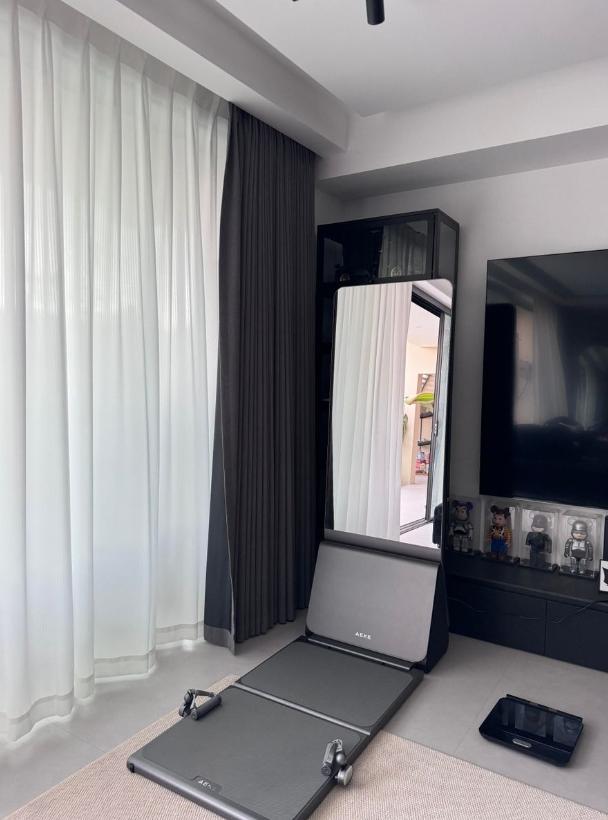
If you want to see everything a smart mirror can do distilled into a single device, the AEKE Smart Home Gym K1 is a compelling place to start. Rather than functioning as a passive display streaming pre-recorded workouts, the K1 operates as a fully integrated AI fitness system — one that observes, analyzes, and responds to your movement in real time. It’s the kind of equipment that makes the gap between traditional gear and connected fitness feel less like a generational upgrade and more like a category reinvention.
At its core, the K1’s AI engine does the heavy lifting that most home gym setups leave entirely to the user. It builds personalized workout plans based on your goals and fitness baseline, then refines those plans continuously as your performance data accumulates. The embedded camera system tracks your form with enough precision to flag compensation patterns — the kind of subtle movement errors that lead to injury over months of uncorrected repetition. Corrections appear on screen in real time, so you’re not waiting until the next session with a trainer to find out your deadlift form is off.
The content library extends well beyond a handful of preset routines. Users can access a broad range of guided sessions spanning strength training, HIIT, yoga, stretching, and more — all synced to the AI layer so intensity scales appropriately. Compared to traditional setups that require purchasing separate equipment for each fitness discipline, the K1 consolidates that variety into a wall-mounted panel that leaves your floor space intact. Against other smart mirrors on the market, its combination of AI depth and content breadth positions it as a serious long-term fitness investment rather than a novelty purchase.
Navigating Smart Gym Equipment Financing for Tech-Savvy Buyers
Sticker shock is the most common reason people talk themselves out of a smart mirror purchase — and it’s understandable. These devices represent a meaningful upfront investment compared to a basic dumbbell set. But framing the cost as a one-time purchase misses the bigger financial picture. Most smart mirror manufacturers offer monthly installment plans that spread the cost over 12 to 36 months, often with zero-interest promotional periods for qualified buyers. When you break the total down to a daily figure, it frequently comes out cheaper than a single gym class per week.
Subscription models are worth scrutinizing carefully before you commit. The hardware cost and the ongoing content fee are two separate expenses, and the value of one depends heavily on how much you use the other. If you plan to work out four or more times per week, an all-access subscription that unlocks live classes, AI coaching, and progress analytics delivers strong return on that recurring fee. Lighter users might prefer platforms with tiered plans that let you pay only for what you actually use.
Before purchasing, check for seasonal promotions — Black Friday, New Year, and back-to-school windows routinely bring significant discounts on both hardware and bundled subscriptions. Some retailers also offer trade-in credits for old fitness equipment. Finally, factor in what you’re already spending: gym memberships, personal training sessions, and fitness app subscriptions often add up to more than a smart mirror’s monthly cost, making the switch a lateral financial move rather than an added expense.
Future-Proofing Your Fitness Journey with Integrated Solutions
Choosing the right smart mirror starts with three practical checkpoints: your available wall space, your realistic budget including subscription costs, and the specific features that match your fitness goals. A device with robust AI coaching matters more than raw screen size if personalized programming is your priority. Once installed, smart mirrors pair naturally with existing equipment — resistance bands, kettlebells, and heart rate monitors all extend the system’s capabilities rather than competing with it. Brands like AEKE design their platforms with this expandability in mind, ensuring that software updates regularly introduce new workout modalities and refine AI algorithms over time. The most important factor for long-term value is that software updateability; platforms that evolve alongside fitness science ensure your investment stays relevant rather than behind the curve, keeping your home gym ahead of the game for years to come.
Smart Mirrors vs. Traditional Home Gyms: The Verdict
Traditional home gyms were built on good intentions, but good intentions don’t correct your squat form or adjust your training load when you’re running on four hours of sleep. The core failures are structural: passive equipment that offers no feedback, layouts that consume space without justification, and a complete absence of the engagement mechanisms that keep people showing up consistently. These aren’t problems willpower can fix — they’re design limitations.
Smart mirrors address each of these gaps directly. AI-driven personalization replaces guesswork with precision. Real-time form correction fills the role of a personal trainer without the scheduling friction. Community features and live classes rebuild the social accountability that solo home workouts have always lacked. Devices like the AEKE Smart Home Gym K1 demonstrate that this technology has matured well beyond novelty — it’s now a genuinely practical, space-efficient alternative to conventional setups.
The future of home fitness isn’t a bigger rack or heavier weights. It’s smarter systems that learn from you, adapt to you, and grow with you over time. If your current setup has started collecting more dust than sweat, that’s not a motivation problem — it’s a technology gap. Closing that gap might be the most effective fitness decision you make this year.

ThePayNews: A Comprehensive Guide to Fintech Insights

Art Prompt Generator: Ignite Your Creative Spark

BarAPK Org: Your Go-To Platform for Secure APK Downloads