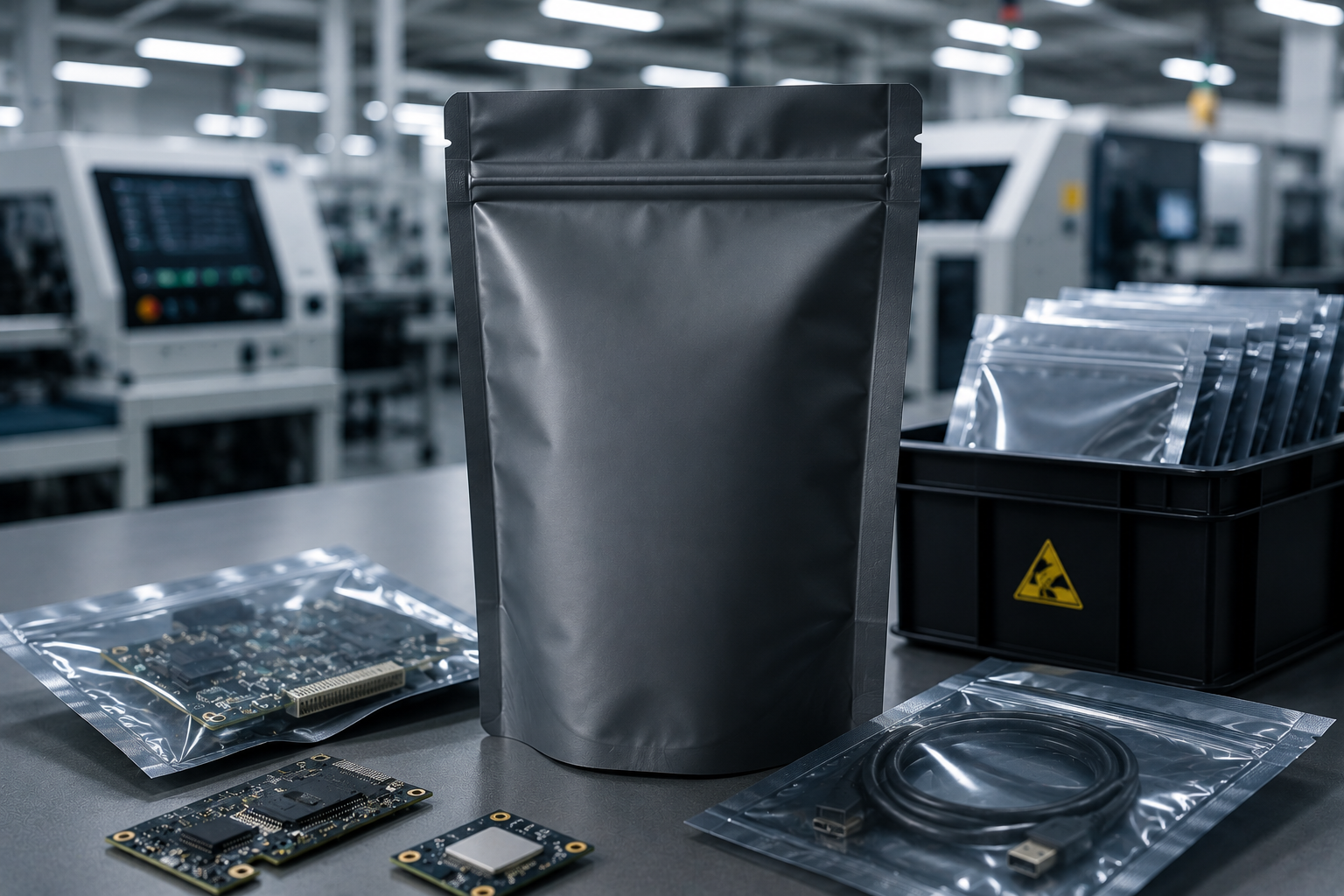
Consumer electronics keep getting better. Devices are faster, thinner, and more compact than ever. But there’s a trade-off that doesn’t get talked about enough. As performance improves, these products also become more sensitive to their environment.
A small drop during transit, a bit of trapped moisture, or even a tiny electrostatic discharge can quietly affect how a device works. Sometimes, the damage isn’t even visible until it’s too late.
This is where packaging starts to matter more than most people expect. It’s no longer just about wrapping a product. It plays a direct role in protecting performance from factory to end user. Many manufacturers now work with experienced partners like EONSEN Pack, a top custom flexible packaging supplier in China, to build packaging that can handle these risks more effectively. The shift toward smart packaging, especially flexible packaging solutions, is a big part of that change.
What Really Happens When Electronics Move Through the Supply Chain?
Think about the journey a typical electronic device goes through. It moves from production lines to warehouses, through transport networks, and finally into the hands of the user. At every step, there’s a risk.
One of the biggest threats is electrostatic discharge, or ESD. It’s easy to overlook because it’s often invisible. In fact, many static shocks are too small to feel. But for sensitive components, even that is enough to cause damage.
Moisture and oxygen exposure create another layer of risk. Over time, they can affect circuits and connectors, leading to corrosion or reduced performance. Even a small amount of moisture trapped inside packaging can shorten a product’s lifespan.
Then there’s physical impact. Drops, pressure, or sharp handling can cause punctures or internal misalignment. What makes this tricky is that the product may still look fine on the outside.
So what happens next? Returns, replacements, and frustrated customers. A lot of these issues can be traced back to how well the product was protected in the first place.
Smart Packaging Isn’t About Features, It’s About Performance
When people hear “smart packaging,” they often think of high-tech add-ons. But in electronics, it’s much more practical than that.
Smart packaging for electronics is designed to actively protect the product. It’s built around performance, not appearance.
For example, anti-static materials help safely dissipate electrostatic discharge before it reaches sensitive components. High-barrier layers block moisture and oxygen, reducing the risk of internal damage over time. Multi-layer structures combine different materials to improve strength, flexibility, and durability in a single solution.
This is where experienced manufacturers make a difference. Companies like EONSEN Pack focus on engineering packaging that brings all these protective features together in a way that works consistently in real-world conditions.
The result is simple. The product arrives as expected, without hidden damage, and performs the way it should.
Why Flexible Packaging Is Becoming the Go-To Choice
So where does flexible packaging fit into all of this?
In many cases, it’s what makes smart packaging for electronics possible. Flexible packaging isn’t just about convenience. It’s about how well it adapts to the product and the environment around it.
Electronics come in all shapes and sizes. Flexible packaging can be designed to fit closely, which reduces empty space and limits movement during transit. Less movement means less risk.
At the same time, it offers a strong balance between durability and efficiency. It’s lightweight, which helps reduce shipping costs, but still strong enough to handle pressure, impact, and everyday handling.
It also performs well under stress. With better shock absorption and higher puncture resistance, flexible packaging helps protect products throughout the entire logistics process.
That’s why many manufacturers working with sensitive components rely on solutions developed by companies such as EONSEN Pack, where both precision and consistency are critical.
Fewer Returns, Better Experience, Stronger Brand Trust
Here’s something worth thinking about. When a product arrives damaged, who gets blamed?
Most of the time, it’s not the packaging.
Customers usually assume the product itself is the problem. That can hurt brand perception, even if the issue started during shipping.
From a business perspective, the impact goes further. Damaged products lead to returns, replacements, warranty claims, and added operational costs. Reverse logistics alone can become a major burden.
Better protective packaging for electronics helps avoid these issues altogether. Fewer damaged units mean fewer returns and a smoother experience for the customer.
Over time, that consistency builds trust. And in a competitive electronics market, trust is hard to win and easy to lose.
Can Packaging Be Both Protective and Sustainable?
At the same time, there’s increasing pressure to make packaging more sustainable. Brands are expected to reduce waste, but they can’t afford to compromise on protection.
So how do you balance both?
Flexible packaging is starting to move in that direction. Many solutions now use recyclable materials or mono-material structures that are easier to process after use. Some applications are also exploring bio-based materials.
That said, performance still comes first. For electronics, protection isn’t optional. The focus now is on finding materials that can deliver both strong protection and a more sustainable footprint without sacrificing reliability.
Why Packaging Is Becoming a Competitive Advantage
Packaging used to sit in the background. Now, it’s becoming part of the product experience.
Smart packaging does more than protect. It supports product reliability, reduces losses, and helps ensure devices perform as expected from the moment they’re used.
As electronics continue to evolve, packaging will need to keep pace. We’re already seeing steady progress in materials, structure, and sustainability.
Looking ahead, packaging won’t just support delivery. It will shape how products perform and how customers perceive them from day one.

Renting vs. Buying an Aerial Work Platform: Which Is Better for Your Business?

How LED Backlit Displays Are Transforming Trade Show Marketing

Permanent Building vs Dome Shelter for Sale: The Real Cost Comparison