When a project manager starts searching for a container or dome shelter for sale, they’re usually already frustrated. A permanent building quote has come in over budget, timelines are stretching into next year, and the site itself might not even justify that level of investment. It’s a situation that plays out constantly across mining operations, agricultural facilities, and industrial worksites around the world.
The choice between a traditional structure and a more flexible shelter option isn’t as simple as price per square foot. There are permits, lead times, operational lifespans, and long-term maintenance costs to weigh. This breakdown covers the real numbers and trade-offs so buyers can make a decision that actually fits their project.
What Makes Permanent Buildings So Expensive
Permanent construction carries costs that go far beyond materials and labor. Before a single wall goes up, there’s land preparation, soil testing, and in most jurisdictions, a permit process that can stretch months. For remote sites like mining operations in Western Australia or agricultural facilities in rural Canada, those timelines get even longer.
Foundation work alone can account for 15 to 25 percent of a total build budget. Concrete slab pours, footings, and drainage infrastructure are unavoidable in permanent structures, and any errors at this stage are costly to fix later. Labor costs compound this further, especially in regions with skilled trades shortages.
Then there’s the ongoing side of the equation. A permanent concrete or steel building requires regular maintenance: roof inspections, structural assessments, HVAC servicing, and eventual facade repairs. Over a 20 to 30 year lifespan, that maintenance budget adds up to a figure most buyers don’t fully account for at the planning stage.
None of this is to say permanent buildings are the wrong choice. For facilities that need to run for decades with fixed infrastructure and full utility integration, they often make sense. But for projects with tighter timelines, remote locations, or uncertain long-term footprints, the calculus shifts quickly.
The Real Advantages of Dome and Container Shelters
Speed and flexibility are where modern shelter options genuinely outperform traditional construction. A dome shelter or container shelter can be operational in days or weeks rather than months, which has real value when a mining site needs covered storage before wet season or a disaster relief operation needs immediate housing.
Key advantages include:
- Deployment speed: A shipping container shelter can be installed on a prepared surface in as little as a few days, with no concrete work required in many configurations.
- Cost savings upfront: Without foundation requirements, permit complexity, or long construction windows, upfront costs are substantially lower.
- Relocatability: A container shelter isn’t fixed to a site. When operations shift, it shifts with them, protecting the initial investment.
- Scalability: Additional units can be added as operational needs grow, without the disruption that comes with expanding a fixed building.
- Industrial durability: Modern dome shelter designs are engineered for harsh environments, handling high wind loads, heavy snow, and UV exposure without performance degradation.
For industries where site conditions change and capital preservation matters, these qualities aren’t just conveniences. They’re operational necessities. A shipping container shelter that can move with a project is fundamentally a different kind of asset than a building that stays behind when the work is done.
Fabric Structures: Where They Fit In
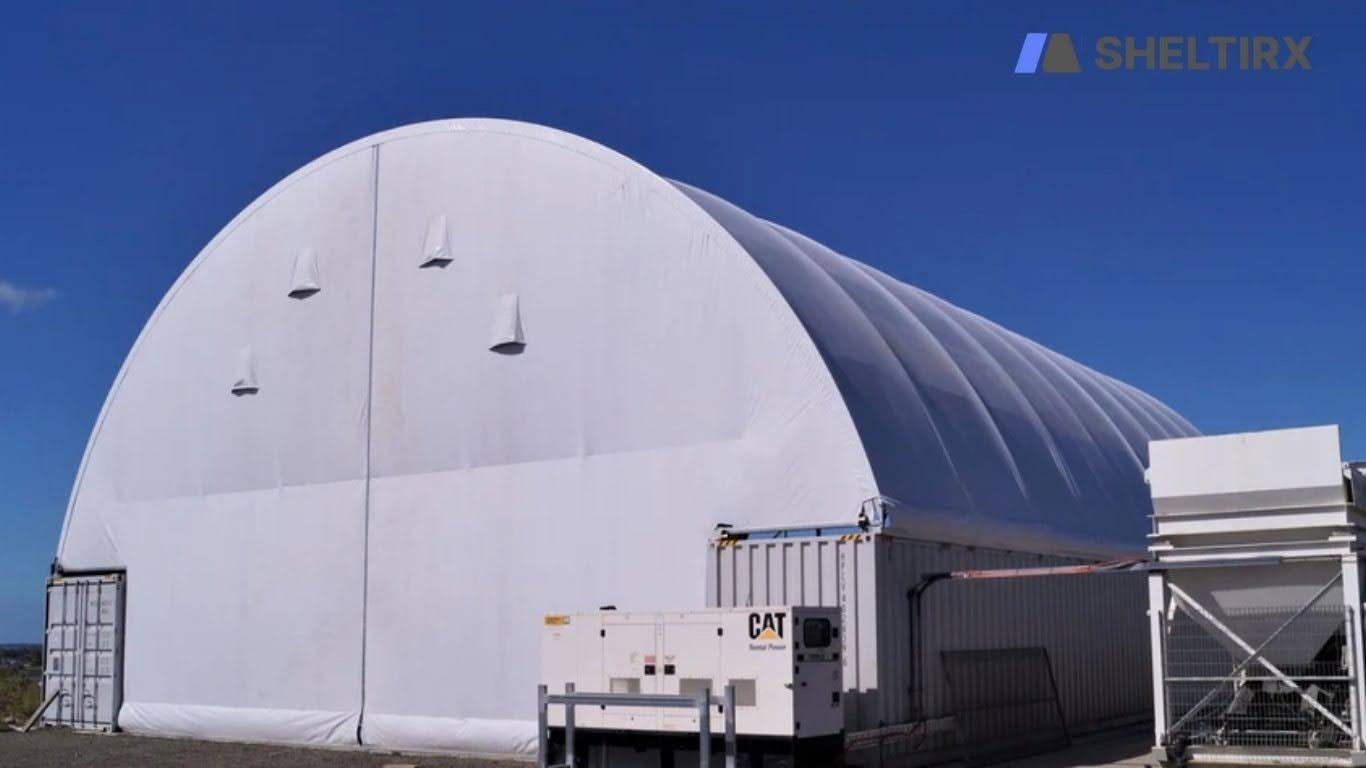
Permanent fabric structures occupy an interesting middle ground that often gets overlooked in cost comparisons. They’re not temporary tents, and they’re not conventional buildings. They’re engineered structures with 20 to 30 year design lifespans, purpose-built for applications where clear-span interior space matters and speed of construction is a priority.
In agriculture, fabric structures are used for hay and equipment storage at a fraction of what steel-frame sheds cost to build. In mining, they protect ore stockpiles and processing equipment from weather without the overhead of full building permits in many regions. Military and emergency management agencies have used them for logistics bases and field hospitals precisely because they deploy fast without sacrificing structural integrity.
The appeal of permanent fabric structures is increasingly in hybrid applications. A facility might use a steel-framed concrete building for its core administration and processing functions, then use fabric structures to cover adjacent laydown yards, vehicle storage, or bulk material handling. This approach lets project planners allocate capital where permanence actually matters, rather than applying the same construction standard to every square meter on site.
Cost Breakdown Comparison
Here’s a realistic side-by-side look at what different structure types typically cost and what that cost includes:
| Structure Type | Upfront Cost (Per m²) | Install Time | Lifespan | Relocatable | Maintenance |
| Permanent concrete/steel building | $1,500 – $3,500+ | 6–18 months | 40–50 years | No | High |
| Dome shelter | $150 – $600 | Days to weeks | 15–25 years | Yes | Low to moderate |
| Container shelter | $200 – $800 | 1–5 days | 20–30 years | Yes | Low |
| Permanent fabric structure | $300 – $900 | 2–8 weeks | 20–30 years | Limited | Low to moderate |
These ranges reflect real-world variability based on site conditions, size, geographic location, and specification level. A dome shelter in a coastal mining environment with cyclone ratings will sit at a different price point than a basic agricultural cover in a temperate climate.
What the table doesn’t capture is opportunity cost. A permanent building that takes 12 months to complete means 12 months of lost productivity or storage. When that downtime is factored in, faster-deploying options often deliver stronger total value even when their per-square-meter rate looks comparable to slower builds.
Which Option Is Right for Your Project?
The honest answer is that it depends on three things: how long the site will operate, whether the structure needs to move, and what the actual use requirements are.
If the operation has a 5 to 10 year horizon with potential to relocate, a container shelter or dome shelter is almost always the smarter financial choice. The mobility alone hedges against the risk of writing off a fixed asset if the site closes or changes scope.
For operations with a clear long-term footprint and significant utility integration requirements, like a processing facility or a permanent logistics hub, a conventional building may still justify the cost. But even then, hybrid approaches using permanent fabric structures for auxiliary coverage can reduce the total capital outlay significantly.
Project managers comparing options should also factor in resale and repositioning value. A container shelter can be resold or redeployed. A concrete slab cannot.
If the timeline is tight, the budget is constrained, or the site is remote, the flexibility of modern shelter systems generally wins. If the operation is a 30-year fixed investment with predictable infrastructure needs, traditional construction may still hold its ground.
Finding the Right Supplier
Once the structure type is settled, sourcing matters as much as the decision itself. Not all shelter manufacturers engineer to the same load ratings, and warranty terms vary considerably across the market.
For buyers working through this comparison in detail, Sheltirx offers a range of container shelter and dome shelter options worth reviewing. Their product range covers industrial, agricultural, and commercial applications, and their team can provide site-specific guidance rather than just a catalogue quote. If you’re still weighing options, it’s a practical starting point before committing to a build direction.

Shop Tools That Make Precision Machining Less Complicated

How Digital Business Solutions Drive Modern Brand Growth: The Ultimate Guide

Why Reliable Technology and Business Information Matters in the Digital Age