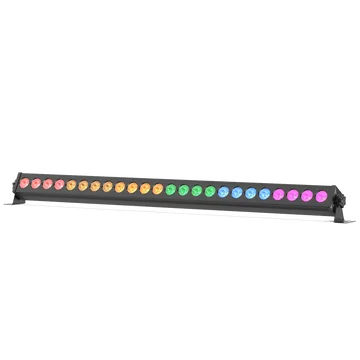
A single sweep of color across a building facade can transform an ordinary outdoor venue into an immersive experience that captivates audiences. Dynamic lighting has become the backbone of memorable events, from corporate galas to music festivals, yet audio-visual technicians consistently grapple with the same challenges: synchronizing dozens of fixtures across expansive spaces, maintaining precise color consistency, and executing real-time adjustments without disrupting a live show. These demands require more than basic lighting equipment—they call for intelligent control systems that keep pace with creative ambition.
Outdoor wall wash lights equipped with DMX512 control offer a proven solution to these challenges. By combining the broad, even illumination of wall wash fixtures with the industry-standard DMX512 protocol, technicians gain granular command over every aspect of their lighting design. This article explores why this combination has become essential for professional outdoor installations, examining the core benefits of DMX512 synchronization, real-world applications in event and performance lighting, practical programming steps, and guidance on selecting the right fixtures for demanding outdoor environments.
Understanding Outdoor Wall Wash Lights and DMX512 Control
Outdoor wall wash lights are wide-beam fixtures designed to cast uniform illumination across large vertical surfaces such as building facades, retaining walls, and stage backdrops. Unlike spotlights that concentrate output into narrow beams, wall washers distribute light evenly across broad areas, eliminating hot spots and creating smooth gradients of color. In architectural and event contexts, they serve as the primary tool for transforming plain surfaces into dynamic canvases of light and color.
DMX512—Digital Multiplex with 512 channels—is the industry-standard communication protocol that connects lighting fixtures to a central controller. Each fixture on a DMX chain receives instructions through assigned channel addresses, allowing a single operator to manage hundreds of lights from one console. The protocol transmits data packets at high speed, directing each fixture’s color output, brightness level, strobe rate, and transition effects with frame-by-frame precision. When outdoor wall wash lights incorporate DMX512 receivers, technicians move beyond simple on-off switching into a realm of creative control where every hue shift, fade duration, and intensity change responds to deliberate programming rather than manual intervention. This marriage of broad-coverage hardware and digital precision forms the foundation for professional outdoor lighting design.
The Advantages of DMX512 Control for Synchronized Lighting
The most compelling advantage of DMX512 control lies in its ability to synchronize dozens—or even hundreds—of wall wash fixtures into a single, cohesive visual display. When every fixture on a facade responds to the same timing data, color transitions ripple across surfaces with millisecond accuracy. A chase sequence that moves left to right across a 50-meter building front requires each fixture to fire in precise succession; DMX512 delivers this coordination through its sequential channel addressing, ensuring that no fixture lags behind or jumps ahead of the programmed cue.
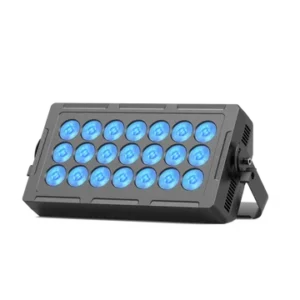
Reliability at scale further distinguishes DMX512 from simpler control methods. The protocol supports daisy-chaining up to 512 channels per universe, and with universe expansion through Art-Net or sACN bridging, installations can grow to thousands of channels without degrading signal integrity. For technicians managing festival stages or multi-building projection mapping events, this scalability means adding fixtures to an existing rig without redesigning the entire control architecture. Each new light simply receives its unique address and integrates into the existing cue structure.
Real-time adjustment capability rounds out the protocol’s professional appeal. During a live performance, conditions change constantly—a set runs long, a keynote speaker requests a different mood, or weather shifts the ambient light level. DMX512 consoles allow operators to override programmed cues instantly, push manual faders for brightness correction, or trigger backup scenes without interrupting the data stream to other fixtures. Complex programming features such as nested cue stacks, conditional triggers, and time-coded playback give technicians the creative latitude to design intricate shows while retaining full manual override authority when the unexpected occurs.
Applications in Party Lights and Performance Lighting
Outdoor concerts rely on DMX-controlled wall wash lights to flood stages and audience areas with color that shifts in sync with musical beats. A lighting designer programming a festival headliner’s set can map color changes to time-coded audio tracks, so bass drops trigger deep red washes across the stage backdrop while melodic breaks transition into cool blues sweeping left to right across a 30-meter truss line. The audience perceives these shifts as part of the music itself, deepening emotional engagement without conscious awareness of the technical choreography behind it.
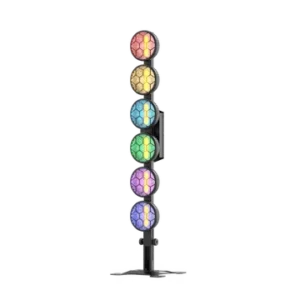
Corporate outdoor galas and private parties benefit from subtler applications. Wall wash fixtures lining a garden wall or courtyard perimeter can cycle through branded color palettes during a product launch, then shift to warm amber tones as the event transitions from presentations to dinner. DMX programming allows these mood changes to unfold gradually over minutes rather than snapping abruptly, maintaining an atmosphere of sophistication. Theatrical performances staged outdoors—Shakespeare in the park, immersive walkthrough experiences, or dance productions—use DMX-synchronized wall washers to simulate time-of-day shifts, storm effects, or emotional scene transitions. A single operator can trigger a sunset gradient fading from gold to violet across an entire backdrop wall, then snap to cold white lightning flashes on cue, all from pre-programmed scenes stored in the console. These synchronized sequences transform static environments into living, responsive spaces that elevate any outdoor gathering from functional to unforgettable.
Step-by-Step Guide to Programming and Synchronization with DMX512
Setting up outdoor wall wash lights with DMX512 control begins with physical installation and cable routing. Run five-pin or three-pin DMX cables from your controller to the first fixture, then daisy-chain subsequent fixtures in series. Terminate the final fixture in the chain with a 120-ohm resistor to prevent signal reflection, which causes flickering and erratic behavior—particularly problematic in long outdoor runs where cable lengths may exceed 100 meters.
Next, assign unique DMX addresses to each fixture. Every wall washer occupies a specific number of channels depending on its operating mode; an RGBW fixture in full-control mode typically uses four to eight channels. Set the first fixture to address 001, the second to 009 (if using eight-channel mode), and continue sequentially. Most fixtures allow address setting through onboard DIP switches or digital displays. Record every address assignment in a channel map document—this reference becomes invaluable during troubleshooting and show programming.
With addressing complete, patch the fixtures in your control console or software. Create a fixture profile that matches the manufacturer’s channel layout, mapping channel one to red intensity, channel two to green, and so on. Once patched, verify communication by pushing individual channels to full and confirming the correct fixture responds with the expected output. This verification step catches wiring errors and address conflicts before programming begins.
Programming synchronized sequences involves building cues—stored snapshots of channel values—and arranging them into cue lists with defined transition times. Start by creating static color scenes, then assign fade times between cues to produce smooth transitions. For chase effects that ripple across a facade, offset the timing of identical cues across fixture groups by fractions of a second. Use your console’s effects engine to generate sine-wave dimming, rainbow cycles, or pulse patterns across selected fixtures simultaneously. Time-code integration allows you to lock cue playback to audio tracks, ensuring that every color shift hits precisely on beat during a performance.
Common Programming Tools and Software
Professional consoles from manufacturers like MA Lighting (grandMA series), ChamSys (MagicQ), and ETC (Eos family) offer dedicated hardware with built-in effects engines and multi-universe output. For budget-conscious setups or smaller installations, software-based solutions such as QLC+, SweetLight, and DMXIS provide full DMX control through USB-to-DMX interfaces. These platforms support fixture libraries, drag-and-drop cue building, and visualization tools that let technicians preview synchronized sequences before going live, significantly reducing on-site programming time.
Choosing the Right Outdoor Wall Wash Lights with Advanced Control Features
Selecting outdoor wall wash fixtures for DMX-controlled installations requires evaluating several critical criteria beyond raw light output. IP rating stands as the first filter—fixtures rated IP65 or higher resist water jets and dust ingress, ensuring reliable operation through rain, snow, and wind-driven debris common in outdoor environments. Anything below IP65 risks moisture damage to internal electronics, particularly the DMX receiver circuitry that makes intelligent control possible.
DMX compatibility deserves careful scrutiny beyond a simple “DMX512 compatible” label. Look for fixtures offering multiple channel modes so you can balance control granularity against channel economy based on your specific installation size. Manufacturers like UKING offer wall wash fixtures with selectable channel modes and 16-bit dimming, which produces smoother fades and more accurate color matching across large fixture arrays—a noticeable difference when thirty or more units must display identical hues simultaneously. Robust construction with aluminum housings, tempered glass lenses, and marine-grade connectors ensures longevity in permanent outdoor installations where fixture replacement disrupts operations. Finally, prioritize fixtures with tool-free addressing systems and standard connector types that simplify integration into existing DMX infrastructure, reducing setup time and minimizing potential failure points in the signal chain.
Building a Scalable DMX512 Lighting Ecosystem for Outdoor Events
Outdoor wall wash lights with DMX512 control represent the convergence of broad-coverage illumination and precise digital command that professional outdoor events demand. The protocol’s ability to synchronize hundreds of fixtures with millisecond accuracy eliminates the coordination headaches that plague large-scale installations, while its real-time override capabilities ensure technicians never lose control during live performances. From festival stages pulsing with beat-matched color to corporate events unfolding through carefully timed mood transitions, DMX512 transforms static outdoor spaces into responsive environments that amplify every moment.
For audio-visual technicians seeking programmable, scalable, and reliable lighting infrastructure, DMX512 control addresses the core professional requirements: granular channel management, seamless expansion through universe bridging, and compatibility with industry-standard consoles and software. As intelligent lighting systems continue evolving—integrating wireless DMX transmission, pixel-mapping capabilities, and network-based protocols—the foundational principles of DMX512 remain the entry point for mastering advanced outdoor lighting design. Investing in quality DMX-compatible wall wash fixtures today builds a control ecosystem that grows with your creative ambitions and technical demands for years to come.

How Glass Manufacturing Facilities Manage Extreme Heat

Shop Tools That Make Precision Machining Less Complicated

How Digital Business Solutions Drive Modern Brand Growth: The Ultimate Guide