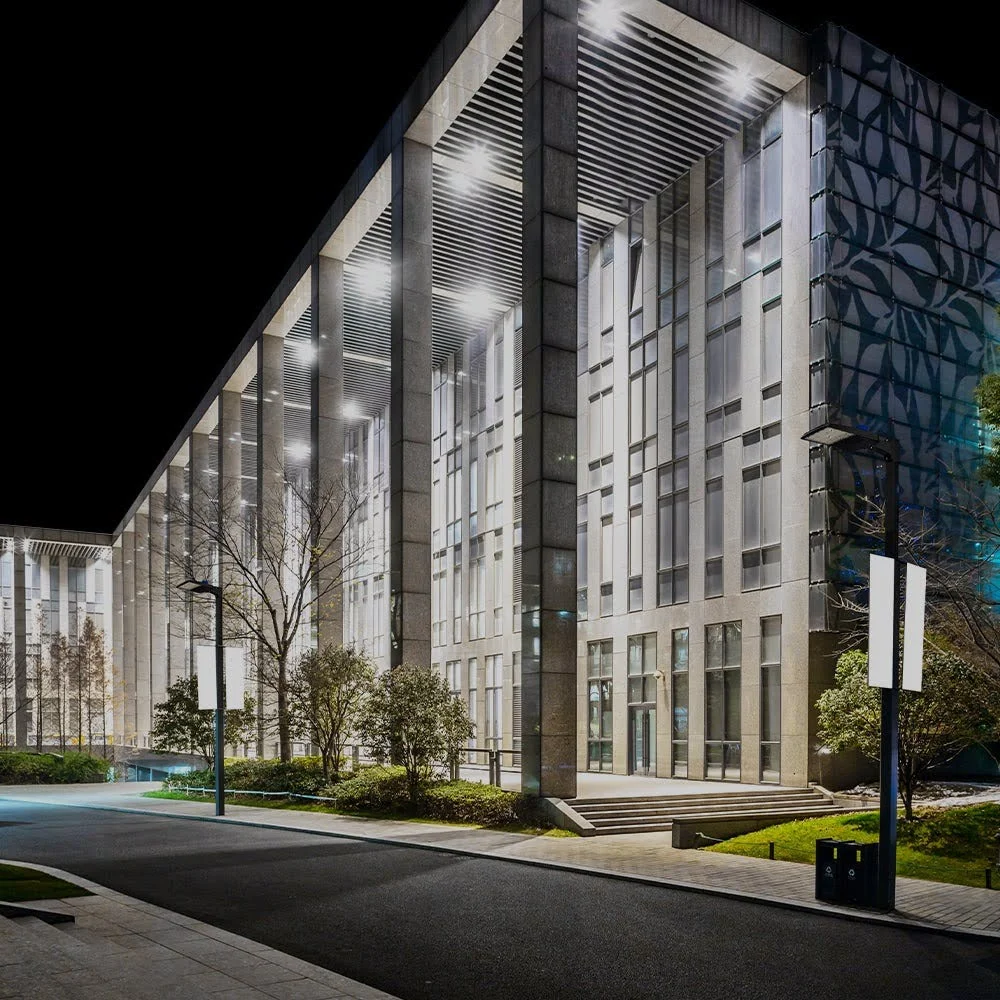
Commercial industrial lighting serves as the first line of defense for any facility, directly impacting security, employee safety, and day-to-day operational efficiency. Yet facility managers consistently grapple with the same frustrating challenges: inadequate visibility across expansive properties, escalating energy costs that strain budgets, and the constant cycle of replacing failed fixtures in hard-to-reach locations. These issues don’t just create inconvenience—they expose businesses to theft, accidents, and regulatory non-compliance.
This guide provides a comprehensive framework for selecting security lighting solutions that address these pain points head-on. Whether you’re upgrading an aging parking lot system or designing illumination for a new warehouse complex, the decisions you make today will affect your facility’s performance for years to come. We’ll walk through the essential factors that separate reliable, cost-effective installations from costly mistakes, covering fixture durability and construction standards, the measurable advantages of LED technology over legacy systems, and the growing role of smart features like photocells and motion sensors in automating operations while cutting waste.
Why Commercial Industrial Security Lighting is Non-Negotiable
Security lighting does far more than illuminate dark corners—it functions as an active deterrent, a safety mechanism, and a productivity enabler all at once. For facility managers responsible for protecting assets and people across sprawling commercial properties, understanding these interconnected roles is essential to justifying investment and making informed decisions.
Criminal activity thrives in darkness. Well-lit perimeters, loading docks, and storage yards dramatically reduce the likelihood of theft, break-ins, and vandalism by eliminating the concealment that opportunistic criminals rely on. Studies consistently show that properties with comprehensive lighting coverage experience significantly fewer security incidents than those with gaps or poorly maintained systems. Beyond deterrence, visible lighting signals to potential intruders that a facility is actively monitored and maintained.
Employee and visitor safety represents an equally compelling concern. Poorly lit parking lots, walkways, and vehicle corridors create conditions for slips, trips, collisions, and personal attacks. When an incident occurs in an area where lighting was inadequate or non-functional, the liability exposure can be substantial—resulting in workers’ compensation claims, lawsuits, and increased insurance premiums that far exceed the cost of proper illumination.
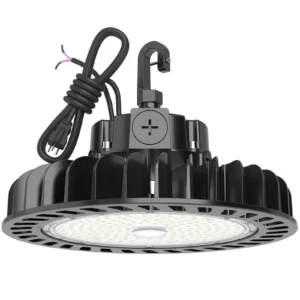
From an operational standpoint, effective security lighting extends usable working hours, supports surveillance camera performance, and enables safe nighttime deliveries and shift changes. Facility managers who treat lighting as a strategic infrastructure component rather than a utility expense consistently achieve better outcomes across safety metrics, operational uptime, and total cost of ownership.
Key Features of Effective and Durable Outdoor Lighting
Selecting security lighting for commercial and industrial environments demands attention to specifications that directly determine whether a fixture will perform reliably for a decade or fail within months. Facility managers who understand these critical features can avoid costly replacements and ensure consistent illumination across their properties.
Construction materials form the foundation of fixture longevity. Die-cast aluminum housings resist corrosion and dissipate heat effectively, while polycarbonate or tempered glass lenses withstand impact from debris, hail, and accidental contact without yellowing or cracking over time. Stainless steel hardware prevents fastener degradation in humid or chemically aggressive environments. The difference between a fixture built with these materials and one assembled from stamped sheet metal becomes obvious within the first two years of outdoor exposure.
Ingress Protection ratings tell you exactly how well a fixture resists environmental intrusion. An IP65-rated luminaire is dust-tight and protected against water jets from any direction—suitable for most outdoor applications. Facilities near wash-down areas or coastal zones should target IP66 or higher. Impact resistance, measured by IK ratings, matters equally in industrial settings where forklifts, loading equipment, and flying gravel pose constant threats. An IK10-rated fixture withstands 20 joules of impact energy, equivalent to a 5kg weight dropped from 40 centimeters.
For security applications, lumen output should provide uniform coverage without creating harsh glare or deep shadows that compromise camera footage. Color temperatures between 4000K and 5000K deliver neutral white light that enhances facial recognition and color rendering for surveillance systems. Beam angle selection—whether narrow spot, medium flood, or wide distribution—must match the mounting height and area dimensions to eliminate dark zones between fixtures. Thermal management through finned heat sinks or passive convection channels keeps LED junction temperatures within safe operating ranges, directly preserving light output and extending rated lifespan beyond 100,000 hours.
Solution: Evaluating and Selecting Durable Fixtures
Start by documenting the specific environmental stressors present at your facility. Coastal locations face salt spray corrosion, desert sites endure extreme thermal cycling, and chemical plants deal with airborne particulates that degrade seals and finishes. This assessment drives every subsequent specification decision. Next, match IP and IK ratings directly to those documented conditions—don’t over-specify for benign environments or under-specify to save marginally on upfront costs. Request independent test certifications rather than relying solely on manufacturer claims. Prioritize fixtures backed by performance data from installations operating under similar conditions for five or more years, and look for warranties of at least five years that cover both LED driver and housing integrity. Finally, consider modular designs where drivers, LED boards, and photocells can be individually replaced without removing the entire fixture from a 30-foot pole—this single feature can cut long-term maintenance labor costs dramatically.
Comparing Lighting Technologies: The Dominance of LED Parking Lot Lights
For decades, commercial facilities relied on high-intensity discharge technologies—metal halide, high-pressure sodium, and mercury vapor—to illuminate parking areas, perimeters, and loading zones. These legacy systems served their purpose but came with significant operational burdens that modern LED parking lot lights have effectively eliminated. Understanding this technology shift helps facility managers quantify the return on upgrading aging infrastructure.
HID fixtures consume substantially more energy to produce equivalent illumination compared to LED alternatives. A 400-watt metal halide lamp that delivers roughly 20,000 lumens can be replaced by a 150-watt LED fixture producing the same or greater output—representing energy reductions of 60 percent or more. Multiply that savings across dozens or hundreds of pole-mounted fixtures operating ten to twelve hours nightly, and the annual utility reduction becomes a compelling line item. Fluorescent systems, while more efficient than HID, still fall short of LED performance and degrade rapidly in cold temperatures common to outdoor installations.
Beyond energy consumption, LED parking lot lights deliver a longer functional lifespan—typically 100,000 hours versus 20,000 for metal halide—which translates directly into fewer bucket truck dispatches and reduced maintenance labor. Unlike HID lamps that require several minutes to restrike after a power interruption, LEDs reach full brightness instantly, eliminating dangerous dark periods during outages. Light quality also improves markedly; LEDs maintain consistent color rendering throughout their lifespan rather than shifting toward the pink or green hues that characterize aging HID lamps. This consistency ensures surveillance cameras capture usable footage year after year. Manufacturers like Hyperlite have developed LED fixtures specifically engineered for these demanding commercial applications, combining high-efficiency drivers with robust thermal management to maximize both output and longevity. Additionally, LED drivers are inherently compatible with dimming protocols and smart control inputs, making them the foundation for any automated lighting strategy a facility manager might implement in the future.
Integrating Smart Controls: The Role of Photocell Lights and Sensors
Automation transforms security lighting from a static utility into an intelligent system that responds to real-world conditions without manual intervention. For facility managers overseeing multiple buildings or expansive properties, smart controls eliminate the daily burden of switching lights on and off while ensuring illumination is always active precisely when needed.
Photocell lights use ambient light sensors to activate fixtures automatically at dusk and deactivate them at dawn. This simple technology eliminates timer adjustments throughout the year as daylight hours shift seasonally—a surprisingly common maintenance task that, when neglected, leaves facilities dark during early evening hours or wastes energy by running lights well into morning. Modern photocells are remarkably reliable, with failure rates far below those of mechanical timers, and they ensure perimeter lighting never depends on someone remembering to flip a switch.
Motion sensors add another layer of intelligence by triggering full-brightness output only when activity is detected in a specific zone. In low-traffic areas like side corridors, rear loading docks, or seldom-used parking sections, fixtures can idle at reduced output—perhaps 20 to 30 percent—then ramp to full power when a person or vehicle enters the detection field. This approach delivers dual benefits: heightened security response that draws attention to unexpected movement, and meaningful energy savings in areas that don’t require constant high-output illumination. Scheduling and zoning capabilities allow facility managers to program different behaviors for weekday operations versus weekends, or to create distinct lighting profiles for active work zones versus storage perimeters. Integration with building management systems centralizes monitoring and alerting, enabling a single dashboard to flag fixture failures, track energy consumption trends, and adjust lighting policies across an entire campus. These systems also help facilities address dark sky ordinances and light trespass complaints by precisely controlling when and where light is directed.
Solution: Implementing a Smart Lighting Strategy
Begin with a thorough lighting audit that maps every fixture location against its actual usage patterns. Identify zones where constant illumination is genuinely necessary—main entrances, active surveillance corridors, emergency egress paths—and separate them from areas where motion-activated or reduced-output operation makes sense. This distinction prevents over-automation in critical security zones while maximizing savings elsewhere. Next, decide between standalone photocells mounted on individual fixtures and networked sensor systems that communicate wirelessly to a central controller. Standalone units work well for straightforward dusk-to-dawn applications on isolated poles, while networked systems offer granular scheduling, remote diagnostics, and group behavior programming across large installations. When planning sensor placement, account for environmental factors that cause false triggers—swaying tree branches, HVAC exhaust plumes, passing traffic on adjacent roads, and wildlife activity. Adjusting detection sensitivity, mounting angle, and coverage range during commissioning eliminates nuisance activations that frustrate occupants and waste energy through unnecessary cycling. Finally, build a realistic cost-benefit model that weighs the higher upfront investment in smart-capable fixtures and controllers against projected energy reductions, labor savings from automated operation, and extended fixture life from reduced operating hours. Most commercial installations recover the smart control premium within eighteen to thirty months through utility savings alone, with compounding maintenance benefits extending well beyond that payback period.
Best Practices for Installation and Maintaining Outdoor Lighting
Even the highest-quality fixtures underperform when installed incorrectly or neglected after commissioning. Facility managers who establish clear installation standards and proactive maintenance routines protect their investment and maintain consistent security coverage throughout the system’s operational life.
Mounting height and spacing decisions directly determine whether a lighting layout achieves uniform coverage or creates problematic dark gaps between fixtures. Poles that are too tall spread light thinly and reduce ground-level intensity, while fixtures mounted too low create glare for drivers and pedestrians while leaving distant areas underlit. Most commercial parking applications perform optimally with mounting heights between 20 and 35 feet, with fixture spacing calculated at roughly three to four times the mounting height for standard distribution patterns. Perimeter security lighting typically benefits from tighter spacing to maintain continuous illumination along fence lines and building facades. Professional installation matters beyond just pole placement—correct electrical supply sizing prevents voltage drop across long wire runs that dims fixtures at the end of circuits, and proper grounding protects expensive LED drivers from surge damage during electrical storms. Always engage licensed electricians familiar with outdoor commercial installations and verify compliance with local electrical codes and illumination ordinances before energizing any new system.
Once operational, a structured maintenance schedule prevents gradual degradation from going unnoticed until a security gap emerges. Quarterly lens cleaning removes accumulated dirt, pollen, and industrial residue that can reduce effective light output by 20 to 30 percent within a single year. During each cleaning visit, technicians should inspect housing seals for cracking, check for moisture condensation inside lenses indicating gasket failure, and verify that photocells and sensors respond correctly to activation triggers. Common failure modes include photocell degradation causing erratic on-off behavior, driver capacitor aging that produces visible flicker, and corrosion at wiring connections exposed to weather infiltration. Rather than replacing individual fixtures reactively as they fail, plan group maintenance campaigns where drivers or sensor modules approaching end-of-life are replaced across entire zones simultaneously. This approach reduces mobilization costs for bucket trucks, maintains uniform light quality across the property, and prevents the patchwork appearance of mixed-age fixtures operating at different output levels.
Building a Long-Term Security Lighting Strategy
Choosing commercial industrial security lighting comes down to three core pillars: durability that withstands real-world environmental punishment, LED technology that delivers superior efficiency and longevity, and smart controls like photocells and motion sensors that automate operation while eliminating waste. Each of these elements works in concert—a robust fixture means nothing if it runs outdated technology at full power all night, and the most advanced smart controls can’t compensate for a housing that fails after two winters of exposure.
The right lighting investment pays dividends across every metric that matters to facility managers. Security incidents decline when coverage is comprehensive and consistent. Safety improves when walkways, lots, and work zones remain properly illuminated without gaps. Operating budgets benefit from reduced energy consumption and dramatically fewer maintenance interventions over the system’s life. Facility managers who approach lighting as a long-term strategic asset—rather than a commodity purchase driven by lowest upfront cost—consistently outperform those who don’t on total cost of ownership and operational reliability.
As connected building systems mature and energy regulations tighten, the gap between intelligent lighting infrastructure and legacy installations will only widen. Facilities that invest thoughtfully today position themselves to integrate emerging capabilities tomorrow without costly rip-and-replace cycles.
Guide to Choosing Commercial Industrial Security Lighting
Enhance Your Mechanical Keyboard with Kailh Switches Comparison
Why Choose Outdoor Wall Wash Lights with DMX512 Control?